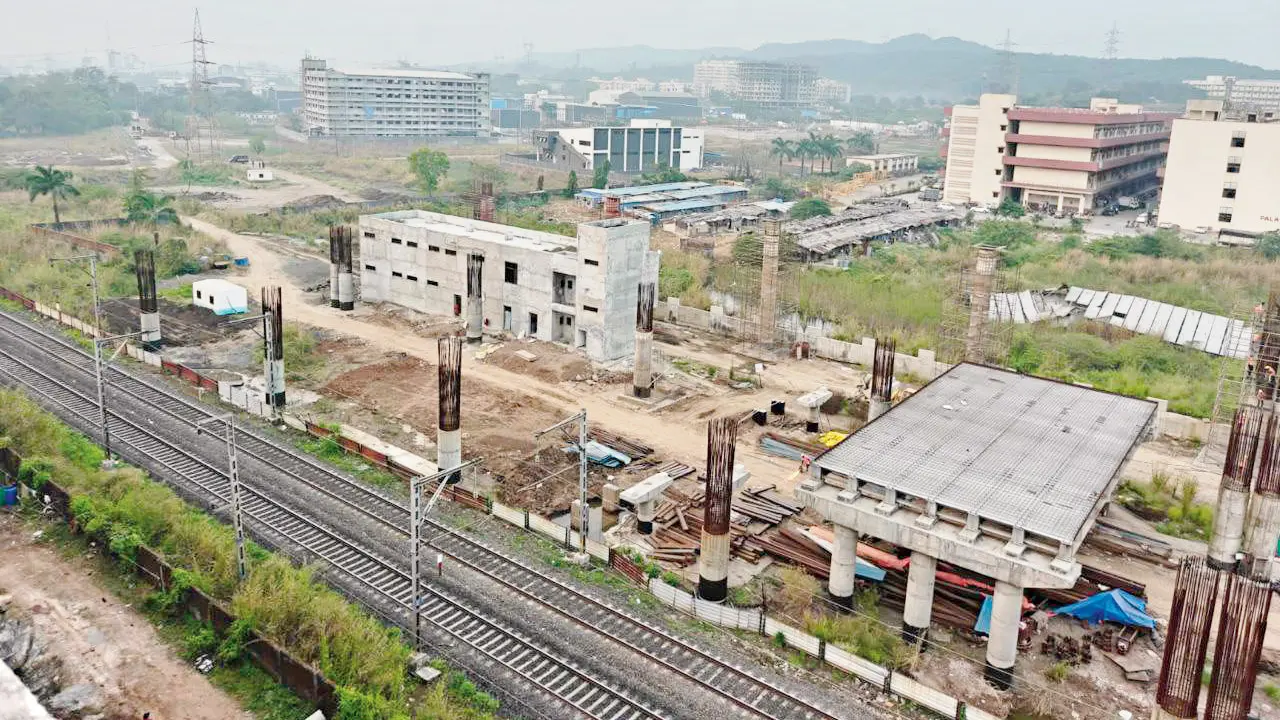
A significant round of public investment is set to reshape mobility across the Kalyan–Badlapur belt as authorities move to relieve mounting pressure on the suburban rail network in eastern Thane district. With commuter volumes rising sharply and rail services operating beyond safe capacity, a fresh allocation for metro and road infrastructure aims to create alternatives that are safer, faster, and more resilient for daily travel.
The funding, routed through the Mumbai Metropolitan Region Development Authority (MMRDA), was outlined as part of the authority’s 2026–27 financial plan. Officials familiar with the budget said the scale of investment reflects the urgency of addressing mobility bottlenecks in rapidly urbanising satellite towns such as Kalyan, Dombivli, Ambernath, Badlapur, and Ulhasnagar, where population growth has consistently outpaced transport capacity. A large share of the allocation is directed towards expanding the metro network in the eastern Mumbai Metropolitan Region. Multiple corridors linking Thane, Bhiwandi, Kalyan, and Taloja have received funding, alongside provisions for new road links designed to remove freight and through-traffic from congested urban streets. Urban transport planners say the combined focus on metro and road projects signals a shift towards more balanced, multi-modal planning rather than continued reliance on suburban rail alone.
Among the key proposals is funding for a new metro corridor connecting Kanjurmarg with Badlapur. Transport experts view this line as critical for reducing dependence on overcrowded trains used daily by commuters travelling long distances to employment hubs in Mumbai and Thane. By offering a parallel rapid transit option, the corridor is expected to absorb a portion of peak-hour demand while improving travel reliability for residents in fast-growing residential zones. Additional support has been earmarked for extensions that would integrate Ulhasnagar more closely with the wider metro grid. Planners note that improved east–west connectivity could significantly reduce road congestion, particularly on arterial routes that currently carry a mix of local traffic, buses, and heavy vehicles. Road infrastructure projects such as ring roads, elevated connectors, and freeway upgrades are intended to complement metro investments by streamlining regional movement and improving last-mile access.
From an economic perspective, the investments are expected to unlock new development potential across the Kalyan–Badlapur corridor. Better transport links typically translate into higher labour mobility, expanded housing choices, and increased viability for commercial and industrial activity beyond Mumbai’s traditional core. Urban economists also point out that shifting commuters from private vehicles and saturated trains to electric metro systems supports long-term climate and air-quality goals. Residents groups have broadly welcomed the focus on easing rail congestion, noting that daily travel on packed trains carries safety risks and significant stress. However, experts caution that timely execution, transparent monitoring, and coordination with local planning bodies will be crucial.
As projects move from budgeting to implementation, the real test will lie in whether these investments deliver measurable reductions in rail overcrowding while supporting inclusive, low-carbon growth across one of the region’s most dynamic suburban belts.
Kalyan Badlapur Corridor Gets Major Transport Boost