


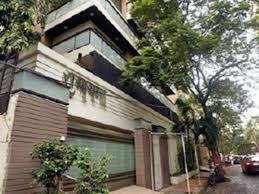
The Brihanmumbai Municipal Corporation (BMC) issued notices to twenty housing societies in the area for altering footpaths along Gulmohar Road and N. S. Road. The BMC’s Assistant Engineer from the K-West Ward visited the sites following complaints raised by the local residents’ association. The issue concerns unauthorized modifications made to the footpaths, which residents claim have caused significant inconvenience and safety risks, particularly to pedestrians.
According to the BMC, the housing societies in question had constructed carriageways for vehicle entry and exit that were not in accordance with the municipal guidelines. The alterations reportedly led to a situation where the slope of the carriageway, built to allow vehicles to enter and exit the premises, was not properly aligned with the existing footpath. This misalignment, the BMC pointed out, created obstacles for pedestrians—especially senior citizens and differently-abled individuals—forcing them onto the road, thus putting their safety at risk. A notice issued by the BMC emphasized that these changes not only disrupted pedestrian access but also violated regulations set by the corporation. “The carriageway constructed by you is not as per the specification and guidelines of BMC. The slope of the carriageway is not maintained, creating inconvenience for pedestrians and illegal alterations of the existing footpaths. You are hereby directed to rectify the carriageway entrance as per specifications and guidelines,” the notice stated. The issue of encroachment on public footpaths is not new to the area, with several housing societies undertaking similar alterations without prior approval. Residents have long raised concerns about such practices, with many arguing that these modifications are detrimental to the community, especially in areas where redevelopment is taking place. A local welfare group had previously written to the BMC about the unauthorised constructions, but despite multiple complaints over the past few months, no substantial action had been taken.
In response to the BMC’s recent action, members of the local residents’ federation voiced their concerns about the recurring problem. “We raised objections on this matter months ago, and the situation has only worsened,” stated one official from the federation. “These alterations are not just illegal, they are unsafe. The footpaths, which should be safe spaces for pedestrians, have been obstructed, forcing people to walk on the road, increasing the risk of accidents.” The federation’s officials further highlighted the need for the BMC to step up its vigilance and enforcement to prevent such alterations from becoming a widespread problem. “In some instances, the modifications appear to be designed to facilitate additional vehicle parking, which is an example of illegal encroachment on public spaces,” they added. The group has also approached MHADA, as the area falls within its jurisdiction, seeking its intervention in addressing the broader issue. The local community and residents’ associations have expressed their relief at the BMC’s decision to take cognizance of the complaints and issue notices. They believe this will set a precedent for the stricter enforcement of building regulations, ensuring that such alterations are not made at the expense of public safety. However, questions remain about how effectively the BMC will monitor compliance and whether this issue will persist in the face of ongoing redevelopment projects in the area. As Mumbai grapples with rapid urbanisation and housing redevelopment projects, the balance between private development and public space remains a delicate one. The issue in Juhu serves as a reminder of the ongoing challenges that cities face in ensuring that growth does not come at the cost of public safety and accessibility.
