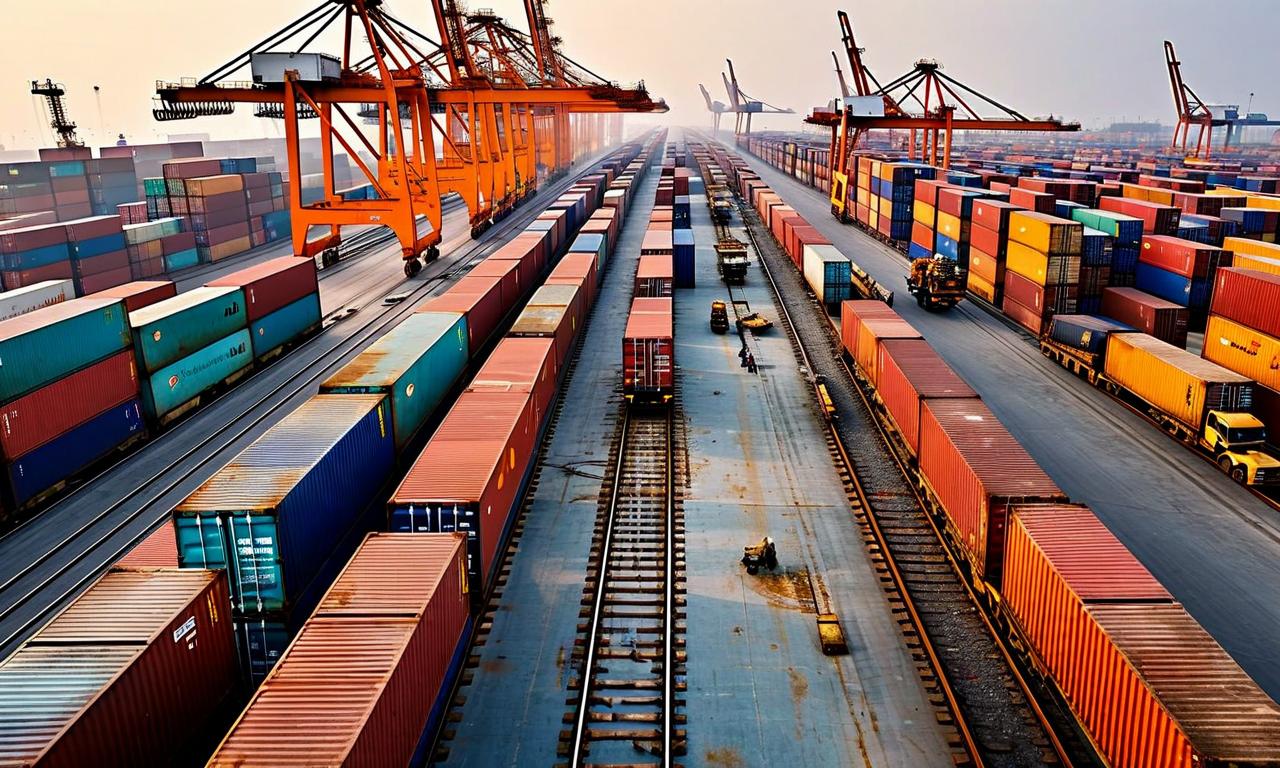
A key regulatory hurdle in the restructuring of a distressed railway infrastructure firm has been cleared after the Mumbai bench of the National Company Law Tribunal approved a resolution plan submitted by JSW Infrastructure. The decision allows the port and logistics-focused company to proceed with the acquisition and revival of NCR Rail, marking another instance of consolidation within India’s transport infrastructure sector.
The approval concludes the judicial phase of the corporate insolvency resolution process, signalling that the proposal met statutory and creditor requirements under the Insolvency and Bankruptcy Code. For India’s infrastructure ecosystem, the move underscores how insolvency mechanisms are increasingly being used to preserve productive assets while enabling financially stronger operators to step in. Industry observers say the resolution is significant beyond the balance sheets involved. Railway-linked infrastructure firms play a crucial role in freight movement, station redevelopment, and last-mile connectivity — areas closely tied to urban growth, logistics efficiency, and lower-emission transport networks. Reviving such companies rather than liquidating them supports continuity of services and protects embedded physical infrastructure.
With the tribunal’s clearance, JSW Infrastructure can now begin implementing operational and financial restructuring measures at NCR Rail. These typically include debt rationalisation, governance changes, and alignment of business strategy with the parent company’s wider logistics and transportation portfolio. Analysts note that this expansion fits into a broader trend of integrated infrastructure players seeking control across ports, rail-linked assets, and inland logistics corridors. From a market perspective, the transaction highlights investor confidence in long-term rail infrastructure demand, driven by freight modernisation, dedicated rail corridors, and urban redevelopment projects around stations and industrial hubs. A senior infrastructure analyst pointed out that rail-linked assets are increasingly viewed as stable, long-duration investments aligned with India’s climate and efficiency goals, given rail’s lower carbon intensity compared to road transport.
Urban planners also see implications for cities and regions where NCR Rail has an operational presence. A financially stable operator is better positioned to maintain assets, upgrade technology, and comply with evolving safety and environmental standards. This has downstream effects on urban freight movement, employment stability, and the quality of infrastructure serving industrial and metropolitan regions. The resolution plan’s approval also reinforces the role of the NCLT in facilitating time-bound outcomes for stressed infrastructure companies. While insolvency cases in capital-intensive sectors are often complex, successful resolutions can unlock stalled projects and restore confidence among lenders, suppliers, and public authorities.
As implementation begins, attention will shift to execution: how quickly operational changes are rolled out, whether service levels improve, and how effectively the asset is integrated into a larger logistics ecosystem. For India’s infrastructure landscape, the case serves as a reminder that financial distress need not mean asset decay — provided resolution processes translate into accountable ownership and long-term operational focus.
JSW Infrastructure Cleared to Revive NCR Rail