


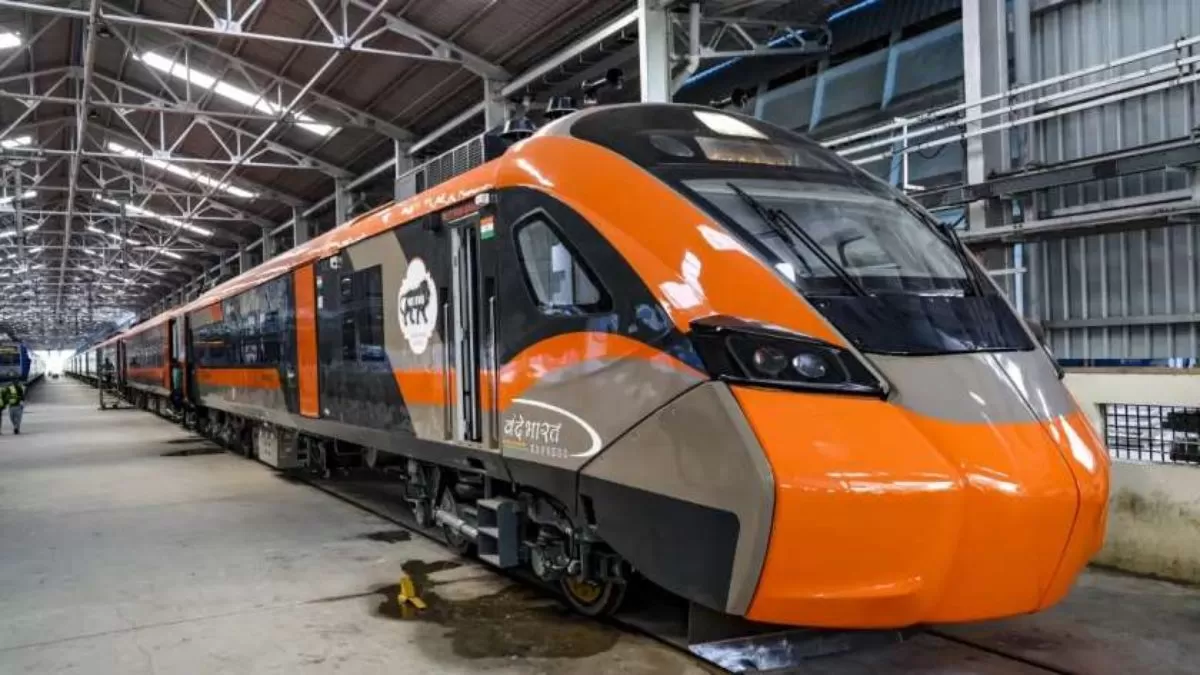
Jodhpur marked a significant leap in modern mobility as the newly approved Vande Bharat trains connecting Jodhpur with Delhi and Jaipur were hailed as a transformative step in strengthening regional connectivity. Officials emphasised that the advanced semi-high-speed service not only fulfils a long-standing public demand but also aligns with India’s larger push for sustainable and efficient urban transport.
The introduction of the Vande Bharat services between Jodhpur–Delhi and Jodhpur–Jaipur is expected to sharply reduce travel time and offer a more comfortable journey for commuters, business travellers, and tourists. Industry experts noted that the upgraded connectivity has the potential to ease pressure on highways, cut down vehicular emissions, and push Rajasthan towards a low-carbon growth pathway. Rail-based travel is already considered one of the most energy-efficient modes of mass mobility, and the Vande Bharat addition reinforces this transition.Beyond rail, infrastructure development in Jodhpur is gaining traction. Officials confirmed that the city’s airport is slated for a modernisation upgrade this year. The expansion is anticipated to improve air traffic handling, strengthen tourism prospects, and serve as a gateway for businesses seeking improved access to Rajasthan’s urban and industrial clusters. Together, these transport investments highlight the government’s integrated focus on multi-modal connectivity to support growth in secondary cities.
Also Watch: An Exclusive Interview with Sanjeev Jaiswal (IAS), CEO MHADA
Political observers pointed out that the approval of new services is not only a response to public demand but also an indicator of the increasing policy priority towards Tier-II cities. By bolstering Jodhpur’s accessibility to Delhi and Jaipur, the initiative is poised to accelerate economic activities ranging from trade to cultural exchange. Experts further stressed that such rail projects should integrate with last-mile green mobility options like electric buses and non-motorised transit to ensure cities evolve sustainably.
While infrastructure advancements are being celebrated, urban planners cautioned that development must be executed with a long-term vision to maintain ecological balance. Investments in modern trains and airport facilities must go hand in hand with strategies for reducing carbon footprints and ensuring inclusivity. For Jodhpur, a city that straddles heritage and modernisation, the real test will be in leveraging such projects to create equitable opportunities for all sections of society.The arrival of Vande Bharat services on the Jodhpur–Delhi and Jodhpur–Jaipur routes is more than a transport milestone; it symbolises Rajasthan’s entry into a new era of connected, sustainable, and aspirational growth.
