


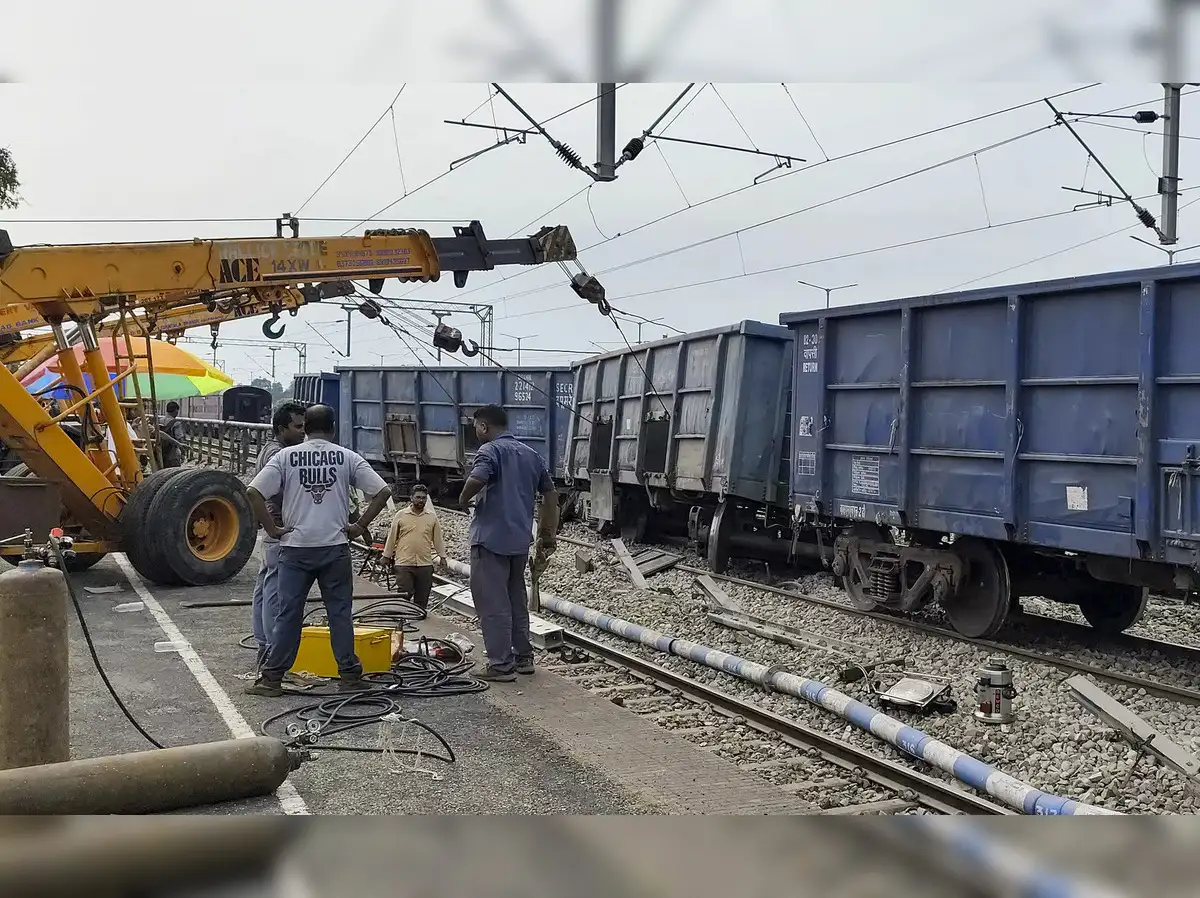
Jharkhand’s vital rail corridor was thrown into disarray in the early hours of Saturday after over 20 wagons from two goods trains derailed near Chandil station in Seraikela-Kharswan district. The incident, which occurred at around 2:45 am, severely disrupted services along the Chandil–Tatanagar section of the South Eastern Railway (SER), a key route for both passenger and freight traffic.
Railway officials confirmed that the derailment blocked both up and down lines, halting all scheduled movements through the section. Emergency teams were dispatched immediately, with restoration work commencing under floodlit conditions. Despite the swift mobilisation, the scale of damage meant that services remained suspended for hours, affecting hundreds of passengers and critical freight consignments. Authorities stated that multiple long-distance passenger trains had to be diverted via alternative routes, while several others were short-terminated or cancelled. Freight operations, particularly the movement of industrial goods and raw materials, also faced substantial delays, adding strain to regional supply chains. The SER has not disclosed a definitive restoration timeline but indicated that normalcy could take several hours to days depending on track repair and safety inspections.
Also Watch: An Exclusive Interview with Sanjeev Jaiswal (IAS), CEO MHADA
While preliminary assessments point towards possible track or mechanical faults, a detailed inquiry has been launched to determine the precise cause. Railway safety experts emphasised the need for comprehensive inspections of rolling stock and track infrastructure, especially on high-load freight routes, to prevent similar incidents. According to them, such derailments not only affect immediate schedules but also carry long-term economic implications by disrupting industrial supply lines. The derailment has also reignited discussions on sustainable and resilient railway infrastructure. Urban mobility planners argue that freight-heavy corridors require continuous monitoring, predictive maintenance technologies, and better weather-proofing of tracks to minimise risks. They further highlight that transitioning towards energy-efficient, low-emission freight locomotives could not only enhance operational safety but also align with India’s commitment to reducing transport-related carbon footprints.
Local communities in affected areas expressed concern over the safety of rail operations, citing past incidents in the region. However, officials assured that stringent safety audits would be conducted before resuming full-scale operations. Meanwhile, stranded passengers were provided with alternate travel arrangements, though delays remained inevitable given the magnitude of the disruption. The South Eastern Railway reiterated its priority on restoring connectivity at the earliest while maintaining rigorous safety protocols. For now, the Chandil–Tatanagar section stands as a stark reminder of the challenges in managing one of the world’s largest and busiest rail networks, where freight and passenger services are intricately interlinked, and where each incident underlines the importance of preventive safety measures and sustainable operational practices.
Also Read: New Delhi Railways Launches Discounted Round Trip Package For Festive Travel
Jharkhand Goods Train Derailment Disrupts Key Rail Route
