


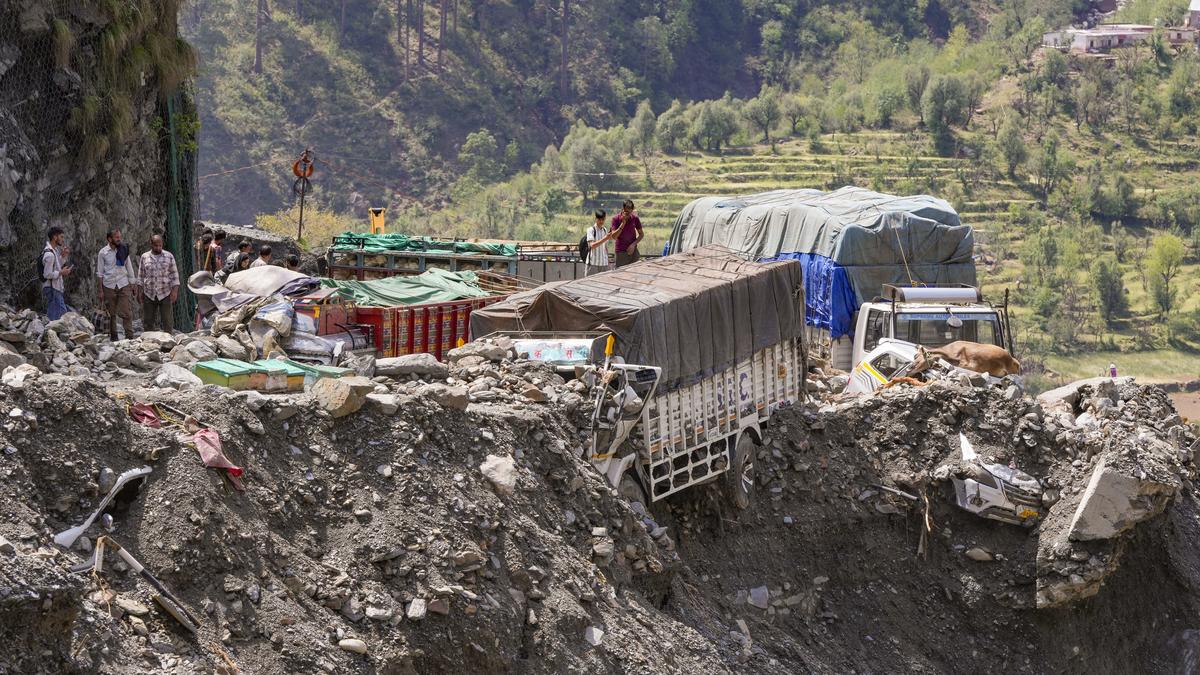
The Jammu-Srinagar National Highway (NH-44), the crucial lifeline connecting the Kashmir Valley to the rest of the country, faced a temporary closure today due to a significant mudslide at Chamba Seri in the Ramban district of Jammu and Kashmir. The
landslide, which occurred during the ongoing rainy weather, caused debris to fall across the highway, blocking the passage for vehicles in both directions. The closure of this vital road has disrupted traffic, particularly for those travelling between Jammu and Srinagar, as NH-44 serves as the primary route for goods and passenger movement between the two regions. The authorities have launched clearance operations, but heavy rains continue to hamper the efforts to restore normal traffic flow. Commuters have been advised to stay updated on the situation via the official traffic police Twitter account, where real-time updates are being provided.
As the region grapples with this disruption, the India Meteorological Department (IMD) has issued a yellow alert for Jammu and Kashmir, warning of thunderstorms and lightning from May 9 to 12. The IMD’s forecast indicates a continuation of adverse weather conditions, including widespread rain and potential hailstorms, across several northern and central states, including Himachal Pradesh, Uttarakhand, and Madhya Pradesh. The warning highlights the urgency for the local government and citizens to prepare for further weather-related disruptions. The elevated risk of such incidents on the Jammu-Srinagar Highway, due to frequent landslides and unstable terrain, underlines the need for improved infrastructure and better weather forecasting systems to mitigate the impact on local communities and economies. The IMD’s prediction of a gradual rise in temperatures by 3 to 5 degrees Celsius across East and Northwest India over the coming days adds another layer of complexity to an already challenging scenario.
In addition to the road closures, the region remains on high alert following escalating tensions along the Line of Control (LoC). Pakistani troops recently engaged in unprovoked ceasefire violations, adding to the stress faced by local authorities and residents. The ongoing military activity, particularly in areas like Kupwara and Baramulla, has further complicated the security and logistical situation in Jammu and Kashmir. For residents of Jammu and Kashmir, the combination of adverse weather conditions and border tensions presents an ongoing challenge. Authorities are urging people to take necessary precautions, both in terms of safety on the roads and preparedness for potential disruptions in daily life due to the unpredictable weather patterns and geopolitical tensions. With a focus on resilience and sustainability, the region’s infrastructure and emergency response systems will need to evolve to meet the growing challenges posed by natural calamities and security concerns.
Read more on:Major safety upgrades on Mumbai Pune Highway to reduce fatal road accidents
Jammu-Srinagar National Highway Blocked by Landslides
