


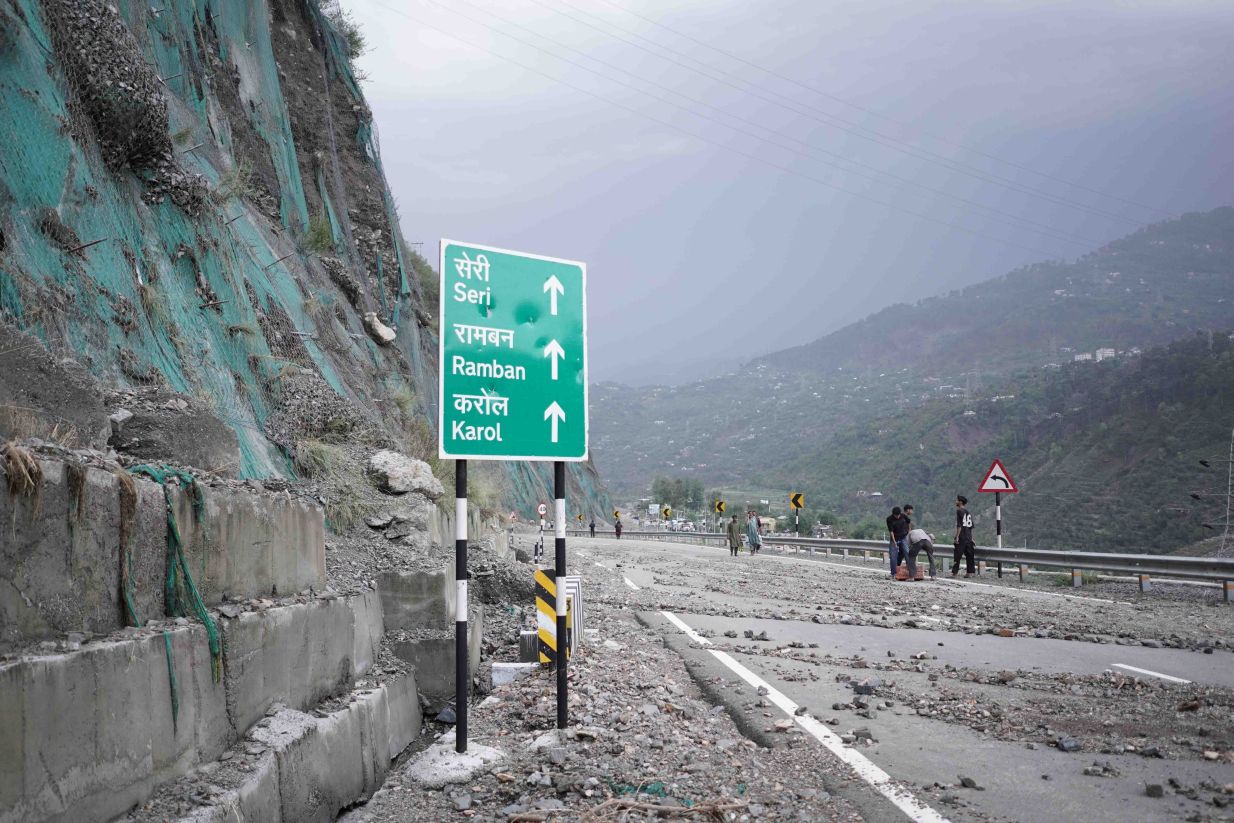
The vital 250-kilometre Jammu-Srinagar National Highway (NH-44), the lifeline connecting the Kashmir Valley to the rest of India, remains impassable due to significant road damage, including a complete road collapse triggered by persistent mudslides in the Ramban district.
This prolonged disruption has resulted in extensive queues of stranded vehicles, notably including numerous trucks carrying essential supplies destined for the Kashmir Valley, raising concerns about potential shortages and economic repercussions for the region. The National Highways Authority of India (NHAI) has initiated restoration efforts, but the timeline for reopening the crucial artery remains uncertain. The severity of the situation is underscored by the complete blockage of the Jammu-Srinagar National Highway (NH-44) following the structural failure of a road segment in the Ramban area. Traffic police officials have issued urgent advisories, cautioning commuters against undertaking any travel on NH-44 until the thoroughfare is declared safe and clear. This precautionary measure highlights the potential dangers posed by the unstable road conditions and the ongoing restoration work. To keep the public informed, authorities have provided a series of contact numbers for the Traffic Control Units (TCUs) in Jammu, Srinagar, Ramban, and Udhampur, urging commuters to verify the road status before commencing their journey.
The prolonged closure of the highway is having a cascading effect, particularly on the movement of essential goods into the Kashmir Valley. Trucks laden with vital supplies, ranging from food and fuel to medicines and other necessities, are currently stranded at various points along the blocked route. This disruption in the supply chain could potentially lead to price hikes and shortages of essential commodities within the valley, impacting the daily lives of residents and the local economy. The economic implications of such prolonged transportation bottlenecks underscore the critical importance of maintaining the integrity and resilience of this key national highway. While the NHAI has mobilised resources for the restoration work, the challenging terrain of the Ramban district, coupled with the unpredictable nature of landslides and mudslides, often complicates and protracts such efforts. The process of clearing debris, repairing the collapsed road segment, and ensuring the long-term stability of the affected stretches requires meticulous engineering assessments and careful execution. The safety of the workers involved in the restoration process is also a paramount concern, further influencing the pace of the repair work.
The recurring vulnerability of the Jammu-Srinagar National Highway to weather-related disruptions, particularly during the monsoon and winter seasons, raises pertinent questions about the long-term sustainability and resilience of this critical infrastructure. The frequent closures not only cause significant inconvenience to commuters and disrupt essential supplies but also have broader economic implications for the region, hindering trade and commerce. This necessitates a re-evaluation of the engineering and construction methodologies employed for this highway, potentially exploring more robust and climate-resilient solutions to mitigate the impact of natural calamities. Investing in advanced slope stabilisation techniques, improving drainage systems along vulnerable stretches, and implementing early warning systems for landslides could be crucial steps in enhancing the highway’s resilience. Furthermore, exploring alternative transportation routes and developing more robust contingency plans for managing traffic flow during such disruptions could help minimise the economic and social impact of these recurring closures. The current situation in Ramban serves as a stark reminder of the need for sustainable and resilient infrastructure development, particularly in regions prone to natural disasters, to ensure uninterrupted connectivity and the well-being of the communities that rely on these vital transportation arteries.
The focus must extend beyond immediate restoration efforts to encompass long-term solutions that can withstand the increasing challenges posed by climate variability and geological instability.
Also Read: Bihar Uttar Pradesh Ganga Bridge Gets Green Light
