


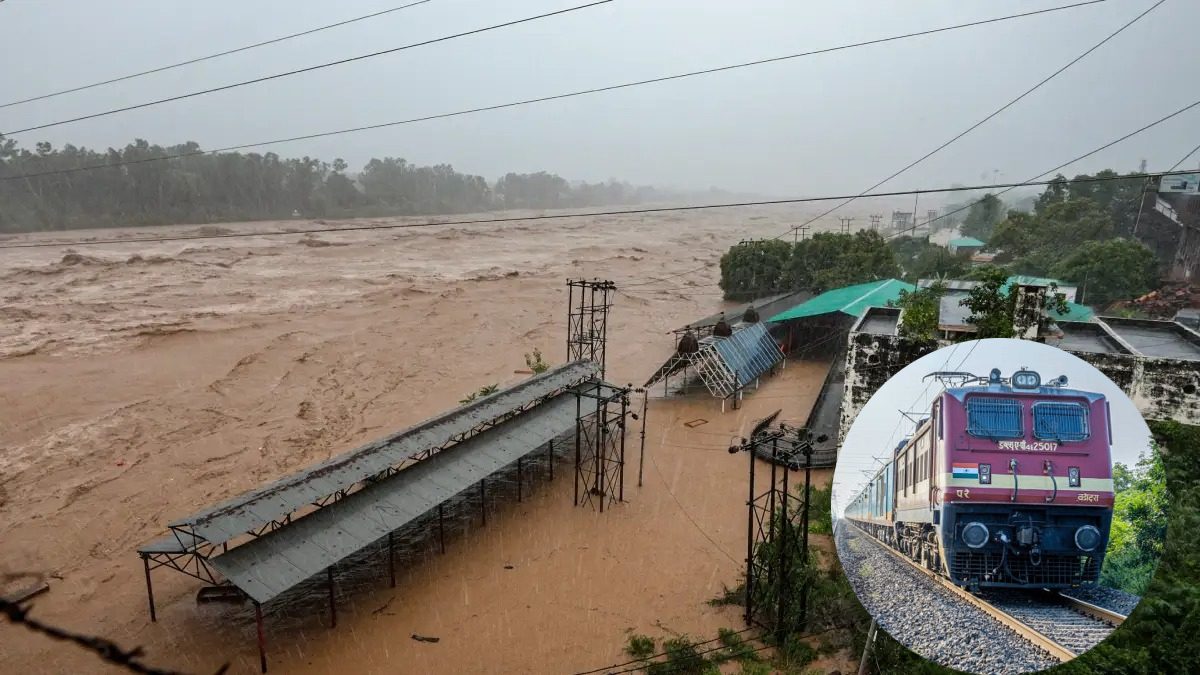
Rail connectivity across North India came under severe strain on Friday as flash floods triggered by torrential rains in Jammu-Pathankot forced the cancellation of 38 trains bound for Shri Mata Vaishno Devi Katra. Among the affected services were high-demand trains including Vande Bharat Express and Shri Shakti Superfast, leaving thousands of passengers stranded and creating a cascading impact on travel routes extending as far as Delhi, Varanasi, and Kolkata.
Officials confirmed that in addition to the cancelled schedules, several trains were either short-terminated or returned midway due to submerged tracks and operational risks. The disruption, which continued from Thursday, highlights the vulnerability of India’s critical transport corridors to extreme weather events that are increasingly frequent due to changing climate patterns.To manage the crisis, railway authorities pressed into service special unreserved trains connecting Varanasi and Delhi, aimed at evacuating passengers stuck at various junctions. However, officials admitted that the ad-hoc measures were insufficient to fully absorb the volume of stranded travellers, as major pilgrim and long-distance routes remained paralysed.
Also Watch: An Exclusive Interview with Sanjeev Jaiswal (IAS), CEO MHADA
The suspension of services has had direct implications for Jammu’s religious tourism economy, particularly the Vaishno Devi shrine, which draws lakhs of visitors annually. Local stakeholders pointed out that disruptions of this scale not only affect passenger convenience but also undermine livelihoods that depend heavily on the region’s tourism inflows. Analysts suggest that unless the rail network is strengthened with climate-resilient infrastructure, such weather-related suspensions will continue to weigh on economic stability.
Across North India, civic and railway engineers are contending with the compounded impact of monsoon flooding on both passenger and freight services. In addition to the Jammu-Pathankot corridor, routes connecting Punjab, Uttar Pradesh, West Bengal, and Maharashtra reported operational halts or diversions. Railway experts noted that flash floods pose a particular challenge because of their sudden onset, leaving little scope for preventive action apart from long-term structural redesign.
The crisis has reignited conversations around India’s preparedness to safeguard transport lifelines in an era of intensified monsoons. Transport planners argue that investment in elevated tracks, smart drainage, and predictive weather-linked operational protocols is no longer optional but essential. Without such systemic reforms, the economic costs of service breakdowns ranging from lost productivity to reduced tourism revenue could escalate.As of Friday evening, authorities stated that services would remain curtailed until water recedes and safety checks are complete. The restoration timeline remains uncertain, and officials urged passengers to check advisories before undertaking travel.
