


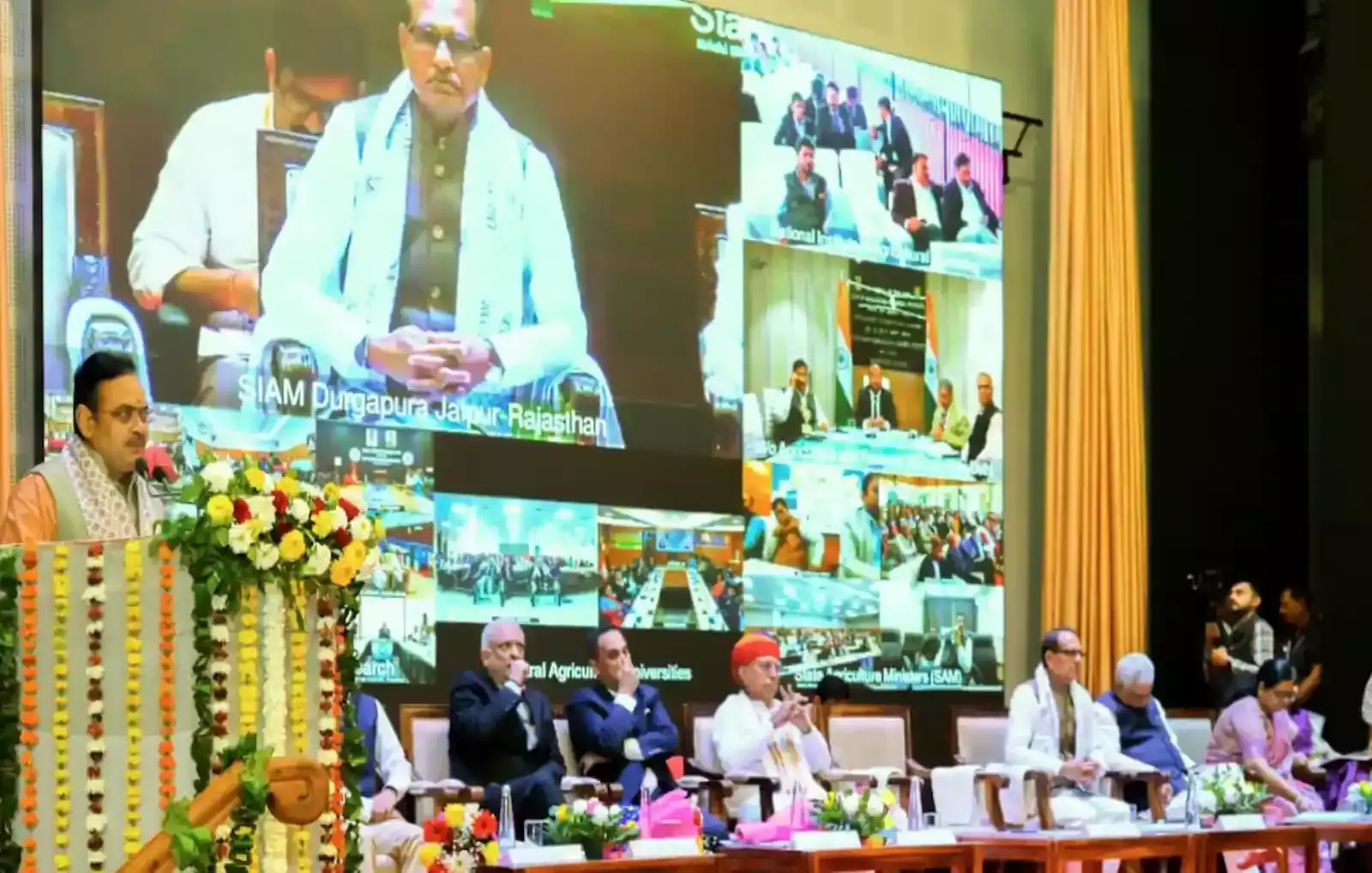
Jaipur is set to become the launchpad for a new artificial intelligence-driven agricultural platform aimed at transforming how farmers access extension services, market information and advisory support across India.
The Union Ministry of Agriculture and Farmers’ Welfare has chosen the Rajasthan capital as the venue to roll out Bharat Vistaar — a digital ecosystem designed to modernise agronomic practices, improve productivity and strengthen rural livelihoods through data-enabled decision-making. The platform leverages AI tools to synthesise crop data, weather forecasts, soil health insights and market price signals, providing farmers with tailored recommendations on crop planning, pest management and resource optimisation. Officials say this marks a shift from traditional extension models toward a technology-mediated service architecture, which could be particularly transformative for small and marginal farmers who have historically faced information gaps and structural barriers to adopting best practices.
Agriculture remains central to India’s socio-economic landscape, employing a significant share of the workforce and sustaining rural economies. Yet productivity constraints, climate variability and fragmented value chains continue to hinder sectoral growth. By situating the launch in Jaipur, policymakers signal a strategic focus on bridging the rural-urban digital divide and fostering innovation hubs outside traditional tech corridors. The choice also reflects Rajasthan’s evolving role in agritech experimentation, given recent pilot programmes in precision irrigation and crop forecasting technologies. Analysts highlight that AI-based platforms like Bharat Vistaar can expedite the diffusion of climate-smart agriculture, enabling farmers to make anticipatory decisions in the face of erratic weather patterns and water scarcity. For example, real-time insights can guide the timing of sowing, irrigation scheduling and input application — interventions that collectively reduce risk, conserve resources and enhance resilience. In states like Rajasthan, where rainfall variability and heat stress are entrenched climatic challenges, such digital guidance could complement on-ground extension services.
Urban planners note that the Jaipur launch also raises questions about digital infrastructure readiness in rural hinterlands. Farmers’ ability to benefit from AI tools is contingent on reliable connectivity, local language interfaces and supportive training networks. This underscores a broader urban-rural infrastructure imperative: building networks and human capital bridges that ensure technological innovations do not widen existing inequities. The platform’s rollout is slated to be accompanied by capacity-building initiatives, including farmer training camps and linkages with local agrarian institutions. Officials are emphasising partnerships with state agriculture departments and cooperatives to embed the digital service within ground-level support ecosystems. Such integration is vital when scaling digital solutions across diverse agro-ecological contexts and fragmented landholding patterns.
In economic terms, Bharat Vistaar could streamline market linkages by aggregating real-time price data from multiple mandis and direct procurement channels, enabling farmers to make more informed sales decisions. This has potential implications for rural incomes and urban food systems alike, as greater price transparency and efficiency can lower transaction costs and stabilise supply chains that feed urban markets. However, the success of AI-enabled agricultural platforms will depend on iterative feedback mechanisms, data governance safeguards and accountability frameworks that protect farmers’ interests and ensure equitable access. Safeguards around data privacy, algorithmic bias and platform interoperability will be critical as digital agriculture moves from pilot to scale.
As Jaipur prepares to host the launch of Bharat Vistaar, stakeholders from government, industry and civil society will be watching early adoption outcomes closely. The initiative has the potential to set a benchmark for how digital tools can be harnessed to drive inclusive agricultural transformation, strengthen rural resilience and link farm-gate productivity with broader economic opportunity.
Also Read: Chandigarh Metro Project Delay Raises Urban Risk
Jaipur to Host Launch of Bharat Vistaar for Farmers
