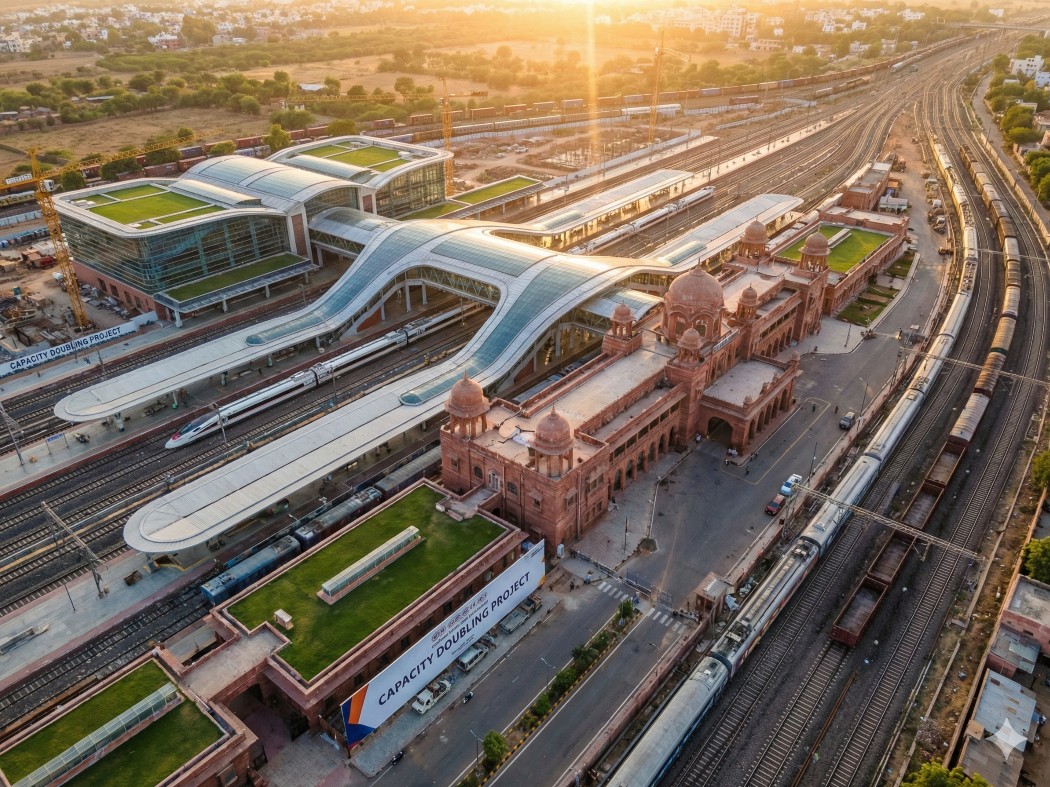
Jaipur rail update eases interchange for Bundelkhand passengers
A revised timetable at Jaipur Junction is expected to ease train interchanges for passengers travelling between Rajasthan and Bundelkhand, after railway authorities advanced the arrival of the Khajuraho Udaipur Express by around 10 minutes.
The change aims to remove schedule overlap with another long-distance train and improve passenger transfers at one of North India’s busiest rail hubs. The schedule revision affects the daily service linking Khajuraho in Madhya Pradesh with Udaipur in Rajasthan, a route that covers roughly 1,090 kilometres and connects several tourism and economic centres across northern and western India. The train typically departs Khajuraho at about 09:25 and reaches Udaipur the following morning after travelling through multiple states.
Railway officials indicated that the adjustment was introduced after operational reviews showed that two trains were arriving at Jaipur around the same time, creating congestion on platforms and complicating transfers for passengers heading toward desert tourism destinations in western Rajasthan. By staggering arrival times, the railway network expects smoother passenger movement and fewer delays in the evening traffic window at the station. Jaipur Junction acts as a crucial interchange for northern India’s rail corridors, linking Delhi, Rajasthan, Bundelkhand, and parts of central India. Even small timetable adjustments can therefore influence passenger flows across multiple routes. Urban mobility experts note that managing interchange efficiency at major stations is increasingly important as intercity rail travel continues to grow.
For travellers, the revised Khajuraho Udaipur Express schedule is expected to make train changes less stressful, particularly for passengers connecting to long-distance services heading towards western Rajasthan. In earlier arrangements, trains arriving simultaneously created crowding on platforms and reduced the margin of time available for travellers moving between services. The route itself serves a diverse passenger base, including tourists visiting Khajuraho’s UNESCO-listed temples, residents commuting between regional cities, and travellers accessing Rajasthan’s heritage tourism circuit through Udaipur and Jaipur. Improved coordination between trains could therefore support both tourism and regional mobility.
Urban planners often highlight the role of efficient rail scheduling in reducing dependence on road travel between cities. When long-distance train connections align better at interchange stations, they make rail a more reliable and climate-efficient alternative for intercity journeys. Railway officials say timetable adjustments are part of a broader effort to optimise operations on high-traffic corridors while improving passenger convenience. As rail networks handle rising demand across tourism and economic corridors, small operational changes—such as the updated Khajuraho Udaipur Express timing—can have a significant impact on travel reliability and station management.
With Jaipur continuing to expand as a transport gateway for Rajasthan, further timetable refinements and infrastructure upgrades are expected to remain part of the railway system’s strategy to support growing mobility needs across northern India.