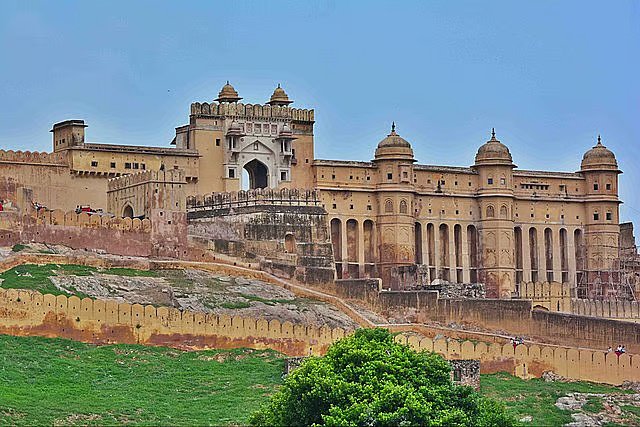
JAIPUR — The Walled City of Jaipur, a UNESCO World Heritage Site since 2019, is under intensified international scrutiny as global heritage authorities raise concerns over conservation lapses and unauthorised development, placing the city’s prestigious designation at risk unless corrective action is taken by the end of 2026.
The situation has widened debate about how heritage protection can be balanced with urban growth pressures in one of India’s fastest-evolving historic urban centres. The United Nations Educational, Scientific and Cultural Organization (UNESCO) has flagged demolition, encroachment and construction activities within the Walled City’s core and buffer zones — areas that contain historic gates, traditional markets and architectural ensembles integral to the city’s Outstanding Universal Value. The World Heritage Centre reiterated that authorities must respond with a comprehensive State of Conservation report by December 2026, a deadline that will determine whether Jaipur’s World Heritage status is maintained, placed on a heightened risk list, or ultimately jeopardised. At the heart of UNESCO’s concern are ongoing redevelopment projects that, while aimed at modernising infrastructure and improving urban services, have proceeded with questionable compliance to heritage impact assessments and conservation norms.
Notable areas cited in reports include redevelopment works near historic precincts and infrastructure expansions that intersect with the traditional fabric of the Pink City. Heritage experts stress that the Walled City’s value lies not just in isolated monuments but in its integrated ensemble — the grid-iron urban plan conceived in the early 18th century that gives Jaipur its cultural, spatial and social identity. Over the past decades, the number of traditional havelis — historic residential structures — has fallen sharply due to neglect, demolition and insensitive alterations, weakening the continuity of the historic streetscape. UNESCO has signalled that such attrition can erode the authenticity required for World Heritage status. The mechanism UNESCO may use if concerns persist is Reactive Monitoring, a process where a World Heritage Site is monitored more closely and potentially placed on the List of World Heritage in Danger. Placement on this list does not immediately strip a site of its designation but signals urgent corrective action.
Only a handful of sites globally have been fully delisted; strict monitoring and ambitious remediation are typically required long before that outcome. These developments come at a time when Jaipur is redefining its urban future, simultaneously managing tourism growth, infrastructure expansion and civic services. City planners and conservationists argue that integrated heritage management — with clear enforcement of building controls, community participation and adaptive reuse frameworks — is key to ensuring that urban growth does not compromise cultural legacy or tourism economy. Local authorities have responded by submitting interim reports and progressing a Special Area Heritage Plan aimed at harmonising development with conservation priorities. Yet critics maintain that plan execution and regulatory enforcement must accelerate to meet UNESCO’s expectations and avoid formal reactive monitoring.
For Jaipur — a city whose appeal as a global destination is deeply rooted in its historic fabric — the next two years will be decisive. Aligning urban planning with heritage conservation norms will not only determine its status on the World Heritage List, but also how the city reconciles living heritage with dynamic growth pressures.