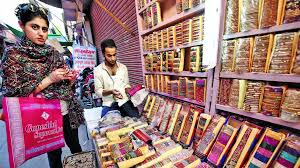
Jaipur Handicraft Exports Face Gulf Shipping Disruption
A sudden halt in shipments to Gulf markets has disrupted export supply chains for several of Rajasthan’s traditional industries, highlighting the vulnerability of regional trade networks to geopolitical shocks.
Exporters across cities such as Jaipur, Jodhpur and Kishangarh report that consignments of mehndi, dimensional stones, handicrafts and garments are currently being held back as shipping services to the Gulf face operational disruptions. Industry representatives say the slowdown in the Rajasthan exports disruption began after escalating tensions in the Middle East created uncertainty in maritime logistics routes connecting Indian ports with Gulf countries. Shipping lines serving the region are either operating irregularly or temporarily suspending certain routes, forcing exporters to delay deliveries that were ready for dispatch.
The Gulf region is among the most significant overseas markets for Rajasthan’s artisanal and mineral-based products. Trade estimates suggest exports from the state to Gulf countries generate roughly ₹10,000 crore annually and account for about a tenth of Rajasthan’s overall export value. The pause in shipments therefore has immediate implications for exporters, logistics operators and thousands of workers across supply chains linked to manufacturing and handicrafts. For cities like Jaipur and Jodhpur, the Rajasthan exports disruption extends beyond trade numbers. The handicraft sector in these cities supports large clusters of artisans producing decorative metalwork, textiles, home décor items and traditional crafts that are widely exported to West Asian markets. When shipments slow, production schedules across workshops and small factories are often forced to adjust.
Similarly, the state’s natural resource–based industries are also exposed to fluctuations in global trade conditions. Kishangarh, one of India’s largest marble and granite processing centres, relies heavily on export orders, while Sojat’s mehndi processing industry has long supplied international cosmetic and cultural markets. With shipments delayed, warehouses across several cities are reportedly filling with unsent goods awaiting transport. Exporters say buyers in Gulf markets have started postponing delivery timelines until logistical clarity improves. The uncertainty is affecting not only current shipments but also future purchase decisions, as importers remain cautious about committing to orders that could face delays in transit.
Trade analysts note that such disruptions underline the interconnected nature of global supply chains, where geopolitical events can quickly ripple into local economies. For regions like Rajasthan, whose exports include both traditional crafts and mineral products, maintaining reliable logistics links with overseas markets is crucial for sustaining employment and economic stability. The situation also highlights the importance of diversifying export markets and strengthening logistics infrastructure at Indian ports. Improved cargo handling, alternative shipping routes and expanded air freight capacity could help exporters mitigate disruptions when global trade routes face uncertainty.
For now, exporters across Rajasthan are monitoring developments in the region and maintaining communication with overseas buyers. While industry leaders remain hopeful that shipping operations will stabilise soon, prolonged disruption could affect production cycles, artisan livelihoods and trade revenues tied to the state’s heritage industries.