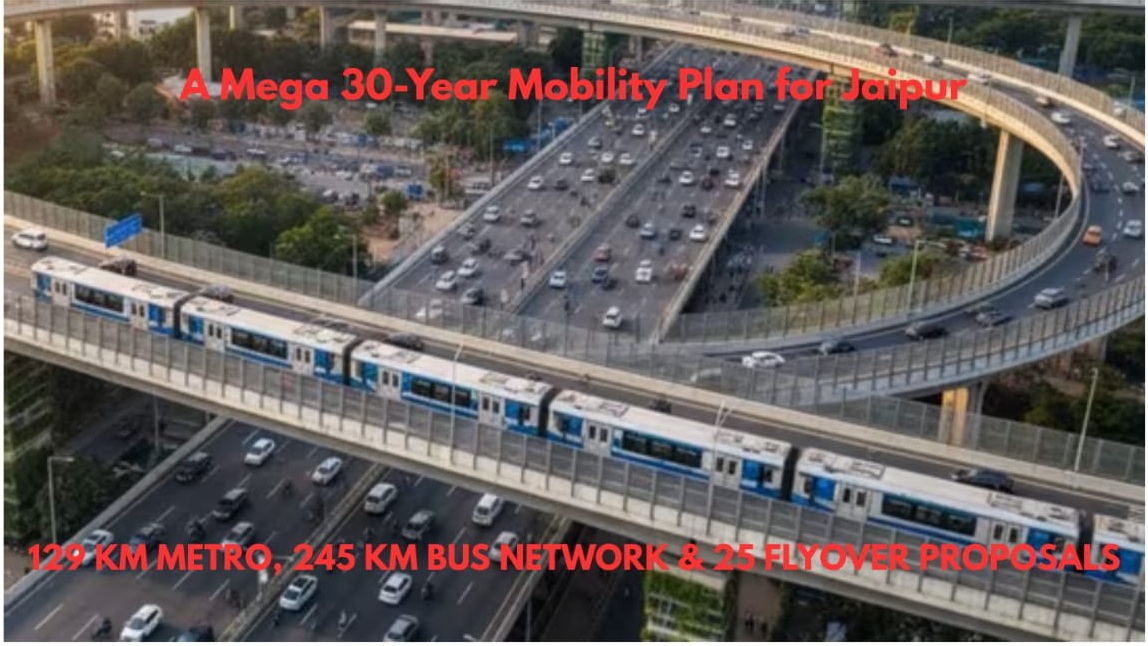
JAIPUR — The Jaipur Development Authority (JDA) has extended the deadline for public feedback on its draft city mobility plan, reflecting the evolving expectations of citizens, urban planners and transport stakeholders as the city seeks sustainable solutions to growing traffic and connectivity challenges.
The extension highlights both the complexity of urban mobility reforms and the administration’s effort to ensure inclusive participation in shaping Jaipur’s transport future. The draft mobility plan — encompassing proposals on road redesign, non-motorised transport infrastructure, public transit enhancements and traffic management strategies — was originally open for review until late March. The JDA’s decision to push the feedback window into April comes amid requests from resident groups and professional bodies for more time to examine technical details and suggest context-sensitive amendments. In doing so, the authority aims to incorporate broader civic insight into a document that will influence investment decisions and regulatory priorities for the next decade. Jaipur’s transport systems are under growing strain. Rapid urban expansion, rising private vehicle ownership and expanding peri-urban settlements have compounded congestion on arterial corridors such as Ajmer Road, MI Road and Tonk Road.
Urban planners emphasise that a comprehensive mobility framework must balance multiple, often competing, objectives: reducing travel times, improving road safety, expanding affordable transit options and lowering transport-related emissions. Several civic organisations and transport experts had petitioned for more time to dissect the draft plan’s provisions on bus priority lanes, pedestrianised zones and bicycle networks. These groups argue that mobility planning should not only address current traffic bottlenecks but also anticipate future growth patterns and climate-resilience needs. The extended review period, they contend, allows for deeper engagement with technical data and models that project traffic flows and infrastructure demand. The inclusion of active mobility — walking and cycling — is especially significant in a city with heritage precincts and densely spaced neighbourhoods. Advocates note that safe, segregated walking and cycling infrastructure can reduce short-distance car trips, ease pressure on main roads and cut vehicular pollution — outcomes aligned with Jaipur’s sustainability goals and national urban transport missions.
Allowing additional time for civil society input is seen as a step toward designing context-responsive networks that support both daily commuters and recreational users. Officials from the JDA have reiterated that the draft plan will be revised in light of substantive comments before being forwarded to state authorities for final approval. The authority has also scheduled a series of zonal consultations, where planners and citizens can interact directly on priorities such as parking norms, road hierarchy, pedestrian crossings and integration with regional transit networks. Extending the mobil ity plan review signals a shift away from top-down planning toward a more deliberative process, one that acknowledges that sustainable mobility must be co-designed with those who live, work and move within the city. For Jaipur — a historic city undergoing rapid transformation — the quality of its next mobility blueprint will influence everything from air quality and road safety to equitable access to jobs and services.
As the consultation window widens, stakeholders and experts will be watching how this collaborative planning process shapes infrastructure investment choices and governance mechanisms, ensuring that Jaipur’s transport future is both inclusive and forward-looking.