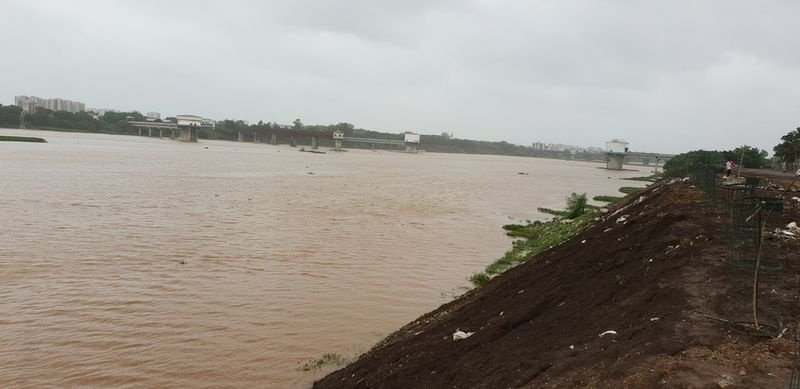
Jaipur Elevated Corridor Along Dravyavati River Gains Momentum
Jaipur’s transport planning strategy is being reshaped once again as the city development authority begins work on a proposal to build a long elevated traffic corridor above the Dravyavati River channel — a project that could become one of the most ambitious urban mobility interventions in the state capital. The authority has already approved funds for preparing a detailed project report to examine the feasibility of constructing the elevated corridor along the rejuvenated river stretch.
Preliminary assessments suggest that the structure could run across much of the 47-kilometre river channel, connecting major traffic corridors and easing congestion in rapidly expanding parts of the city. Urban planners say the choice of location reflects a broader shift in how growing cities are using riverfront land to solve mobility problems while minimising large-scale land acquisition. Officials involved in the project have indicated that the riverbanks are wide enough in several stretches to support elevated construction without significant displacement, which has historically been one of the biggest barriers to new road infrastructure in dense urban areas. The proposal also builds on the earlier Dravyavati river rejuvenation programme, which involved sewage-treatment plants, green corridors, and public spaces along the river. By placing a transport corridor above the channel rather than expanding roads on the ground, the city appears to be attempting a hybrid approach — combining mobility infrastructure with existing riverfront redevelopment efforts.
Traffic congestion has become one of the biggest urban challenges in Jaipur in recent years, particularly along routes connecting the airport, Jagatpura, Tonk Road, and emerging residential zones on the city’s southern and eastern edges. Officials say the elevated corridor is being examined as a long-term solution rather than a short-term traffic fix, with the final alignment and cost expected to be determined after the feasibility study is completed. From an urban-development perspective, the project highlights a wider shift in infrastructure planning in tier-two cities. Instead of building isolated flyovers, authorities are now considering corridor-level projects designed to handle future traffic demand while supporting long-term urban expansion. Similar plans approved recently by the city development authority — including land-pooling schemes and new road corridors — suggest that the city’s master plan is gradually moving toward more integrated transport networks.
At the same time, the proposal also raises important environmental and planning questions. The Dravyavati River was restored only a few years ago as part of a major urban-renewal project, and environmental experts say any new construction along the river must ensure that storm-water flow, flood safety, and green-corridor development are not compromised. Earlier reports have already pointed to pollution challenges in parts of the river, underscoring the need for careful planning before major infrastructure is introduced. The project is still in the early stages, but its scale makes it significant. If the feasibility report supports the plan and construction moves forward, the elevated corridor could reshape traffic movement across large parts of Jaipur while also influencing future real-estate growth along the river corridor.
The next phase will depend on how the proposal balances two competing priorities — faster mobility and environmentally responsible urban development. How the city manages that balance could determine whether the project becomes a model for climate-resilient transport planning or simply another large infrastructure experiment.