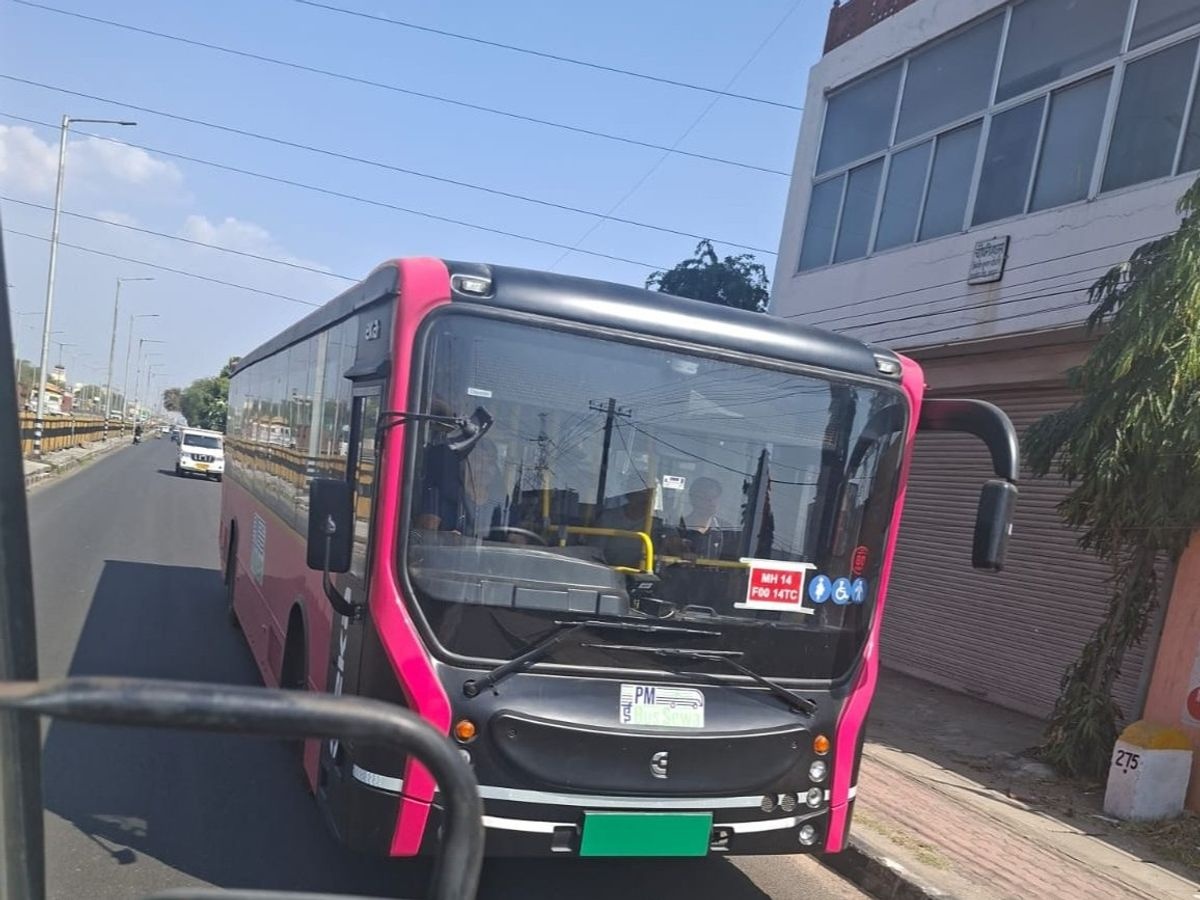
Jaipur Electric Buses Trial Begins For Cleaner Mobility
Jaipur has initiated trial runs of air-conditioned electric buses, marking a significant step towards transitioning its public transport system to cleaner mobility solutions. The pilot, led by the city’s transport utility, aims to assess operational readiness before scaling up deployment, with over 300 electric buses expected to be inducted in the coming months. The move is seen as critical for reducing urban emissions while maintaining service continuity amid an ageing fleet. The trials involve both 9-metre and 12-metre electric buses operating across key city corridors to evaluate performance under real traffic conditions. Transport officials indicate that parameters such as battery efficiency, charging turnaround time, passenger load handling and onboard comfort are being closely monitored. The outcome of this assessment will determine the timeline for full-scale commercial operations.
The introduction of Jaipur electric buses comes at a time when the city’s existing fleet is undergoing phased retirement. A significant portion of conventional buses is scheduled to be decommissioned by 2026, with further reductions planned by 2028. This transition has previously resulted in route disruptions, highlighting the urgency of timely fleet replacement to sustain urban mobility networks. Officials overseeing the programme state that the electric buses are being deployed under a national scheme aimed at accelerating adoption of zero-emission public transport. Jaipur is expected to receive buses in multiple phases, with depot-level infrastructure already being upgraded to support charging and maintenance requirements. Facilities at key depots are being adapted to accommodate the new fleet, including provisions for high-capacity charging systems. Urban mobility experts note that the Jaipur electric buses initiative aligns with broader efforts to decarbonise city transport systems, which are a major contributor to urban air pollution. Electric buses offer the dual advantage of reducing tailpipe emissions and lowering noise pollution, particularly in densely populated corridors.
However, experts caution that long-term success will depend on reliable charging infrastructure and route optimisation. The transition also carries implications for city planning and real estate development. Improved and cleaner public transport systems can enhance accessibility, support transit-oriented development and reduce dependence on private vehicles. This, in turn, can influence land use patterns and improve liveability in emerging urban clusters. At a strategic level, Jaipur’s mobility blueprint anticipates substantial population growth in the coming decades, requiring a significant expansion of bus-based transit corridors. Planners emphasise that integrating electric buses into this framework will be essential to meeting future demand while adhering to climate goals. While the current trials are limited in scale, they represent a foundational shift in how Jaipur approaches public transport.
The focus now will be on ensuring that Jaipur electric buses can operate efficiently at scale without service gaps or operational bottlenecks. As cities across India accelerate their transition to low-carbon mobility, Jaipur’s experience will be closely watched for lessons on infrastructure readiness, financial viability and passenger adoption in the electric public transport ecosystem.