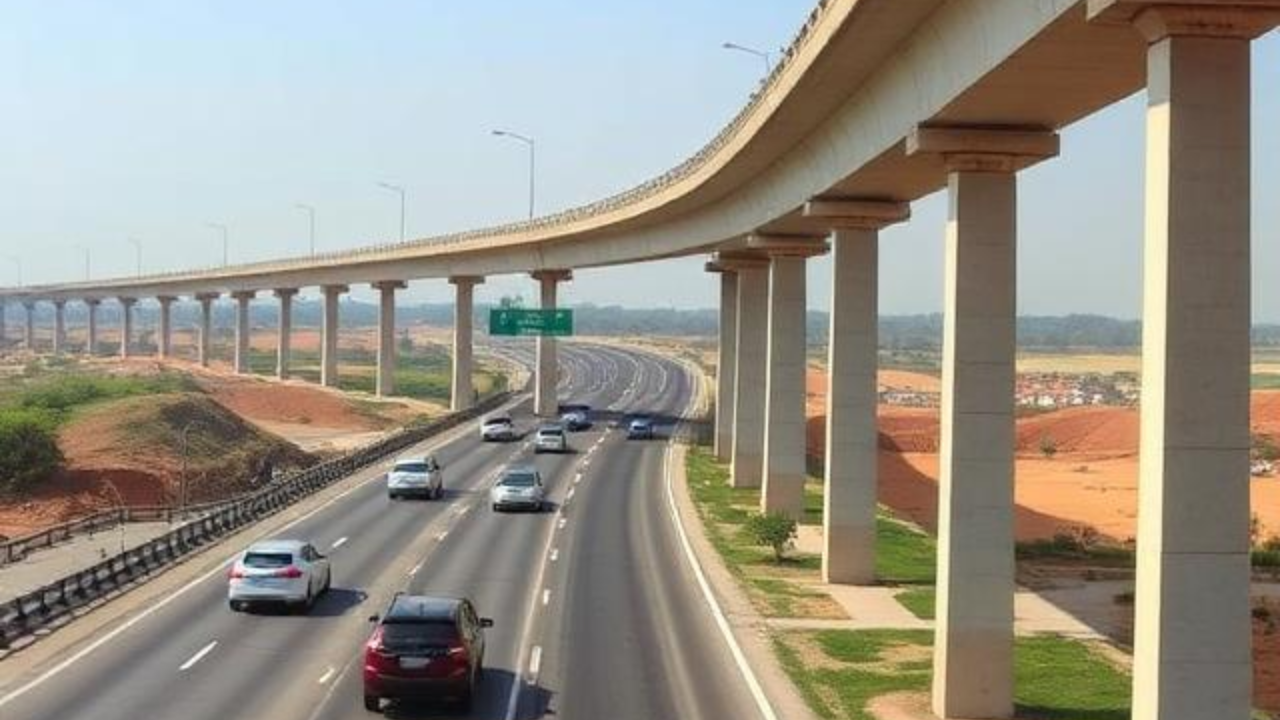
The National Highways Authority of India (NHAI) is on course to significantly cut travel time between Delhi and Jaipur by commissioning six new flyovers and related grade-separation structures along National Highway 48, transforming mobility on one of North India’s most important inter-city corridors.
The upgrades, due for operationalisation by late March, aim to reduce journey time to roughly 4.5–5 hours — a notable improvement on the current five-plus hours — and enhance safety and logistical continuity along the route. The NH-48 stretch through Kotputli, Behror, Dahmi and other key nodes has long been plagued by frequent bottlenecks, signalised intersections and at-grade crossings that constrain vehicle speeds and elevate accident risks. By replacing these friction points with flyovers and underpasses, the NHAI’s phased infrastructure programme is designed to support uninterrupted high-speed travel for private vehicles, freight carriers and inter-city buses alike. Once six of the planned nine major structures are commissioned by March 31, motorists should notice a marked improvement in traffic fluidity, especially during peak holiday and weekend movement periods that characterise this gateway to Rajasthan’s tourism and business centres.
The advanced flyovers at Kotputli, Behror and Dahmi are already in place, while additional bridges and service ramps at strategic junctions such as Bawal and Shahpura are nearing completion. Road transport analysts underscore the broader implications for regional mobility and economic integration. The Delhi–Jaipur axis is more than a tourism route; it functions as a commercial artery linking the national capital’s manufacturing and service hubs with Rajasthan’s urban and semi-urban markets. Reducing travel time strengthens logistics efficiencies for freight movements, making supply chains more predictable and lowering transit costs — a key consideration for industries relying on just-in-time delivery models. The highway enhancements also dovetail with national infrastructure objectives to improve road safety and reduce carbon emissions. By eliminating stop-and-go congestion, the upgraded NH-48 alignment can moderate fuel consumption and reduce vehicular emissions per trip — a small but measurable step toward cleaner, more efficient shared mobility within India’s broader climate resilience agenda. However, experts caution that engineered improvements must be matched with enforcement on speed, vehicle standards and emergency response systems to realise full sustainability dividends.
The competitive landscape of northern India’s road networks is evolving. Parallel initiatives — including the under-construction Delhi–Jaipur Super Expressway and the Bandikui spur from the Delhi-Mumbai Expressway — promise even more dramatic travel time reductions once completed. These corridors, planned with access-controlled designs, are expected to further compress journey times to potentially under four hours between Delhi and Jaipur when fully operational. Urban and regional planners note that improved long-distance connectivity fuels growth beyond transportation alone. Enhanced highways can stimulate real estate demand in peri-urban zones, accelerate tourism-linked investments and expand labour markets by enabling longer daily commutes. For Jaipur, better linkages with Delhi and other northern economic nodes can diversify the urban economy and attract new investment into sectors such as logistics, hospitality and advanced services.
As the flyovers come online and NH-48’s performance improves, authorities will need to integrate these gains with local last-mile connectivity enhancements, public transit options and road safety outreach to ensure that mobility gains benefit the widest spectrum of road users. The coming months will reveal how operational improvements translate into economic and social benefits for millions traversing this vital corridor.