


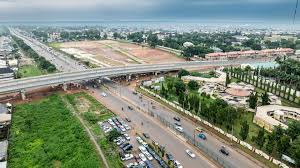
The Union Budget 2026–27 has placed infrastructure at the centre of India’s economic strategy, setting the stage for a structural shift in how and where real estate growth unfolds over the next decade. Rather than acting as a short-term stimulus, the Budget’s emphasis on long-horizon capital spending and regional planning is expected to reshape urban development patterns well beyond the country’s largest metros.
With a capital expenditure allocation of Rs 12.2 lakh crore, the government has reinforced its commitment to transport networks, urban utilities and connectivity-driven growth. For the real estate sector, this translates into greater predictability around project viability, timelines and long-term demand key variables that influence both residential and commercial development decisions. One of the most consequential announcements is the rollout of City Economic Regions, supported by a Rs 5,000 crore corpus per region over five years. By extending this framework to Tier-2 and Tier-3 cities, including temple towns, the Budget signals a move away from metro-centric urbanisation towards a more distributed growth model. Developers and planners say this approach could help smaller cities evolve into self-sustaining economic hubs rather than dormitory towns dependent on larger urban centres. Improved road networks, high-speed rail corridors and upgraded urban infrastructure are expected to unlock new development corridors that were previously constrained by weak connectivity. Historically, real estate growth has closely followed infrastructure investment, and the current policy framework seeks to institutionalise that linkage rather than rely on sporadic announcements.
Another notable development is the introduction of the Infrastructure Risk Guarantee Fund, aimed at reducing execution and financing risks for long-gestation projects. By improving lender confidence, the mechanism could accelerate project completion and encourage private participation, particularly in urban redevelopment and large-scale commercial assets. Market participants believe this may also improve asset quality by allowing developers to focus on planning and execution rather than short-term liquidity pressures. The Budget’s measures also strengthen the financial ecosystem supporting real estate. Steps related to REITs and asset monetisation are expected to improve capital circulation, enabling developers to recycle capital and investors to access stabilized assets. Over time, this could lead to a more institutional and transparent real estate market across city tiers. Beyond property markets, the infrastructure-led approach has broader urban implications. Integrated planning of transport, utilities and public amenities can support more compact, efficient cities while generating employment across construction, logistics and allied services. This alignment between physical infrastructure and real estate development is increasingly seen as essential for sustainable urban growth.
As infrastructure investment expands geographically, real estate demand is likely to follow a similar trajectory. The Budget, therefore, may be remembered less for headline announcements and more for quietly resetting the foundations of India’s next real estate cycle one that is wider in reach, steadier in pace and more closely tied to long-term economic planning.
Also Read: Jabil Expands Pune Industrial Footprint
Infrastructure Push Redraws India’s Real Estate Map
