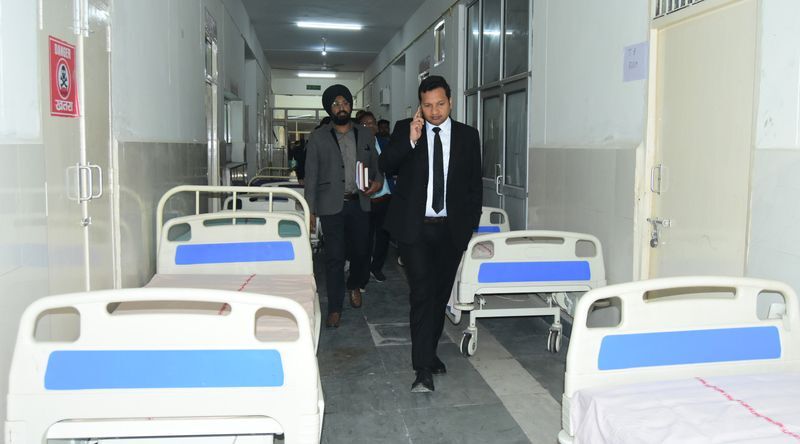
Infrastructure in Rohtak Hospital Unused Amid Funding Gap
A state-of-the-art cancer diagnostics and treatment centre at the Pandit Bhagwat Dayal Sharma Post Graduate Institute of Medical Sciences (PGIMS), Rohtak — built to offer high-end oncology services — has remained largely non-functional for three years due to delays in financial approvals and equipment procurement, leaving patients to travel to distant private hospitals for critical care.
Completed in 2025 after more than ₹100 crore was spent on building infrastructure and preparatory works, the facility was designed to house advanced diagnostic and treatment technologies including PET scans, bone marrow transplants and linear accelerators. However, without formal clearance and release of additional funds required to purchase key machines and operational supplies, none of the major oncology equipment has been installed to date. Officials involved in the project told reporters that around ₹36.8 crore extra is needed to fully operationalise the centre — covering items such as an electrical substation, CT simulator and a LINAC radiotherapy system — but the state government has yet to sanction or issue these allocations. Healthcare administrators and medical directors have repeatedly petitioned for budget approval, signalling an impasse between institutional readiness and funding disbursement.
For patients in Rohtak and surrounding districts, the absence of local cancer care infrastructure exacerbates both clinical and economic burdens. Many are forced to seek cancer diagnostics and radiotherapy in private clinics in Delhi and Gurugram, where costs can be several times higher and travel logistics add time, stress and expense for families already coping with serious illness. Local residents cited in the reporting described choosing delayed or compromised care due to the lack of affordable, nearby services. Healthcare planners argue that the dormant facility highlights a broader systemic gap between capacity creation and service delivery in public hospital infrastructure. While physical infrastructure often gets built under flagship schemes, operationalisation — requiring specialised equipment, trained personnel and recurrent funding — frequently lags, undermining the potential for inclusive, city-region health systems to curb out-of-pocket expenditure on critical care. This inefficiency is echoed in other audits of health infrastructure across India that have flagged delays in procurement and non-functional facilities.
In response to questions, the Haryana Health Minister acknowledged that some equipment — such as a LINAC and CT simulator — is in various stages of procurement through corporate social responsibility funding and state medical services, while PET-CT budget approvals are under consideration by the State Finance Commission. Officials expressed optimism that needed funds and machines would arrive by the first half of 2026, enabling the facility to begin offering full cancer care for the first time. Public health experts note that operationalising such facilities could dramatically improve early detection and treatment of malignancies — particularly for economically weaker groups — by reducing dependence on expensive private care. Models from statewide initiatives in Haryana show progress in decentralising cancer care through day-care centres, chemotherapy units and screening centres in district hospitals
However, the delay in Rohtak underscores a persistent disconnect between capital expenditure on health infrastructure and budgetary flows for service delivery — a challenge that health planners say needs systematic reforms in planning, financing and execution to ensure critical facilities do not remain idle after construction.