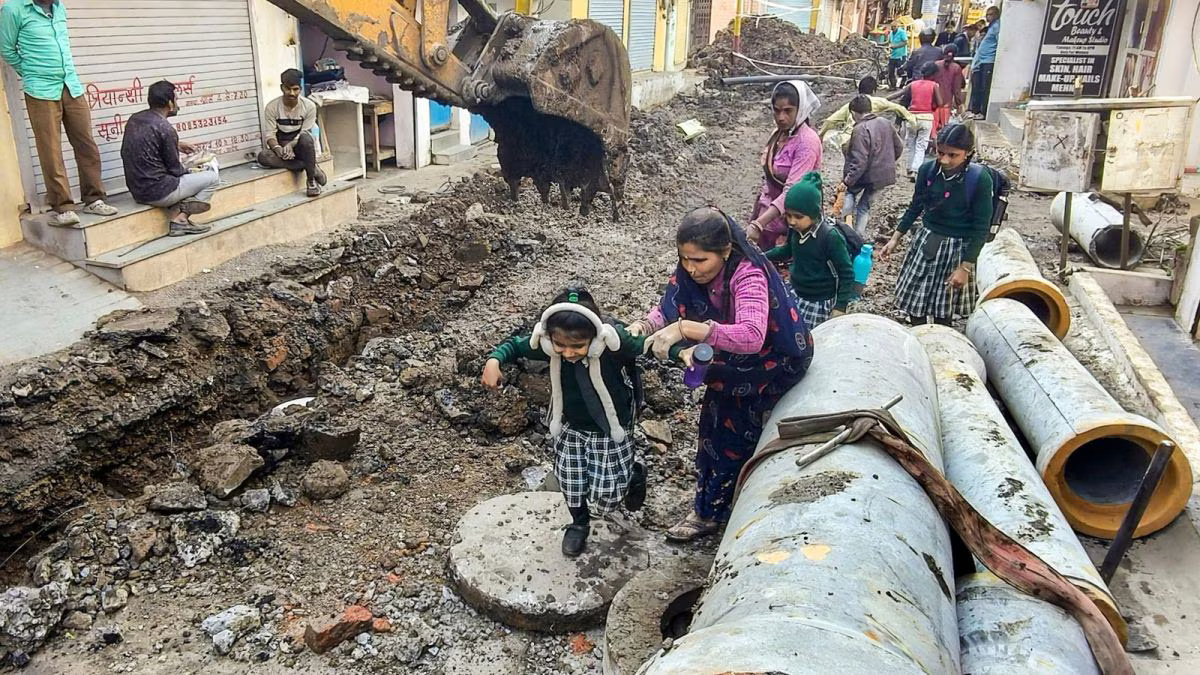
INDORE — A water quality catastrophe in Indore’s Bhagirathpura locality has reverberated far beyond public health, thrusting infrastructure failures and environmental governance into the spotlight of the Madhya Pradesh legislative assembly and igniting heated debate over civic accountability.
The crisis, which saw drinking supply contaminated with sewage-borne bacteria and resulted in multiple deaths and hundreds of illnesses, has become a test of urban service delivery in India’s fast-growing cities. The state assembly’s budget session on Monday was disrupted when opposition lawmakers challenged the governor’s address lauding achievements in water and sanitation, arguing that the Indore contamination emergency belied official claims of safe water access. Lawmakers forced an adjournment amid shouts and table-thumping, underscoring rising public frustration over basic water safety in a city long celebrated for cleanliness rankings. Public health authorities have linked the outbreak of diarrhoea, vomiting and other waterborne symptoms to sewage ingress into the drinking supply system in Bhagirathpura after tests found faecal bacteria in piped water.
While government reporting on fatalities varies, independent assessments and local testimonies suggest the toll could be significantly higher than initial official figures, highlighting an information gap in emergency response metrics. Urban planners and public health analysts observing the crisis say the incident illustrates systemic challenges in integrating sanitation with potable water infrastructure in rapidly urbanising regions. “When treated sewage and potable water networks are not insulated from overlapping pressure points or poorly documented pipe corridors, the risk of cross-contamination increases,” said a senior urban planner familiar with water safety frameworks. “This undermines trust in municipal services and puts vulnerable groups at disproportionate risk.” Beyond immediate health impacts, the episode has financial and social ramifications. Local hospitals reported a surge in admissions, with resources stretched to manage dehydration and gastrointestinal infections.
Daily-wage families reliant on municipal water now face economic strain from medical costs and work absenteeism, compounding existing inequities in access to safe basic services. Politically, the controversy is reshaping legislative priorities in Bhopal. Opposition members are pushing for greater transparency in water quality data, independent audits of city infrastructure, and clearer accountability paths for municipal and state authorities. “Safe drinking water is a fundamental right, not a political talking point,” said a state legislator advocating for a white paper on infrastructure oversight. Environmental jurists and public interest advocates have welcomed the announcement of judicial and tribunal-level reviews of water-sanitation practices, which could establish new precedents for urban water governance nationally.
As Indore’s residents recover and city officials implement remedial measures, the larger lesson for Indian cities remains clear: robust, climate-resilient water systems interlinked with strong monitoring and transparent governance are essential to protect public health and support equitable growth in urban India. The government’s response and policy reforms in the coming months will be critical indicators of reform momentum.