


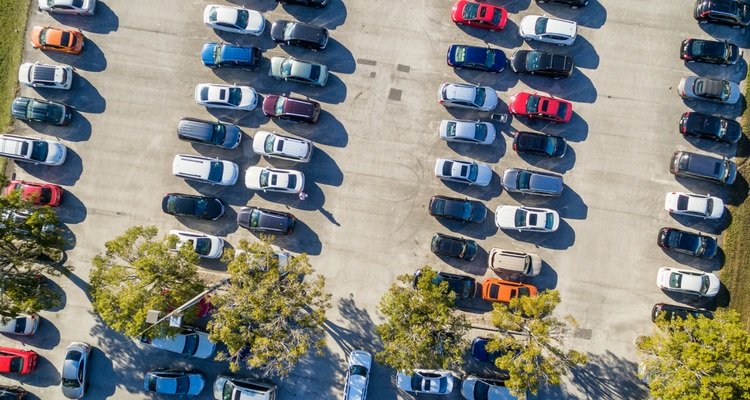
A regional vehicle trade event in Ujjain is reshaping automobile purchasing patterns across Madhya Pradesh, with Indore witnessing a sharp decline in registrations and transport revenue. The shift has left the city’s transport administration facing a significant shortfall in its annual collections, highlighting how fiscal incentives can rapidly alter economic flows between neighbouring urban centres.At the centre of this transition is a government-backed auto fair offering substantial tax concessions on vehicle registrations. Buyers are increasingly opting to complete purchases and registrations in Ujjain, even when vehicles are ultimately used in Indore. This trend has contributed to a nearly one-third gap in Indore’s projected annual revenue, with collections trailing well below expected levels as the financial year draws to a close.
The implications extend beyond administrative accounting. Indore, traditionally one of the state’s highest-performing transport revenue hubs, is now confronting a redistribution of economic activity driven by policy design rather than market demand alone. Monthly vehicle registrations in the city have dropped markedly in recent weeks, reflecting how mobility-linked taxation can influence consumer behaviour at a regional scale. Urban economists suggest that such shifts reveal emerging competition between cities for transactional revenue streams. In this case, the Indore RTO revenue decline is closely tied to regulatory arbitrage, where buyers leverage location-based tax benefits while continuing to live and operate in another city. This creates a disconnect between where infrastructure demand exists and where fiscal resources are generated. The structure of the auto fair has further enabled this dynamic. Dealers are permitted to register vehicles in Ujjain while delivering them across districts, effectively decoupling registration geography from usage geography. As a result, Indore continues to bear the burden of road usage, congestion, and infrastructure maintenance, even as associated revenues flow elsewhere. For the real estate and urban development ecosystem, the trend signals broader implications. Transport-linked revenues often support city-level investments in road networks, traffic management, and public infrastructure. A sustained Indore RTO revenue decline could constrain the city’s ability to finance upgrades, particularly as vehicle ownership continues to rise alongside urban expansion.
The situation also raises questions about policy harmonisation across regions. While targeted incentives can stimulate economic activity in specific locations, uneven application may create unintended imbalances between neighbouring cities. Planners argue that a more coordinated approach to taxation and mobility governance is essential to ensure equitable urban growth. Looking ahead, authorities may need to reassess how revenue frameworks align with actual patterns of urban usage. As cities become more interconnected, policy decisions in one jurisdiction increasingly shape outcomes in another. For Indore, the immediate challenge lies in stabilising revenues—but the longer-term priority will be designing systems that balance competitiveness with fairness in a rapidly evolving urban economy.
ALSO READ – Indore Gas Supply Cuts Threaten Industrial Output
Indore Vehicle Registrations Drop Amid Ujjain Auto Fair
