


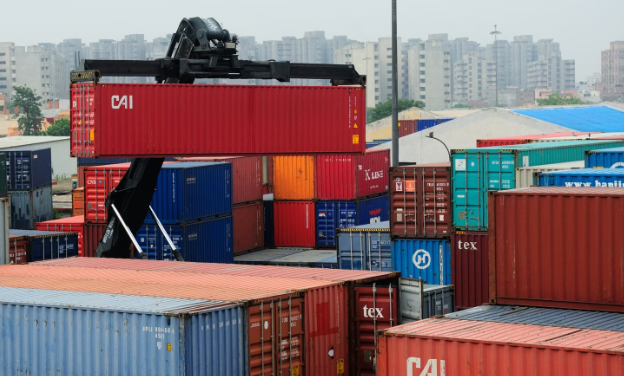
Export-oriented industries operating from the Indore Special Economic Zone have recorded a notable rise in overseas shipments in the financial year 2025–26, signalling the growing economic role of tier-two manufacturing hubs in India’s global trade ecosystem. Data reviewed by officials indicates that Indore SEZ exports crossed ₹14,000 crore during the fiscal year, reflecting steady expansion despite geopolitical uncertainty and shifting trade conditions. The increase underscores how mid-sized urban industrial clusters are increasingly contributing to India’s export-led growth strategy. Located near one of central India’s fastest-growing cities, the zone has gradually evolved into a specialised production hub, hosting companies across pharmaceuticals, engineering goods, packaging materials, and other export-driven industries.
Industry observers note that pharmaceuticals remain the dominant contributor to Indore SEZ exports, accounting for a significant share of shipments from the industrial enclave. The sector benefits from India’s strong global position in generic drug manufacturing and the expiry of patents on several widely used medicines, which has expanded demand for competitively priced formulations produced by Indian manufacturers. Urban planners say the growth of export-oriented zones in cities like Indore also reflects a structural shift in India’s industrial geography. Historically concentrated around major metropolitan regions, export manufacturing is increasingly moving into emerging urban centres where land availability, lower operating costs, and improved logistics networks make expansion easier. Transport connectivity improvements and industrial infrastructure investments in central India have played a role in enabling this shift. Experts say export zones embedded within mid-sized cities can generate a multiplier effect—supporting ancillary industries, boosting employment, and strengthening local real estate markets that accommodate industrial workers and logistics services. However, the export growth also comes at a time when global trade conditions remain uncertain. Geopolitical tensions in West Asia and policy changes in key markets such as the United States have created volatility in supply chains. Officials monitoring export performance suggest that pre-existing international orders helped maintain shipment volumes during recent disruptions. Urban economists argue that sustaining Indore SEZ exports growth will depend not only on global demand but also on long-term policy stability and infrastructure upgrades. Efficient freight corridors, reliable power supply, and environmentally responsible manufacturing processes are increasingly critical as international buyers demand compliance with sustainability and climate standards.
The rise of export zones within India’s tier-two cities also raises broader questions about urban planning. Rapid industrial growth must be balanced with housing availability, water management, and low-carbon infrastructure to ensure that economic expansion does not strain urban ecosystems. For Indore, the performance of its export zone offers a snapshot of how regional industrial clusters are reshaping India’s economic map. As manufacturers continue to scale production and explore new global markets, the city’s export ecosystem could become a model for how smaller urban centres integrate manufacturing growth with sustainable urban development.
ALSO READ – Lucknow School Infrastructure Upgrade Signals Education Shift
Indore SEZ exports growth strengthens manufacturing hub
