Indore Region Sees Crackdown On Illegal Structures
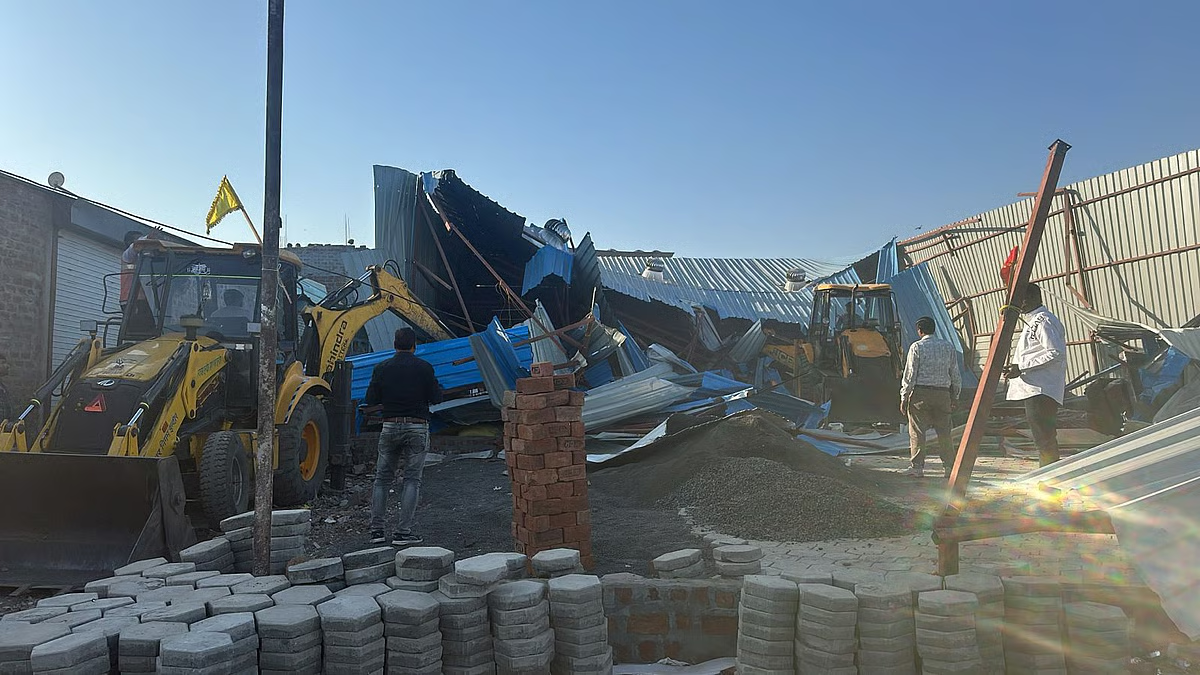
Urban land enforcement in the Indore region is intensifying, with authorities demolishing 16 illegal structures in Ujjain as part of a wider push to reclaim misused land and restore planned urban development. The action, carried out near a key religious corridor, reflects growing administrative focus on enforcing zoning norms amid rising urbanisation pressures.
The demolition took place in the Begambag area, where plots originally allocated for residential use were converted into commercial establishments in violation of lease conditions. These leases, granted decades ago, had expired without renewal, and repeated notices had been issued before authorities moved to clear the encroachments following the removal of legal stays. Officials described the operation as part of a phased enforcement drive, with earlier rounds already removing several unauthorised constructions in the same locality. The cleared land is expected to be repurposed for planned infrastructure, including proposals linked to future urban mobility improvements ahead of large-scale events in the city. For Indore and its surrounding urban region, the development highlights a broader shift toward stricter land governance. As the commercial capital of Madhya Pradesh expands, nearby cities like Ujjain are experiencing parallel growth, often leading to informal land-use changes that strain infrastructure and planning frameworks.
Urban planners note that such enforcement drives are becoming increasingly necessary to maintain the integrity of master plans. Unregulated commercial activity in residential zones can disrupt traffic patterns, overload utilities, and reduce liveability. In high-footfall areas—particularly near cultural and religious landmarks—the impact is amplified, affecting both residents and visitors.The Indore urban enforcement trend is also tied to long-term infrastructure planning. Clearing encroachments creates space for public projects such as roads, bridges, and transit corridors, which are essential for accommodating future growth. In this case, authorities have indicated that the reclaimed land could support upcoming connectivity improvements, aligning with regional mobility goals.At the same time, experts caution that enforcement must be paired with transparent rehabilitation and communication strategies. Many such developments emerge over years due to regulatory gaps or weak monitoring. Addressing these systemic issues—alongside strict action—will be key to preventing recurrence.
The operation was carried out under tight security, with coordinated involvement from development authorities, municipal teams, and law enforcement to ensure minimal disruption in a sensitive zone. From a sustainability perspective, planned land use plays a critical role in shaping resilient cities. Preventing haphazard construction allows for better integration of infrastructure, green spaces, and mobility networks, contributing to more efficient and inclusive urban systems.
As enforcement actions continue across the Indore region, the focus is likely to shift toward balancing regulation with forward-looking planning. Ensuring that reclaimed land is effectively redeveloped for public benefit will determine whether such interventions translate into lasting improvements in urban form and quality of life.