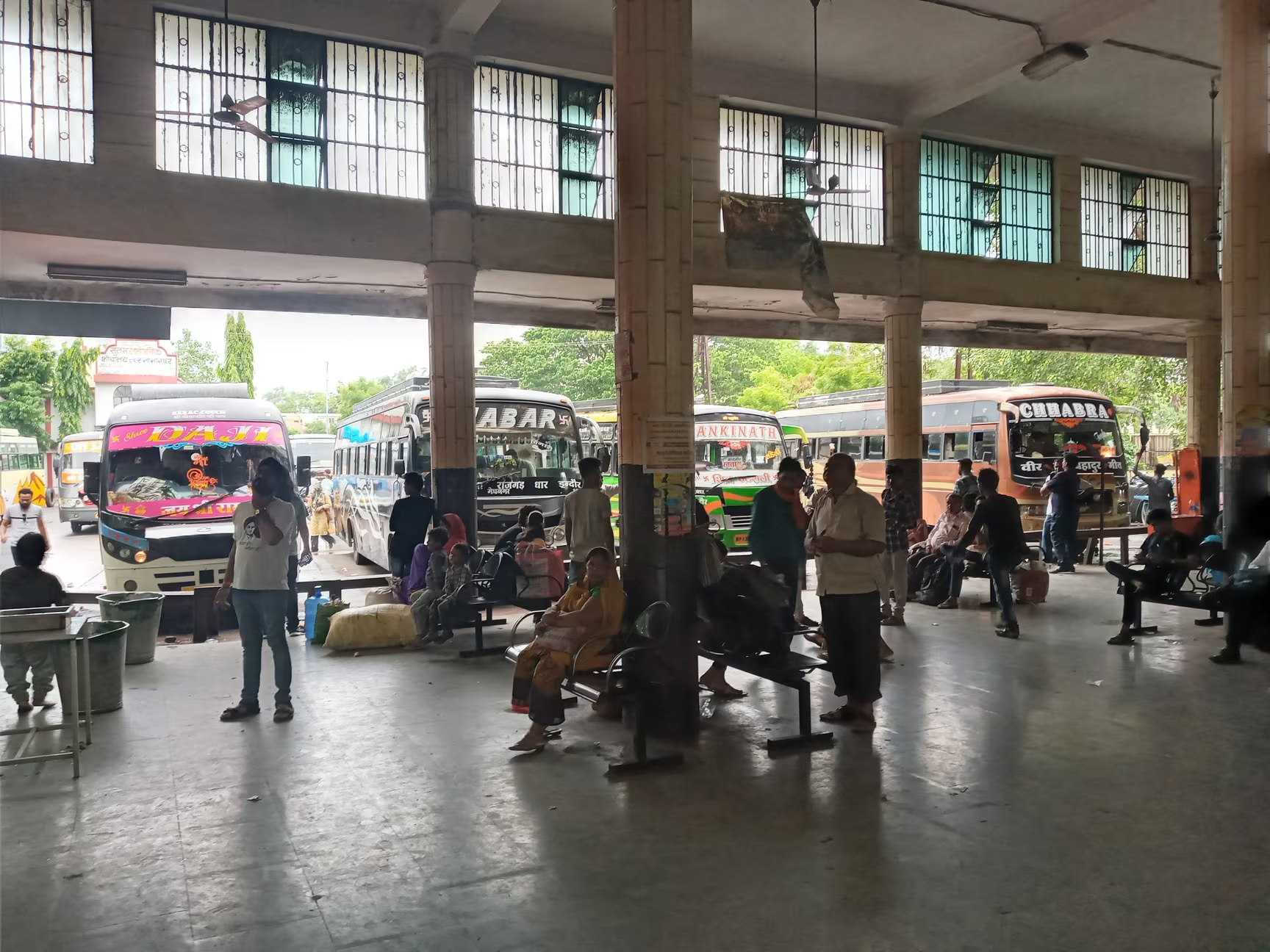
Indore Rajwada Bus Stand Removal Disrupts Passenger Access
The removal of a key bus stand near Rajwada Circle in Indore has disrupted commuter movement, forcing passengers to walk nearly a kilometre to access connecting services—raising concerns over last-mile connectivity in the city’s evolving transport network.The relocation of the bus stop, implemented as part of traffic management and urban reorganisation efforts, has altered established commuting patterns in one of Indore’s busiest heritage and commercial zones. Rajwada, a central landmark, serves as a major interchange point for multiple bus routes, making accessibility critical for daily commuters.
With the Indore Rajwada bus stand removal, passengers now have to walk longer distances between transit points, particularly affecting those who rely on seamless transfers between routes. The change has had a disproportionate impact on elderly commuters, women, and daily wage workers, for whom convenience and accessibility are essential.Officials have indicated that the decision was aimed at easing congestion and improving traffic flow around the historic precinct. However, urban mobility experts note that traffic decongestion measures must be balanced with commuter accessibility to ensure that public transport remains a viable option.The Indore Rajwada bus stand removal highlights a recurring challenge in Indian cities—managing high-density urban spaces while maintaining efficient public transport systems. In areas with limited road capacity and heavy pedestrian movement, transport planning often involves trade-offs between traffic management and commuter convenience.
From a planning perspective, the situation underscores the importance of integrated mobility solutions. Relocating transit points without adequate last-mile connectivity—such as feeder services, pedestrian-friendly pathways, or shuttle systems—can reduce the effectiveness of public transport networks.Urban planners stress that walkability is a key component of sustainable mobility. While encouraging walking is desirable, it must be supported by safe, shaded, and accessible infrastructure. In high-temperature cities like Indore, long walking distances without adequate amenities can discourage public transport use and push commuters towards private vehicles.The issue also has implications for inclusivity. Public transport systems are often the primary mode of mobility for lower-income groups. Changes that increase travel time or physical effort can disproportionately affect these users, limiting access to employment and services.Local businesses around Rajwada may also experience indirect impacts. Reduced footfall near the original bus stand location could affect commercial activity, while increased congestion in alternative boarding areas may create new pressure points.Authorities are expected to review commuter feedback and assess whether additional measures are needed to improve connectivity. Options could include introducing intermediate stops, improving pedestrian infrastructure, or deploying feeder services to bridge the gap.
Looking ahead, the Indore Rajwada bus stand removal serves as a reminder that urban mobility interventions must prioritise user experience alongside traffic efficiency. As cities modernise and reorganise transport systems, ensuring seamless, inclusive, and accessible mobility will be essential to sustaining public transport usage.Balancing heritage conservation, traffic management, and commuter needs will be key to shaping Indore’s urban core into a more liveable and resilient space.