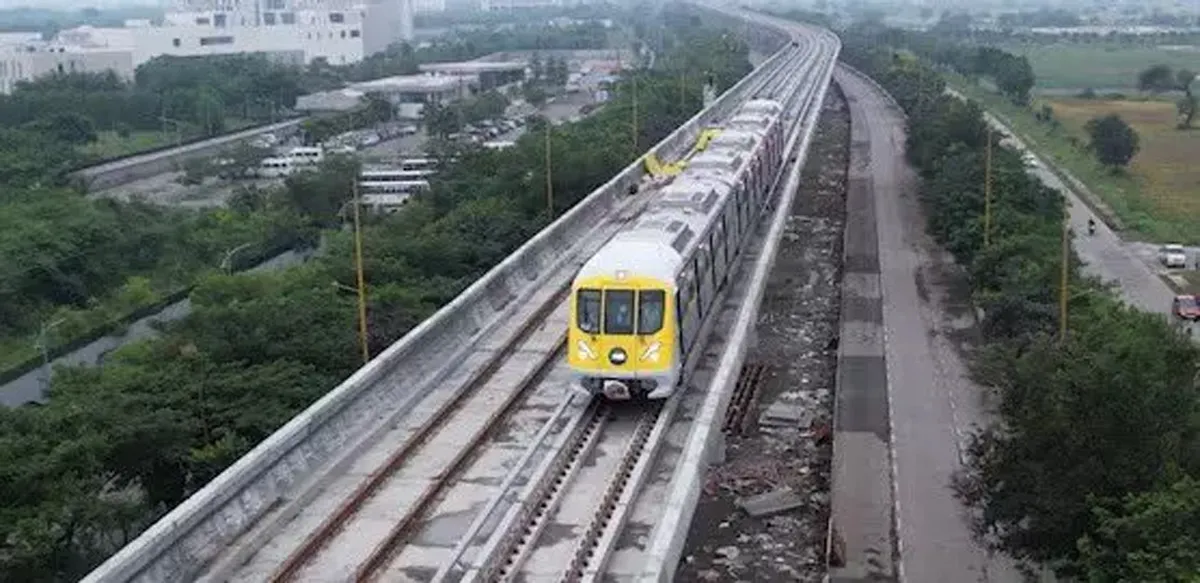
Indore Metro Safety Review Advances Corridor Readiness
Indore’s expanding metro network has reached a crucial milestone as railway safety authorities begin the final operational inspection of a key section connecting the city’s emerging development corridor to Radisson Square. The review marks an important step toward bringing additional stretches of the metro system closer to passenger operations. The inspection focuses on the Indore Metro Radisson Square corridor, a segment expected to strengthen connectivity along the city’s rapidly developing northern urban belt. Safety assessments conducted by independent railway authorities are mandatory before metro services are permitted to begin commercial operations.
Transport engineers overseeing the process say the inspection covers multiple technical aspects of the system, including track alignment, signalling reliability, electrical infrastructure and train braking systems. Emergency preparedness, passenger evacuation protocols and communication systems are also evaluated during the review. Urban mobility experts say the Indore Metro Radisson Square corridor forms part of a broader strategy to build a modern mass transit system capable of supporting the city’s fast-growing population. As residential neighbourhoods and commercial districts expand outward, efficient public transport is increasingly essential for reducing dependence on private vehicles. Indore has emerged as one of India’s fastest-growing tier-two urban centres, with expanding industrial activity, educational institutions and a thriving service sector. Infrastructure investments such as the metro system are intended to support this growth by improving mobility and reducing travel time across the city. The Indore Metro Radisson Square corridor also serves the city’s Super Corridor development zone, an area where technology parks, educational campuses and new residential projects are rapidly emerging. Reliable public transport along this axis could help shape future urban development patterns by encouraging transit-oriented growth. Urban planners note that metro systems influence how cities expand. When transit infrastructure is integrated with land-use planning, new residential and commercial developments often cluster around stations, reducing the need for long car-based commutes. From an environmental perspective, electrified metro networks are considered a key component of sustainable urban mobility. By offering high-capacity public transport, metro systems can reduce traffic congestion, lower fuel consumption and help cities cut transport-related emissions. The inspection of the Indore Metro Radisson Square corridor represents one of the final stages before authorities grant operational clearance. Such evaluations ensure that infrastructure meets strict safety and operational standards required for passenger transport systems. Transport policy specialists say safety certification is essential to maintaining public confidence in metro services. Detailed inspections verify that every operational component—from signalling networks to platform safety features—functions reliably under real-world conditions.
If the inspection concludes successfully, the corridor could move closer to launching passenger services in the near future. The additional metro stretch is expected to enhance connectivity between residential districts, commercial centres and major transit nodes. For Indore, progress on the Indore Metro Radisson Square corridor signals a broader shift toward integrated urban mobility systems designed to support economic growth while promoting sustainable and efficient transportation across the city.