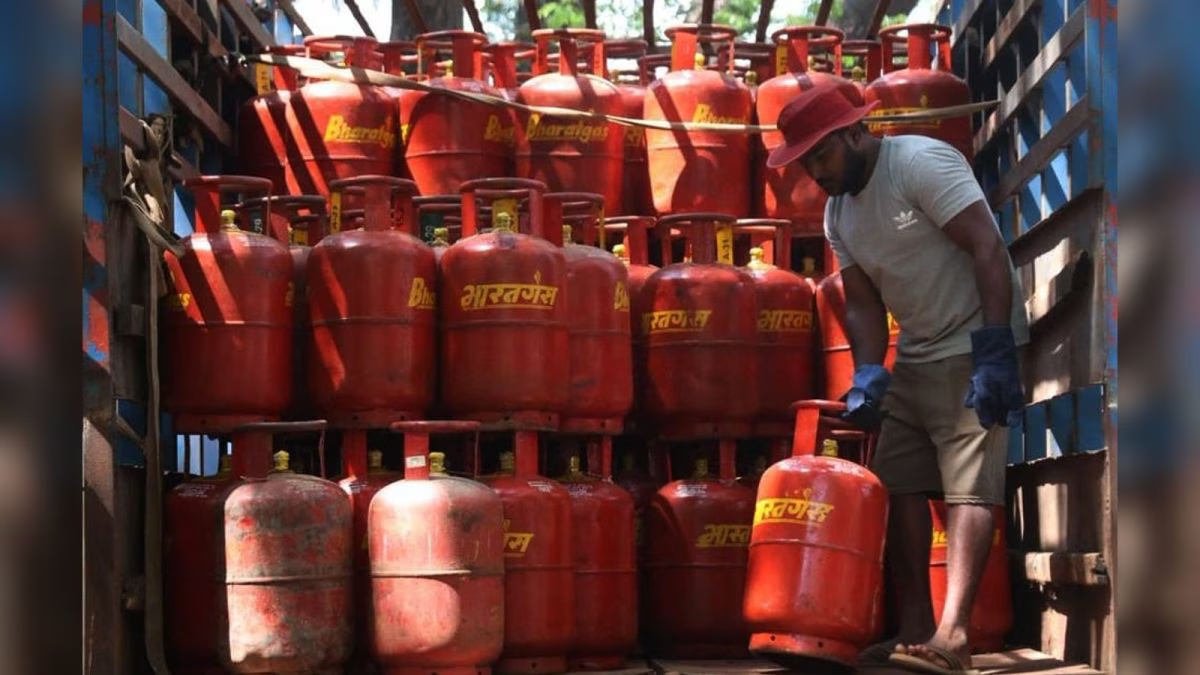
Indore has temporarily suspended the supply of commercial LPG cylinders to prioritise domestic consumption, as authorities respond to mounting pressure on household cooking fuel availability in the city.The decision follows a surge in demand and supply constraints that have disrupted regular LPG distribution, prompting officials to redirect available stock towards residential users. The move reflects an emerging Indore LPG supply crisis, where essential urban utilities are being rationed to maintain access for households.
Officials indicate that commercial establishments—including restaurants and small businesses—will face short-term restrictions until supply stabilises. The prioritisation of domestic users is aimed at ensuring continuity of basic cooking needs, particularly for families that rely exclusively on LPG.The disruption is part of a wider pattern of fuel supply stress affecting several urban centres, driven by a combination of logistical bottlenecks, increased demand, and broader energy market volatility. In Indore, the situation has been compounded by delays in cylinder replenishment and distribution inefficiencies at the last mile.Industry observers note that the Indore LPG supply crisis underscores the vulnerability of urban energy systems that depend heavily on centralised supply chains. When disruptions occur, cities often lack the flexibility to quickly rebalance distribution between commercial and domestic users without affecting economic activity.
For businesses, the suspension presents immediate operational challenges. Small eateries, street vendors, and service establishments—many of which operate on thin margins—are likely to be disproportionately affected. Some may be forced to reduce operations or shift to alternative, and often less efficient, fuel sources.The decision also raises questions about preparedness and contingency planning in urban utility management. Experts argue that cities need more resilient systems, including decentralised storage, better demand forecasting, and diversified energy options, to avoid such disruptions.From a broader urban development perspective, the incident highlights the critical role of energy security in sustaining city life. Reliable access to cooking fuel is not only a household necessity but also a key enabler of economic activity in informal and small-scale sectors.The Indore LPG supply crisis also brings attention to the social dimension of utility disruptions. Lower-income households and small businesses are often the most affected, with limited capacity to absorb price fluctuations or access alternative fuels.
Looking ahead, authorities are expected to review supply chains and restore normal distribution as conditions improve. However, the episode serves as a reminder that as cities grow, ensuring the resilience of essential services like LPG supply will be central to maintaining both economic stability and quality of life.