


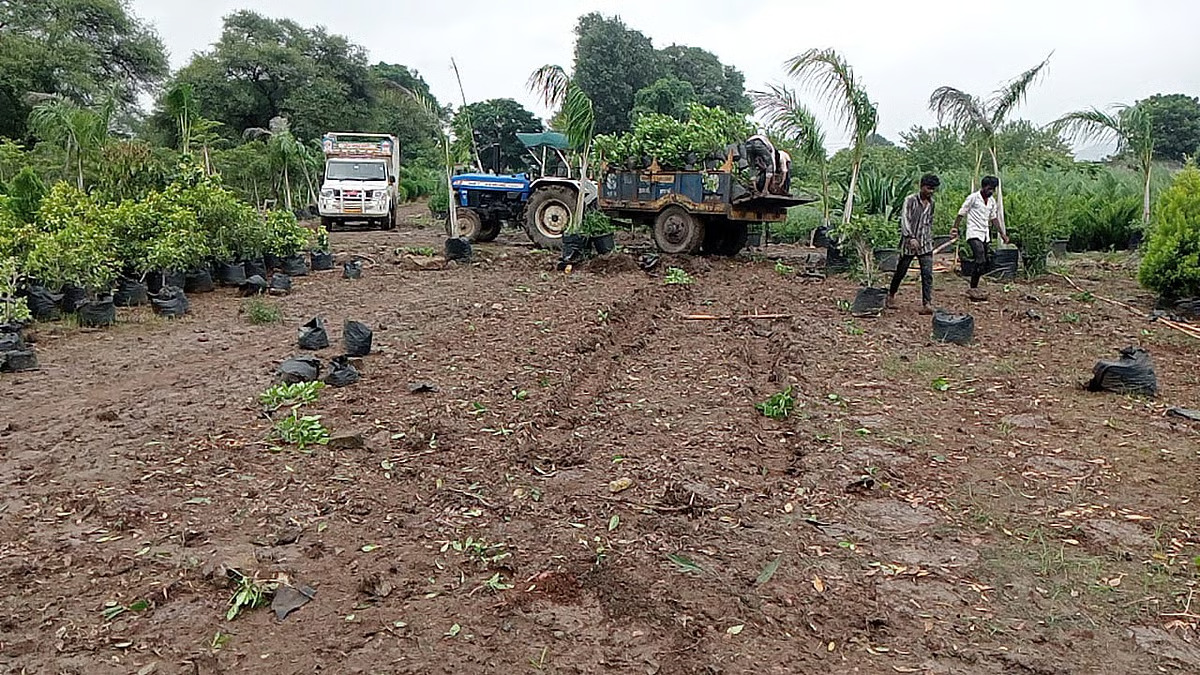
Indore’s urban governance received a decisive boost this week after the Municipal Corporation, working in tandem with the district administration, freed 3,620 square metres of government land from illegal occupation in Village Kailod Kartal. Valued at more than ₹5.4 crore, the land is now set to be repurposed for public interest and environmental rejuvenation.
For years, the encroached land had been diverted to private use with commercial activity operating in violation of regulations. Following a coordinated anti-encroachment drive, officials deployed machinery to dismantle structures and clear nearly 5,000 plants that had been cultivated on the site. While the encroacher was served due notice before the operation, municipal teams executed the clearance in line with legal procedures, ensuring compliance at every stage. Authorities supervising the action underlined the civic body’s renewed resolve to eliminate illegal occupations that deprive cities of their natural and public assets. According to officials, strict measures will continue to ensure that government land remains protected and can be leveraged for sustainable, people-centric projects.
What sets this operation apart is not just the enforcement of law, but also the intent to align land reclamation with long-term ecological goals. Municipal leaders have indicated that the cleared area will undergo large-scale plantation drives, creating an urban green buffer that will improve air quality, mitigate heat, and enhance the liveability of the locality. With Indore already recognised for its national leadership in cleanliness, this effort underscores the city’s ambition to balance development with environmental stewardship. Equally important is the benefit to mobility and city planning. Encroachments often strain civic infrastructure, obstruct natural drainage, and reduce available land for essential public projects such as housing, schools, or transport hubs. By reclaiming land, city planners gain an opportunity to strengthen Indore’s resilience to climate stress while expanding facilities equitably across neighbourhoods.
Officials emphasised that enforcement would be impartial and ongoing. “No encroachment on public land will be tolerated,” said a senior municipal authority, adding that such land will always be channelled towards the city’s broader welfare. This clear stance reflects a governance model that recognises the link between spatial justice and sustainability. Residents near Kailod Kartal expressed relief at the action, noting that the clearing of government land will reduce congestion, improve civic amenities, and bring much-needed green cover. As the plantation initiative takes root, the reclaimed space is expected to evolve into a shared community asset.
In reclaiming land from private misuse and dedicating it to public and environmental priorities, Indore once again demonstrates how decisive governance can build a more sustainable, equitable, and eco-friendly city for the future.
Also Read : Bhopals Raja Bhoj Airport Redesign To Feature Modern Arrival, Departure Halls Soon
