


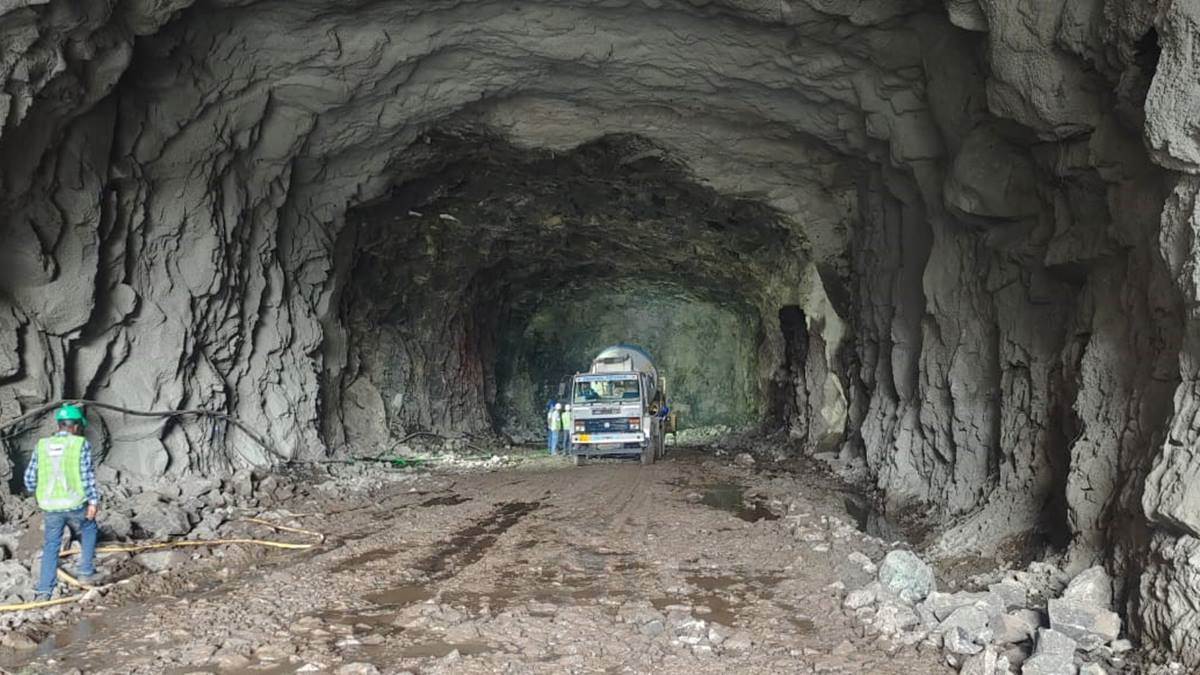
In a significant push towards infrastructure modernisation and sustainable transport solutions, three large tunnels being built on the Indore-Khandwa highway stretch are now nearing completion.
The project, part of a critical 33-kilometre corridor between Tejaaji Nagar and Balwara in Madhya Pradesh, is being implemented by the National Highways Authority of India (NHAI) using the advanced New Austrian Tunnelling Method (NATM), a globally trusted technology in tunnel construction. The tunnels are being constructed as part of a broader strategy to improve road connectivity in the region, particularly in the ghat sections that present topographical and traffic challenges. The NATM approach, known for its efficiency and adaptability in varied geological conditions, ensures a safer and more durable tunnel structure. What makes this initiative particularly noteworthy is the commitment to safety, sustainability, and automation. Once operational, these smart tunnels will include automatic emergency barricade systems and integrated fire-fighting mechanisms—features that elevate the project to global standards in highway safety.
The construction methodology involves meticulous attention to tunnel lining. Cement-concrete plaster is being applied with a gantry equipped with 42 precisely aligned windows. This innovative gantry system, resting on rails akin to railway tracks, manages to complete 12.5 metres of reinforced tunnel liner each day. The process includes filling the 2.5-metre space between the tunnel wall and reinforcement mesh with concrete, ensuring structural strength and resistance to environmental wear. As concrete begins to exit a window, it is sealed off, and the gantry is moved forward—a process repeated with high precision to form a uniform, resilient lining. What adds to the project’s progressive credentials is the integration of sustainable development goals. Unlike traditional tunnel construction that often disregards ecological footprints, this project incorporates low-emission methods and durable materials that align with the vision of net-zero carbon urban transport. The focus is not merely on faster commute times, but on creating infrastructure that is safe, resilient, and environmentally responsible.
As the tunnels near the final stages of development, ancillary works along the Indore-Ichhapur highway have also seen marked progress. The base road within the tunnels has been prepared, while overground connectivity has been enhanced through newly opened flyovers. Notably, traffic has now begun flowing through the Datonda flyover, with preparations underway to launch additional structures, including the Simrol bypass and adjacent underpasses, before the onset of the monsoon season.
With this advancement, Madhya Pradesh is setting a template for other regions to follow—where rapid infrastructure development meets innovation, safety, and sustainability. These tunnels are not just conduits through rock, but symbols of a modernising India, aiming to build cities that are future-ready, climate-conscious, and inclusive in design. As traffic begins to flow and finishing touches are applied, the Indore-Khandwa road project stands as a testament to what purposeful, well-engineered urban development can achieve.
Also Read : Kashedi Tunnel Opening Soon to Boost Mumbai Goa Travel and Tourism Flow
Indore Khandwa Road Tunnels Near Completion with Focus on Safety and Sustainability
