


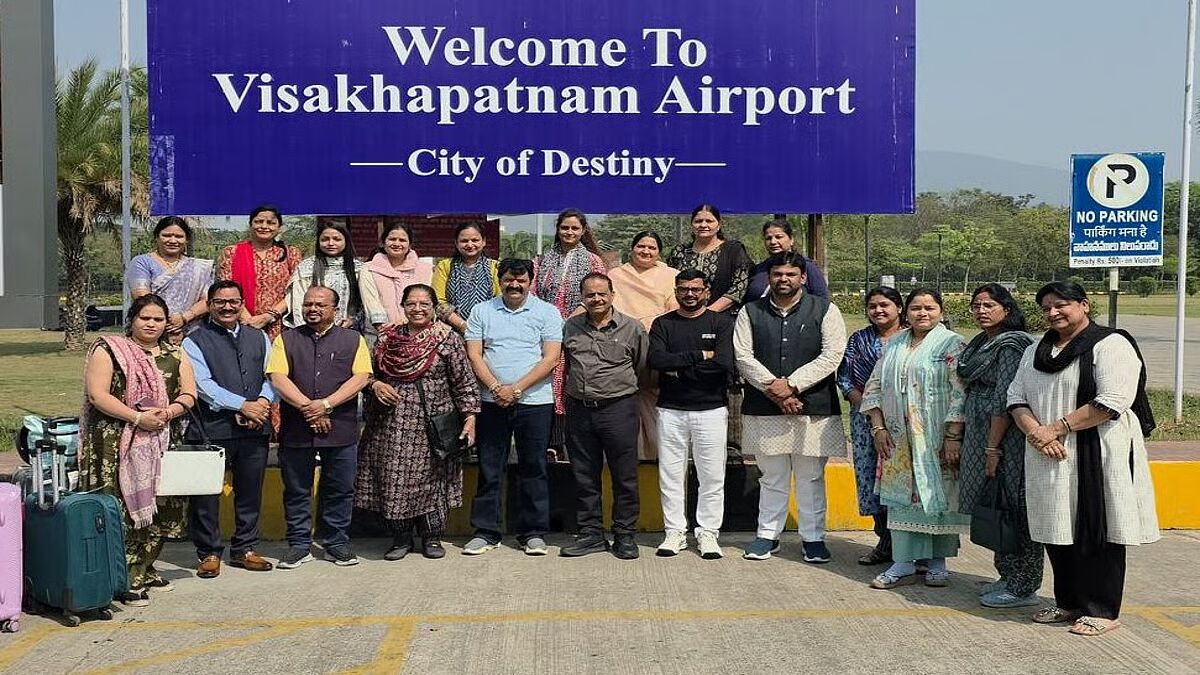
A delegation of 22 elected members from the Indore Municipal Corporation has embarked on a three-day study tour to Visakhapatnam, underscoring a growing emphasis on cross-city learning to enhance urban services — particularly solid waste management and sanitation systems — and integrate innovative models into Indore’s own civic governance framework.
The initiative reflects efforts by local leadership to deepen institutional knowledge and adopt scalable practices that support sustainable city development. Arriving in Andhra Pradesh’s largest port city on Wednesday, the Indore team was received by senior officials from the Greater Visakhapatnam Municipal Corporation (GVMC) and senior administrators, beginning a programme that combines structured field visits, interactive sessions and exchange discussions with Visakhapatnam’s urban management counterparts. During the visit, corporators are examining innovative sanitation and solid waste management initiatives implemented in Visakhapatnam, including operational frameworks, citizen engagement strategies and governance mechanisms that support cleaner neighbourhoods and more efficient service delivery. Indore’s delegation is also presenting insights from the city’s renowned cleanliness and waste handling models, which have earned national recognition and helped it rank among India’s leading clean cities.
Urban policy experts observe that such inter-city exchanges can accelerate municipal learning by exposing leaders to diverse operational contexts and adaptive solutions. Visakhapatnam combines coastal city challenges with rapid urban growth pressures, making its sanitation and waste frameworks valuable case studies for Indore, where expanding urban zones and rising population continue to test existing service infrastructure. The study tour comes at a time when Indian cities are increasingly looking beyond isolated reform efforts to collaborative knowledge networks that share best practices in areas such as sustainable waste management, public participation in governance, and climate-resilient infrastructure. Indore has pioneered several innovative initiatives — including digital address systems for citizen services and inventive waste handling schemes — that planners hope to juxtapose with Visakhapatnam’s evolving models to identify complementary strategies.
Officials from both cities are engaging in interactive discussions and academic sessions, exploring possibilities for joint learning, peer benchmarking and future cooperation. Delegates highlighted the value of revisiting on-ground practices, documenting process outcomes and considering adaptability to Indore’s own socio-urban context. These exchanges are expected to enrich municipal planning with practical insights drawn from applied experiences in a coastal governance setting. Civic leaders underscore that this knowledge exchange aligns with broader goals of building resilient, equitable and environmentally responsive cities — central tenets of India’s urban agenda. By learning from diverse models and adopting evidence-based practices, cities like Indore can enhance service efficiency, deepen community engagement in cleanliness drives, and strengthen infrastructure that supports long-term sustainability.
As the delegation’s three-day engagement concludes, city officials plan to synthesise learnings into actionable recommendations that could inform policy and operational decisions back home. The hope is that such collaborations will not only yield immediate tactical improvements but also foster a culture of continuous innovation in municipal governance across India’s urban landscape.
Also Read: Indore Varsity Incident Highlights Campus Safety Challenges
Indore Examines Visakhapatnam Urban Systems Exchange
