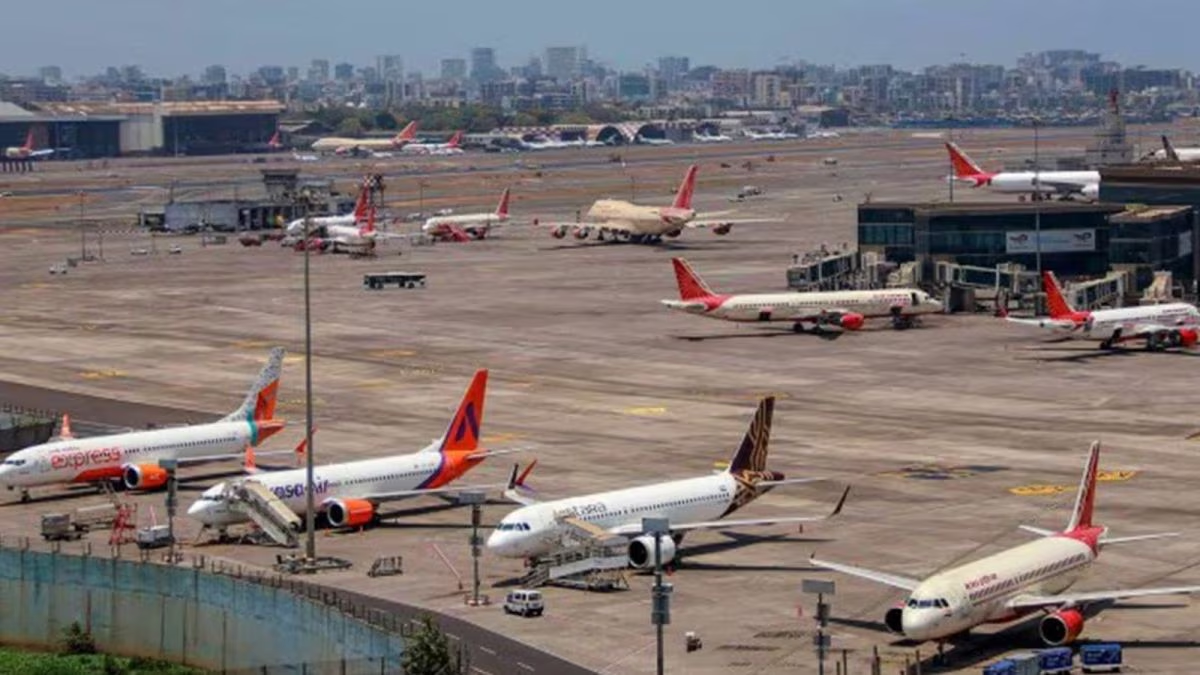
Indore could play a central role in a proposed regional aviation network aimed at improving air connectivity across Madhya Pradesh, with authorities outlining plans to establish a commercial airport roughly every 150 kilometres across the state. The strategy positions Indore’s aviation infrastructure as a key node in a broader effort to strengthen mobility, regional economic integration and faster access to smaller cities.Policy planners say the proposed aviation grid would connect major urban centres with emerging towns and industrial regions through a network of commercial airports and upgraded airstrips. Within this framework, Indore airport is expected to function as a primary hub, supporting passenger flows, logistics operations and regional flight connections.
Urban economists note that Indore already serves as one of central India’s busiest aviation gateways. The city’s airport has recorded consistent passenger growth over the past decade, supported by expanding business activity, educational institutions and a growing technology and services sector.Under the proposed framework, smaller regional airports could feed passengers into larger aviation hubs like Indore, enabling shorter travel times between cities that currently rely on long road journeys. Such connectivity is increasingly seen as critical for linking industrial corridors, tourism destinations and emerging urban clusters.Transport analysts say improved regional aviation infrastructure could also help decentralise economic opportunities. Cities like Indore are rapidly expanding beyond their municipal boundaries, and faster air connectivity could support trade, investment and talent mobility across the wider region.
For Indore, which has positioned itself as a logistics and manufacturing centre in central India, stronger aviation connectivity may also complement existing road and rail networks. The city lies along several major economic corridors and has seen rising demand for faster passenger and cargo movement.The expansion of aviation infrastructure is also being viewed through the lens of urban growth planning. Airports often act as catalysts for real estate development, hospitality investments and commercial districts. Areas surrounding Indore airport have already witnessed new hotels, logistics facilities and business parks emerging in recent years.Urban planners caution, however, that aviation expansion must be balanced with environmental and land-use considerations. Airport-linked development can increase traffic volumes and urban sprawl if not integrated with sustainable transport systems and careful zoning regulations.Experts emphasise that regional aviation networks should ideally be aligned with public transport, electric mobility and efficient land-use planning to minimise carbon emissions while improving accessibility.
If implemented effectively, the aviation grid could reshape travel patterns across central India, allowing smaller cities to connect more easily with economic hubs like Indore.For Indore, the plan signals not only stronger regional connectivity but also the possibility of evolving into a more prominent aviation and logistics centre—an outcome that could influence the city’s economic trajectory and urban expansion over the coming decade.