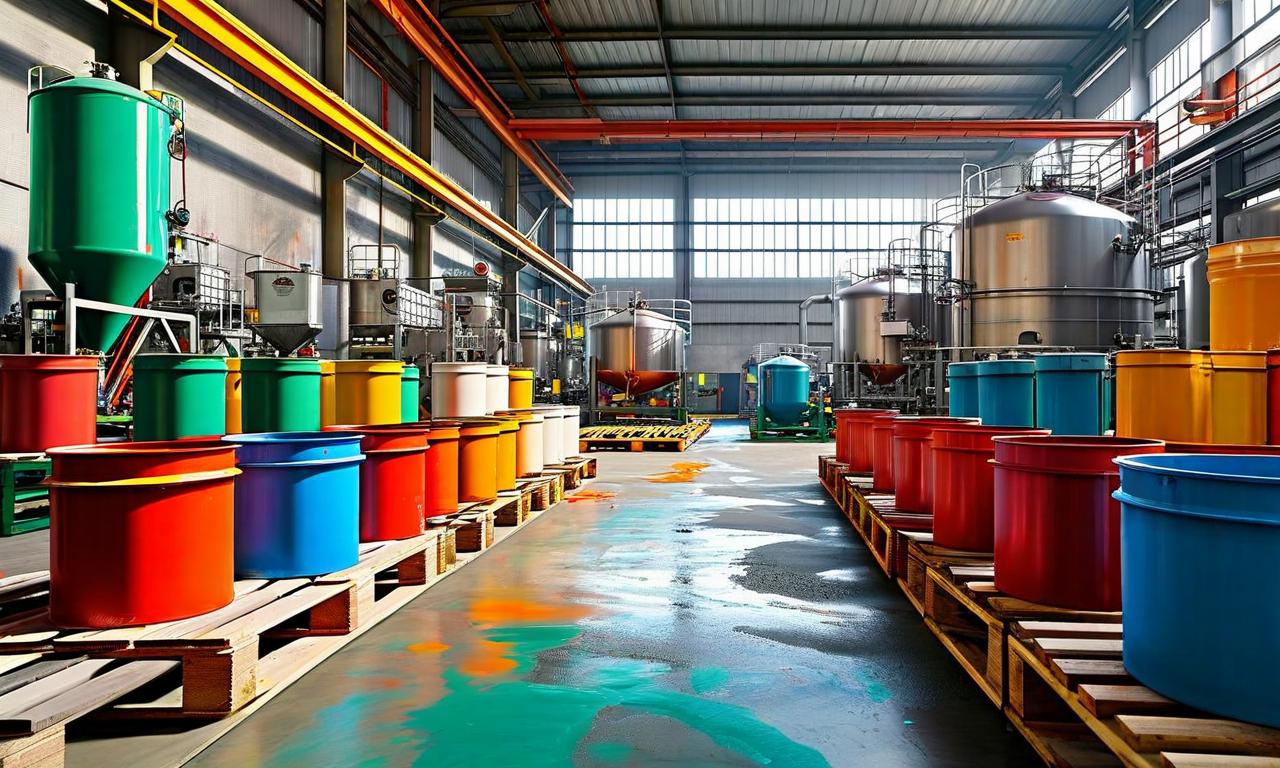
Indigo Paints Boosts Production Amid Habitat Construction Trends
India’s decorative paints industry is showing signs of resilient demand amid a broader pick-up in housing and commercial construction activity, with one mid-tier manufacturer reporting sustained revenue and profitability improvements in the third quarter of fiscal 2025-26. The performance underscores how paint consumption — a fundamental input for residential and infrastructure projects — tracks shifts in urban development patterns and builder confidence.
For the quarter ended 31 December 2025, the coating maker’s consolidated revenues grew by around 4.7 per cent year-on-year, accompanied by a marked expansion in operating efficiencies that boosted core profit margins. Gross profitability remained among the highest in the domestic paints segment, while earnings before interest, tax, depreciation and amortisation (EBITDA) margins widened significantly due to disciplined cost management and effective distribution execution.Urban planners and industry watchers see this performance as reflective of two parallel forces in India’s built environment economy. First, steady demand for interior and exterior coatings corresponds with robust housing activity in both established metropolitan areas and rapidly growing tier-2 cities, where rising household formation and real estate investments are fuelling construction volumes. Second, commercial and institutional infrastructure projects — including schools, hospitals and mixed-use developments — are translating into broader coatings usage across sectors beyond residential.
Decorative paints are essential to the finishing stage of construction, and their demand is closely linked to real estate cycles. In the third quarter, while revenue growth remained moderate, the notable improvement in margin performance suggests that manufacturers are absorbing cost pressures and leveraging operational scale more effectively, despite competitive intensity from larger peers.A subsidiary focused on construction chemical products contributed disproportionately to consolidated growth, reflecting how diversified offerings — such as waterproofing solutions and specialised coatings — are gaining traction in urban markets. These products help address both aesthetic and performance requirements of modern buildings, particularly in regions with challenging climatic conditions or aggressive weather cycles.
The regulatory landscape is another factor shaping industry dynamics. Recent changes associated with labour codes introduced accounting impacts related to past service costs; however, companies have classified these as exceptional items, separating them from core operating results. This accounting treatment provides clearer visibility into underlying demand trends, unclouded by one-off compliance costs.Beyond quarterly figures, longer-term trends point to structural shifts in demand patterns. As smaller cities urbanise and tier-2 and tier-3 markets expand, distribution networks are being reconfigured to reach these growth hubs more effectively. This aligns with broader national priorities around affordable housing, Smart Cities initiatives, and infrastructure upgrades, where residential and commercial construction serves as a crucial economic multiplier.
Supply-chain innovation is also featuring more prominently. Manufacturers are increasingly investing in logistics and dealer engagement to ensure timely deliveries and product availability close to construction sites — a factor that can significantly influence builder and contractor preferences.However, challenges remain. Competitive pressures from larger, well-established brands can temper price realisation, and raw material price volatility still influences cost structures. Urban development stakeholders note that while demand fundamentals are solid, ongoing efficiency improvements — including adoption of leaner manufacturing practices and sustainable raw materials — will be essential to maintain growth momentum.
As India’s housing and infrastructure pipelines continue to expand, the correlation between coating consumption and urban build-out serves as a barometer of construction activity. Companies that balance operational discipline with strategic market expansion may be best positioned to benefit from the next phase of urban growth.