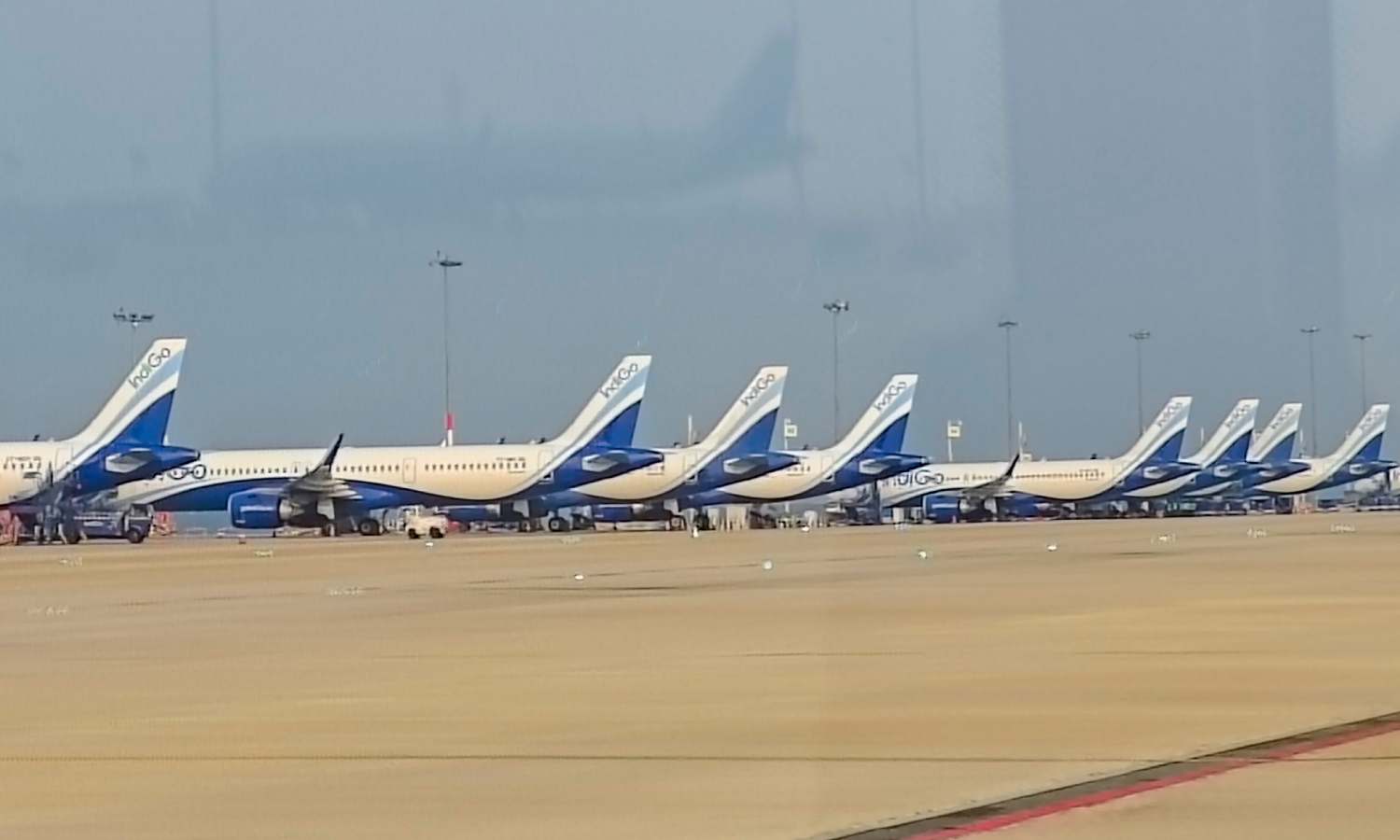
IndiGo’s operations came under renewed strain on Wednesday as the airline cancelled nearly 220 flights across Delhi, Mumbai, and Bengaluru, intensifying the travel disruption already affecting thousands of passengers nationwide. The cancellations follow the government’s decision to trim the airline’s winter schedule after days of widespread operational instability.
According to airport officials, Delhi recorded the largest impact, with more than 130 services withdrawn. Mumbai and Bengaluru saw significant disruptions as well, particularly at Bengaluru airport, where both arrivals and departures were scaled back. The short-notice cancellations left many passengers stranded, raising concerns about the resilience of India’s aviation ecosystem at a time when major cities depend heavily on reliable air mobility for business and daily life. The airline’s leadership had earlier asserted that operations were “back on track”, yet the continued cancellations appeared to contradict such claims. Aviation experts noted that IndiGo has been grappling with compliance requirements linked to revised safety norms for crew deployment. The airline’s inability to adjust swiftly, they said, resulted in cascading service shortfalls and unplanned operational gaps.
Government agencies have now stepped in to stabilise the situation. The aviation regulator issued show-cause notices to senior airline executives, seeking explanations for the prolonged disruptions, deficiencies in planning, and delays in passenger refunds. Officials stated that any airline of IndiGo’s scale must maintain adequate buffers in crew availability and contingency planning, especially when serving high-density urban corridors critical to India’s economic flow. The Ministry of Civil Aviation has also ordered a 10 per cent reduction in IndiGo’s winter flight schedule to prevent further cancellations. While the airline will continue to serve its full network, it must operate fewer daily flights until its systems stabilise. Industry observers said this temporary cap could improve on-time performance and provide breathing space for recruitment and crew reallocation.
However, the disruption has already strained passengers, who reported abrupt cancellations, delayed alternatives, and limited communication. As per India’s passenger rights charter, airlines are required to offer compensation for cancellations and long delays without customers having to raise requests. Consumer groups said strict enforcement of these norms is essential to maintaining trust in air travel, especially across metropolitan hubs where travellers rely on punctual services for work, healthcare, and essential movement. The broader impact of IndiGo’s crisis extends beyond inconvenience. With the airline operating the country’s largest domestic network, cancellations have pushed up fares on competing carriers and increased crowding across airport terminals. For India’s metros—already battling congestion, pollution, and mobility challenges—air travel disruptions highlight the need for more resilient and equitable transport systems.
Regulators are expected to review IndiGo’s updated crew planning, recruitment strategy, and restoration timeline later this week. Ensuring stable operations, experts say, is critical not just for economic continuity but also for creating accessible, reliable mobility networks that support sustainable and inclusive city development.
Indigo Cancels 220 Flights Across Delhi Mumbai, Bengaluru Amid Severe Disruptions