


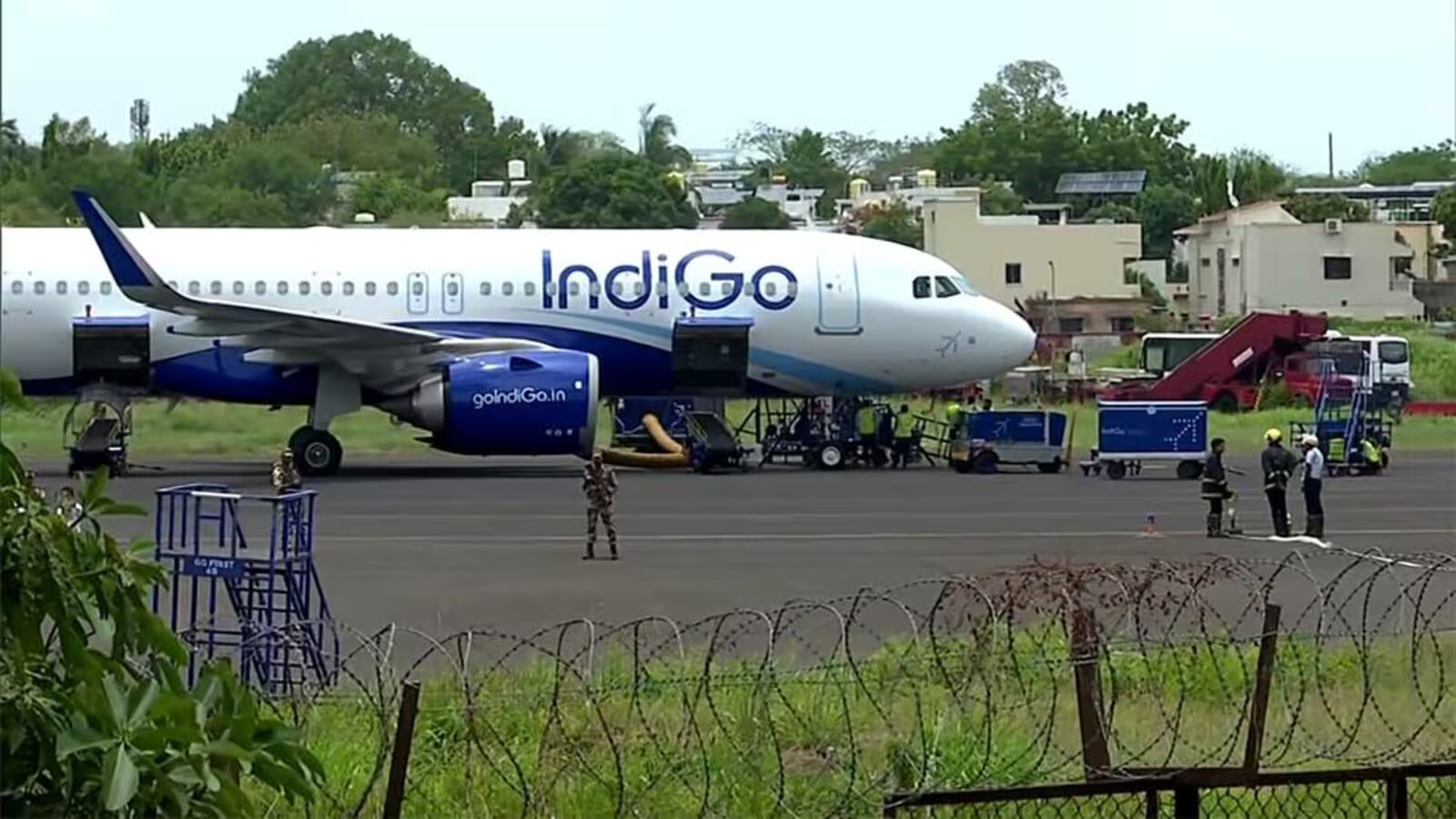
Mumbai woke up to relentless monsoon showers on Monday, triggering widespread waterlogging and severe traffic congestion across key city arteries. The heavy rainfall prompted major airlines, including IndiGo, SpiceJet, and Akasa Air, to issue travel advisories urging passengers to check flight status in advance and plan additional commute time to the airport.
IndiGo, in an advisory issued early morning, stated that adverse weather conditions were impacting air traffic and causing minor delays in flight operations. “Our teams are coordinating closely with air traffic control and will resume normal operations as soon as conditions allow,” the airline added. Similarly, SpiceJet cautioned that departures, arrivals, and connecting flights could face disruptions, while Akasa Air advised passengers to account for slow-moving traffic en route to the airport. The Indian Meteorological Department (IMD) issued a yellow alert for Mumbai Suburban and Mumbai city, as well as for Thane, Pune, and Nashik. An orange alert was flagged for districts including Raigad, Palghar, and Nandurbar, indicating more intense rainfall.
Heavy precipitation has been reported across central and western Mumbai, including Sion’s Gandhi Market and the Eastern Express Highway, causing significant waterlogging. On the Western Express Highway, vehicles crawled through slow-moving traffic, adding to commuter woes. Experts say that such urban waterlogging highlights the urgent need for resilient, sustainable city drainage systems and better road infrastructure to mitigate monsoon impact. Airlines are also adapting to the operational challenges posed by the deluge. Officials confirmed that flights into and out of Chhatrapati Shivaji Maharaj International Airport may experience delays, while ground transport to the airport could be affected due to saturated roads. Last week, similar heavy rainfall had disrupted over 60 flights, underlining the need for preemptive travel planning.
City officials advise commuters to leave earlier than usual, use alternate routes, and follow live traffic updates to avoid bottlenecks. Airlines are employing dynamic scheduling and air traffic control coordination to minimise delays, but passengers are encouraged to remain flexible amid these monsoon-related challenges. As Mumbai continues to grapple with intense rains, the current scenario underscores the importance of integrating sustainable urban infrastructure, advanced flood management systems, and climate-resilient airport connectivity. Experts also stress community awareness and real-time advisories as critical tools for safer, more efficient urban mobility during extreme weather events.
Also Read : Kochi NH 544 Repairs Ease Highway Congestion Woes
