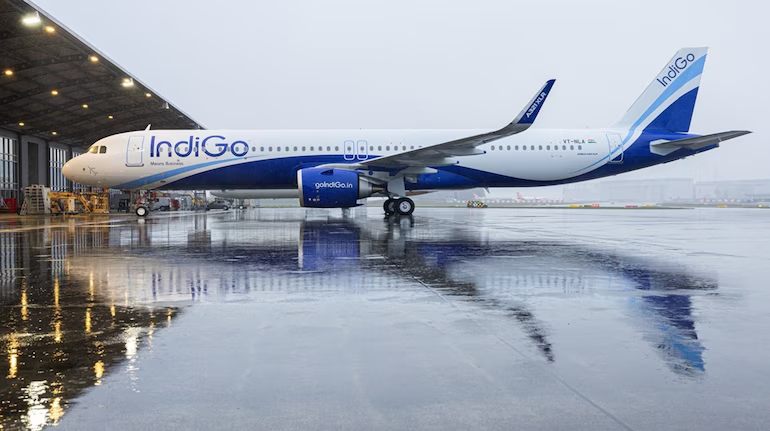
India’s largest airline by market share has begun recalibrating its international network as global airspace disruptions and airport congestion strain long-haul operations. IndiGo has decided to suspend select overseas routes and reduce frequencies on others, marking a cautious reset of its widebody ambitions at a time when geopolitical and operational uncertainties are reshaping global aviation flows.
The changes affect services connecting Delhi with parts of Europe, including a temporary halt to flights to a Scandinavian capital and reduced operations on key United Kingdom routes. The adjustments come just months after the carrier expanded into long-haul markets using leased widebody aircraft, signalling that external conditions have overtaken initial growth projections. According to airline officials, a combination of restricted airspace and congestion at major international hubs has lengthened flight times and disrupted schedules. Several regions, particularly across parts of West Asia and Eastern Europe, have seen periodic airspace closures linked to geopolitical tensions, forcing airlines to adopt longer, fuel-intensive routings. For carriers operating narrow margins on long sectors, these diversions can quickly undermine reliability and cost efficiency.
Industry analysts note that Indian airlines are especially exposed to such disruptions. Unlike some global competitors, they have limited flexibility in rerouting due to geography and diplomatic constraints. Recent airspace restrictions affecting Indian carriers have compounded pressures, increasing crew duty hours, aircraft utilisation challenges, and turnaround delays at destination airports. IndiGo’s decision mirrors similar steps taken by another Indian full-service airline, underscoring that the issue is systemic rather than carrier-specific. Aviation consultants say the pullback reflects a broader reassessment of how quickly Indian airlines can scale intercontinental operations without a stable geopolitical and regulatory environment.
The affected flights were operated using leased widebody jets as the airline awaits delivery of its own next-generation long-haul aircraft later in the decade. While leasing allowed a faster entry into overseas markets, it also left operations more sensitive to disruptions, given the higher costs and tighter operational windows associated with long-haul flying. From an urban and economic perspective, the route changes highlight how global uncertainties ripple into city connectivity and business travel. Direct international links play a growing role in supporting trade, tourism, and knowledge economies in Indian metros. Reduced frequencies can affect passenger choice, cargo capacity, and the competitiveness of hub airports such as Delhi.
At the same time, aviation planners argue that short-term consolidation may help airlines restore schedule reliability and passenger confidence. Overextension, especially during periods of airspace instability, can lead to cascading delays that erode trust and inflate emissions due to longer routings and holding patterns.
Looking ahead, the airline has indicated it will continue monitoring global developments and adjust capacity as conditions evolve. The episode underscores a key challenge for India’s aviation growth story: while demand for international travel is rising, resilient expansion will depend on diplomatic stability, efficient airport infrastructure, and long-term fleet planning aligned with sustainability goals. Until then, airlines may be forced to balance ambition with operational realism.
IndiGo Adjusts Overseas Network As Pressures Mount