


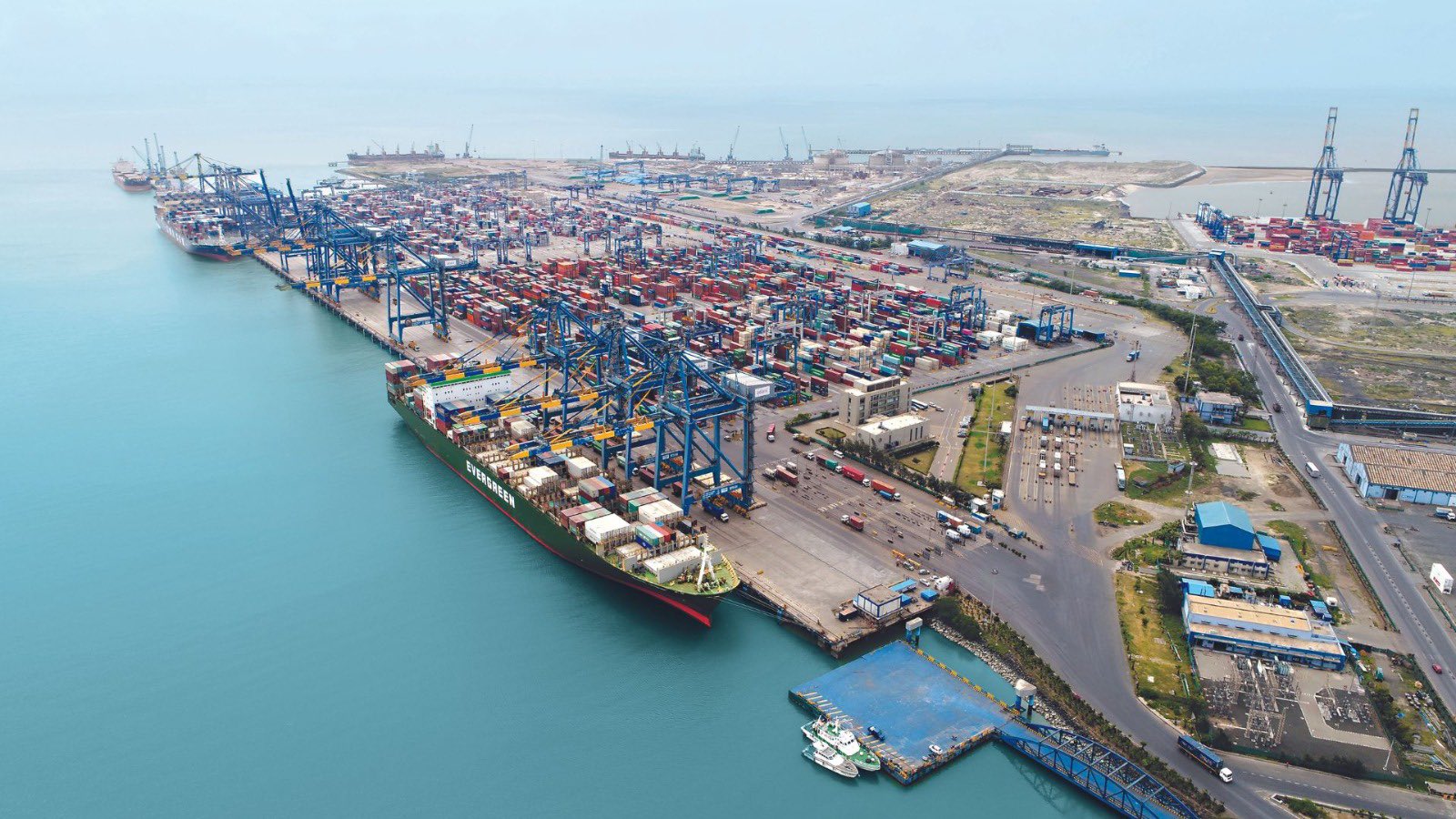
India’s major ports have emerged as pivotal engines of economic progress, showcasing a robust 4.3% surge in cargo handling to an impressive 855 million tonnes in the fiscal year 2024-25.
This substantial leap from the 819 million tonnes managed in the preceding fiscal year underscores the inherent strength and expanding capacity of the nation’s maritime infrastructure in accommodating escalating trade demands. The Ministry of Ports, Shipping and Waterways affirmed this growth, highlighting concurrent advancements in operational efficiency and the ongoing modernisation of port facilities. The upswing in traffic was notably propelled by a significant 10% increase in container throughput, coupled with substantial growth in fertilisers (13%), petroleum, oil, and lubricants (3%), and a remarkable 31% surge in miscellaneous commodities compared to the previous fiscal year. Leading the cargo spectrum were petroleum, oil, and lubricants, encompassing crude oil, refined petroleum products, and liquefied petroleum gas/liquefied natural gas, which collectively accounted for a substantial 254.5 million tonnes, representing 29.8% of the total volume. This was closely followed by container traffic at 193.5 million tonnes (22.6%) and coal at 186.6 million tonnes (21.8%), alongside other vital cargo categories including iron ore, pellets, and fertilisers.
A historic milestone was achieved as the Paradip Port Authority and the Deendayal Port Authority each surpassed the 150 million tonnes mark in cargo handling for the first time. This feat solidifies their crucial roles as epicentres of maritime commerce and operational excellence within the nation. Concurrently, the Jawaharlal Nehru Port Authority established a new benchmark by efficiently managing 7.3 million twenty-foot equivalent units (TEUs), marking a significant 13.5% year-on-year growth in container traffic. In a move towards fostering port-led industrial development, Indian ports collectively allocated a substantial 962 acres of land for industrialisation during FY25. This strategic allocation is projected to generate a revenue of ₹7,565 crore over the fiscal year. Furthermore, lessees are anticipated to inject investments amounting to ₹68,780 crore on the allotted land in the future, reflecting strong investor confidence in the synergistic growth potential of port-linked industries.
The pivotal role of private sector engagement in this transformative journey is underscored by a threefold increase in investments in public-private partnership (PPP) projects at major ports, escalating from ₹1,329 crore in FY23 to ₹3,986 crore in FY25. This surge in private investment is instrumental in driving innovation and efficiency within the port sector. Operational performance witnessed consistent improvement throughout FY25, with pre-berthing detention time (on port account) registering an approximate 36% reduction compared to FY24. This enhanced efficiency translates to reduced waiting times for vessels and improved overall port productivity.
Financially, major ports demonstrated a robust performance, with total income expanding by 8% to ₹24,203 crore in FY25 from ₹22,468 crore in FY24. The operating surplus also saw a healthy 7% growth, reaching ₹12,314 crore in FY25 from ₹11,512 crore in the preceding year, highlighting the increasing financial sustainability of these vital trade gateways. A retrospective analysis over the past decade reveals a compelling trajectory of growth. Cargo volumes have surged from 581 million tonnes in FY15 to approximately 855 million tonnes in FY25, registering a compound annual growth rate (CAGR) of 4%. Containerised cargo witnessed an even more remarkable 70% expansion during this period, escalating from 7.9 million TEUs in FY15 to 13.5 million in FY25. Conventional commodities such as coal, fertilisers, iron ore, and petroleum, oil, and lubricants also recorded substantial growth over the decade.
Productivity indicators further underscore this positive trend. Output per ship berth day (OSBD) increased significantly from 12,458 tonnes to 18,304 tonnes over the decade. The average turnaround time (TRT) for vessels improved by an impressive 48%, decreasing from 96 hours in FY15 to 49.5 hours in FY25. Pre-berthing detention time (on port account) also saw a 24% improvement, declining from 5.02 hours in FY15 to 3.8 hours in FY25. Furthermore, idle time at berths decreased by 29%, from 23.1% in FY15 to 16.3% in FY25, indicating enhanced asset utilisation. The financial performance of major ports over the past decade has been equally noteworthy. Total income more than doubled from ₹11,760 crore in FY15 to ₹24,203 crore in FY25, exhibiting a CAGR of 7.5%. The operating surplus nearly tripled to ₹12,314 crore at a 13% CAGR over the same period. Operational efficiency also witnessed substantial gains, with the operating ratio declining from 64.7% in FY15 to a more efficient 42.3% in FY25, reinforcing the long-term financial viability of the port sector.
Looking ahead, India’s major ports are strategically positioned to elevate their global competitiveness through sustained investments in mechanisation, process re-engineering, advanced port community systems, and seamless multi-modal logistics integration. These proactive initiatives are expected to yield higher cargo volumes, further reduce vessel turnaround times, optimise capacity utilisation, and bolster investor confidence in the nation’s burgeoning maritime sector.
Also Read :Kandla Shipyard Tender Cancelled After Single Bid
