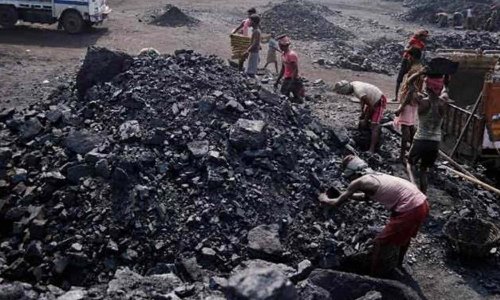
India’s coal production crossed the one billion-tonne mark in FY25, yet experts warn that demand may halve by 2047 as the nation gradually shifts toward cleaner energy sources. Coal currently fuels around 70 per cent of India’s electricity, but industry leaders emphasise the urgent need for responsible usage and emission reductions. The coming decades are expected to balance energy security with sustainable practices, signalling a major transformation in India’s power sector.
India’s reliance on coal remains central to its electricity supply, with thermal power contributing 72 per cent of the total generation. However, industry voices say this dominance will gradually shrink, aligning with global decarbonisation trends and India’s sustainability targets. P M Prasad, former chairman and managing director of Coal India Ltd, highlighted that coal’s share could fall to 30–35 per cent by 2047. “Transitioning responsibly is essential, even as coal continues to play a key role in the energy mix,” he said.Prasad now chairs the India Chapter of FutureCoal, a global alliance promoting sustainable coal use, which was established with Coal India Ltd and Gainwell Engineering. FutureCoal advocates technologies capable of cutting coal emissions by up to 99 per cent, aiming to make existing and future mines cleaner while maintaining energy reliability. According to Prasad, expanding the environmental standards implemented by public-sector mining company NLC India across 300 mines could reduce dust and pollutants by another 20–30 per cent.
Michelle Manook, Chief Executive of FutureCoal, noted that although coal’s overall share will diminish over time, the immediate challenge lies in ensuring efficient and responsible usage. Rising electricity demand from data centres, AI infrastructure, and industrial growth makes sustainable coal practices critical for affordable and secure power supply.Dipankar Banerjee, CEO of Gainwell Engineering, added that coal remains the most cost-effective energy source for developing economies, including India, Africa, and Southeast Asia. While nuclear energy and large-scale renewables offer alternatives, they remain expensive and infrastructure-intensive. “The question is how to use coal efficiently without compromising environmental responsibility. FutureCoal provides a platform to discuss technology, innovation, and best practices to achieve this,” he explained.
Urban planners and energy experts suggest that reducing coal reliance will require integrating renewable sources, modernising thermal power plants, and adopting carbon-cutting technologies. The shift is not just an environmental imperative but also a strategic necessity to maintain energy security and equitable access for all citizens.India’s coal sector stands at a pivotal juncture, balancing economic growth, energy affordability, and environmental stewardship. The coming decades will test policymakers, industry leaders, and urban planners to ensure that cleaner coal practices support sustainable, low-carbon cities and industries, marking a significant step toward the nation’s net-zero ambitions.