


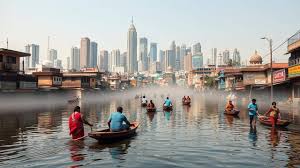
The report’s findings paint a compelling picture of a nation at a critical crossroads. With India’s urban population projected to nearly double to 951 million by 2050, the demand for housing will surge, requiring over 144 million new homes by 2070. Simultaneously, intense heatwaves and the urban heat island (UHI) effect are already causing city temperatures to rise by 3-4 degrees Celsius above surrounding rural areas. This, coupled with the rapid expansion of built-up areas, diminishes cities’ natural capacity to absorb stormwater, rendering them increasingly susceptible to devastating floods. The World Bank emphasizes that without immediate and decisive action, Indian cities risk failing to reach their full economic and social potential due to their concentrated populations and assets, coupled with existing planning systems struggling to keep pace with urbanisation and escalating climate impacts.
Crucially, the report, which included in-depth studies of 24 Indian cities such as Chennai, Indore, New Delhi, Lucknow, Surat, and Thiruvananthapuram, highlights that timely adaptation measures can significantly mitigate future weather-related shocks. Projections indicate that annual losses from pluvial (stormwater) flooding could be reduced by $5 billion by 2030 and a staggering $30 billion by 2070. Furthermore, proactive investments in climate adaptation are estimated to save over 130,000 lives from the impacts of extreme heat by 2050, demonstrating a clear human and economic imperative for action. Given that over half of the urban infrastructure required by 2050 is yet to be constructed, India has a unique and critical window of opportunity to embed resilience into its future urban development.
Also Watch: “Mumbai will rock, shine and always be India’s best city to live.” In an exclusive, MHADA CEO Sanjeev Jaiswal (IAS) talks about Mumbai’s enduring charm, livability, and the government’s focus on making it affordable for all
Auguste Tano Kouame, World Bank Country Director for India, underscored this urgency, stating, “The imperative for India to build resilient cities at scale is clear. By investing in more green and resilient urban development—including housing, transport, and municipal services—cities can better mitigate extreme heat conditions and urban floods, and continue to grow and create jobs.” The report advocates for key recommendations including robust programmes to address urban heat and flooding through better stormwater regulation, increased green spaces, the installation of cool roofs, and effective early warning systems. It also calls for investments in resilient infrastructure, energy-efficient housing, modernised solid waste management, and flood-resilient urban transport systems, alongside improved access to urban finance, critically engaging the private sector.
The estimated investment required to meet the demand for new, resilient, and low-carbon urban infrastructure and services is over $2.4 trillion by 2050, with the private sector expected to play a pivotal role in mobilising this capital. Despite the challenges, the report acknowledges that several Indian cities are already pioneering innovative solutions. Ahmedabad’s Heat Action Plan, which has reportedly averted 1,200 deaths annually since 2013, serves as a model for early warning systems and increased green cover. Kolkata has implemented a city-level flood forecasting and warning system, while Indore has transformed its solid waste management, creating green jobs. Chennai’s climate action plan, rooted in thorough risk assessment, targets both adaptation and low-carbon growth, showcasing a proactive approach. These city-led initiatives offer valuable blueprints for creating zero net carbon, eco-friendly, sustainable, gender-neutral, and equitable urban environments that can withstand future climate impacts and continue to thrive.
Also Read: Air India Flight AI 2744 Skids Off Mumbai Runway Amid Rain Today
