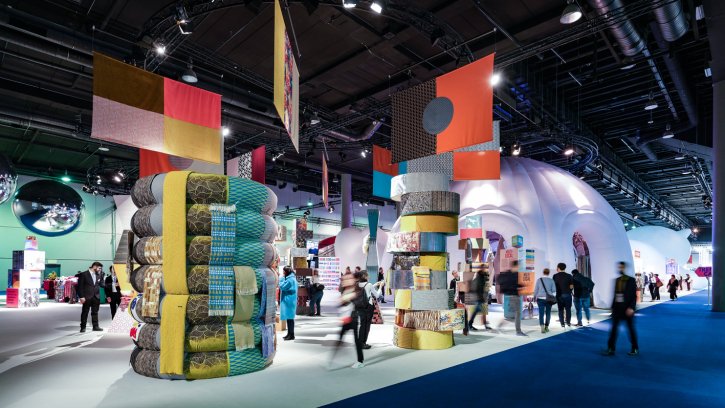
Indian Textiles Showcase At Heimtextil Under Sustainability
India inaugurated its national pavilion at Heimtextil 2026 on January 13, positioning the country’s home textiles and traditional handicraft exports on a global stage while emphasising sustainable design and advanced manufacturing. The annual trade fair, held at Messe Frankfurt, attracts thousands of exhibitors and buyers worldwide under the theme “Lead the Change,” focussing on textile circularity, sustainable materials and AI‑driven design — trends shaping interior material sourcing in urban real estate and commercial projects.
India’s representation was officially opened by the Consul General of India in Frankfurt alongside senior officials from the Ministry of Textiles, the National Jute Board and the Carpet Export Promotion Council (CEPC), reflecting a concerted push to amplify organised exports in bed, bath, table linen, upholstery, yarn and handcrafted products. The event’s scale — with participation from over 60 countries — makes it a key barometer for global buyers seeking both mass‑market products and artisanal, design‑led materials used in residential, hospitality and contract interiors. A central focus at the Indian pavilion was on handmade carpets, with industry delegates urging enhanced government support to translate global interest into sustained export growth — particularly for Kashmiri artisans whose craft is emblematic of India’s cultural heritage and export potential. Despite the historic strength of India’s handicrafts in overseas markets, stakeholders note that the handmade carpet segment faces competitive pressures from lower‑cost machine‑made imports, counterfeit challenges and the need for quality verification systems that preserve artisan value.
The CEPC delegation highlighted how platforms like Heimtextil can catalyse bulk orders and long‑term partnerships, noting that global buyers increasingly seek both sustainable production credentials and authentic cultural craftsmanship. From an urban infrastructure perspective, these export channels also feed into interior specification trends for large residential projects and commercial fit‑outs, where sustainable textiles and handcrafted surfaces are emerging as differentiators in quality and occupant experience. Sustainability themes at Heimtextil — such as recycling, reduced chemical inputs and circular materials — resonate with India’s textile ecosystem, which has ramped up eco‑friendly innovations in fibres, dyes and finished products. Such innovations are increasingly embedded in project specifications for green buildings, luxury hotels and high‑end residences, where certifiable sustainable materials can contribute to broader ESG commitments.
India’s pavilion also served as a networking hub for emerging AI‑assisted design tools that help textile producers and exporters tailor offerings to buyer preferences, streamlining sourcing decisions and reducing lead‑times — factors critical to competitiveness in international markets. Despite the global optimism, industry analysts caution that translating fair participation into export growth requires addressing systemic issues: improving quality assurance mechanisms for handmade goods, strengthening artisan supply chains and bolstering marketing support for smaller exporters. Recent government initiatives, such as schemes to modernise looms and create sector‑specific HSN codes, are part of this effort to fortify India’s global textile brand.
As Heimtextil 2026 unfolds through January 16, India’s pavilion is expected to host buyer meetings and trend showcases that could unlock new orders and long‑term collaborations, reinforcing the country’s role as both a mass‑textile supplier and a custodian of rich handcrafted traditions.