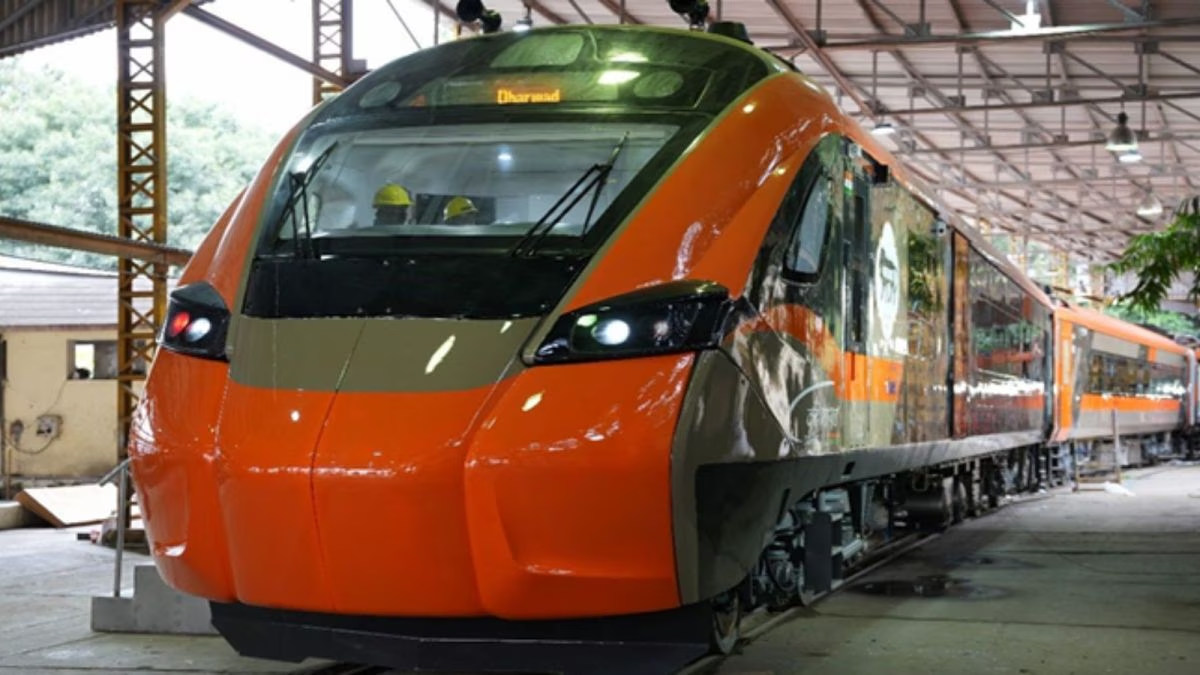
Indian Railways is preparing to introduce its first long-distance Vande Bharat Sleeper service on the Guwahati–Kolkata corridor in January 2026, marking a strategic shift in how overnight intercity travel is planned in eastern India. The new service is expected to shorten journey times while offering a rail-based alternative that competes with aviation on comfort, reliability, and cost—an important development for regional mobility and economic integration.
The route links Assam’s largest urban centre with eastern India’s primary commercial gateway, covering a distance of just over 1,000 kilometres. At present, passengers rely on conventional overnight trains with long travel durations or relatively expensive flights with limited capacity. The Vande Bharat Sleeper is designed to bridge this gap by offering semi-high-speed travel combined with sleeping accommodation, a format increasingly seen as essential for medium-haul corridors. Railway planners indicate that the trainsets have completed mandatory testing and certification, clearing the way for operational deployment. While the rolling stock is capable of higher speeds, operating velocities will be aligned with existing track conditions, translating into a journey time of roughly 16 to 18 hours. This represents a meaningful reduction for a corridor that carries a mix of business travellers, students, migrant workers, and tourists throughout the year.
The service will halt at several urban and regional nodes across Assam and West Bengal, strengthening access beyond the terminal cities. Stops are expected to include major junctions that serve industrial zones, educational hubs, and tourism centres. Transport economists note that such routing choices are critical for spreading economic benefits along the corridor rather than concentrating them at endpoints alone. Unlike earlier Vande Bharat services configured primarily for daytime travel, the sleeper variant introduces berths across multiple classes. The 16-coach composition is expected to include air-conditioned three-tier, two-tier, and first-class coaches, offering price differentiation while maintaining a consistent quality of ride. Advanced suspension, sealed gangways, and modern safety systems are intended to improve overnight travel conditions compared to older rolling stock.
Preliminary fare estimates suggest pricing positioned between conventional air-conditioned trains and economy airfares. This could prove particularly relevant for households and small businesses seeking predictable, affordable travel without sacrificing comfort. From a climate perspective, rail-based overnight services also offer lower per-passenger emissions compared to short-haul flights, aligning with broader goals of reducing transport-related carbon intensity.Officials involved in rail infrastructure planning see the Vande Bharat Sleeper as part of a wider effort to modernise long-distance rail without relying solely on new high-speed corridors.
By upgrading rolling stock and optimising existing routes, Indian Railways aims to deliver faster gains in capacity and service quality. As demand patterns stabilise after launch, attention will turn to punctuality, last-mile connectivity at stations, and integration with urban transport systems. If executed effectively, the Guwahati–Kolkata Vande Bharat Sleeper could become a template for upgrading other overnight corridors critical to India’s regional growth.
Indian Railways Upgrades Guwahati Kolkata Rail Travel