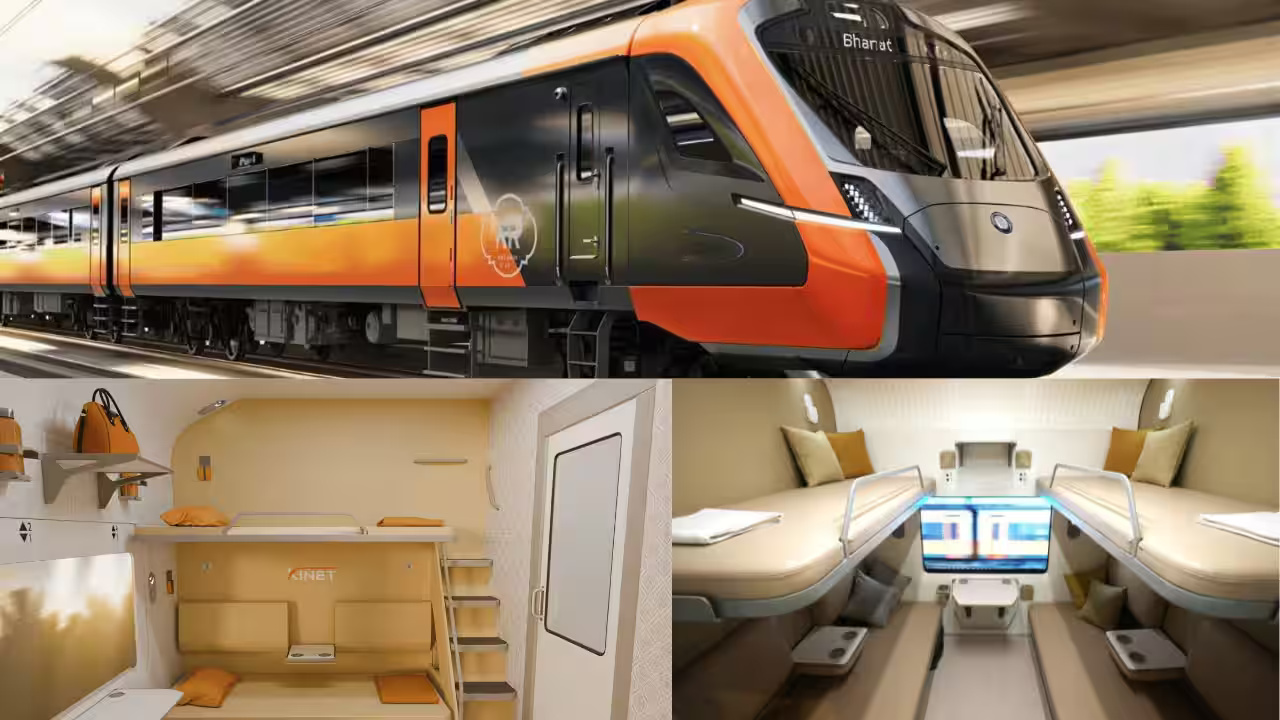
Indian Railways has formally notified the fare framework for its first Vande Bharat Sleeper service, signalling a structural shift in how premium overnight rail travel will be priced and managed in India. Scheduled to debut next week on the eastern corridor linking West Bengal and Assam, the new service eliminates Reservation Against Cancellation (RAC) and introduces a minimum chargeable distance, even for shorter journeys.
The new fare rules matter beyond ticket pricing. They indicate a move towards predictable capacity management, premium service positioning, and faster long-distance connectivity—key pillars as Indian cities seek low-carbon alternatives to short-haul aviation and road-based intercity travel. Under the notified structure, the Vande Bharat Sleeper will issue only fully confirmed tickets. Unlike conventional long-distance trains, there will be no RAC, waitlisted, or partially confirmed bookings. All berths will be opened for reservation from the start of the advance booking window, ensuring certainty for passengers while allowing rail operators to optimise occupancy and onboard services.
A notable departure from existing practice is the introduction of a minimum chargeable distance equivalent to a 400-kilometre journey. Even if a passenger travels less, fares will be calculated from this base threshold. Pricing has been set on a per-kilometre basis, placing the Vande Bharat Sleeper above traditional premium services in the rail ecosystem. For distances up to 400 km, passengers will pay approximately ₹960 in 3AC, ₹1,240 in 2AC, and ₹1,520 in First AC, excluding applicable taxes. On longer sectors—such as the 1,000-km launch route—the fare rises proportionately, reinforcing the train’s positioning as a high-speed, high-comfort alternative to both conventional express trains and overnight flights. Railway officials involved in planning say the model reflects higher operating costs associated with advanced safety systems, faster turnaround times, and enhanced passenger amenities. Urban mobility experts add that reliable overnight rail can reduce pressure on congested airports while offering a more energy-efficient option for long-distance travel.
The inaugural service will operate overnight, departing late evening and arriving early morning, with scheduled stops across multiple districts in eastern India. Designed for speeds up to 180 kmph, operational limits for this service have been set lower to align with safety protocols on existing tracks. The 16-coach configuration prioritises air-conditioned classes, supported by features such as automated doors, improved suspension, noise reduction, and advanced train protection systems. These upgrades, analysts say, reflect a broader strategy to modernise intercity rail as a backbone of sustainable regional growth.
As more Vande Bharat Sleeper services are planned across major corridors, fare rationalisation, service reliability, and inclusivity—through dedicated quotas—will determine how effectively the model scales across India’s diverse travel markets.
Indian Railways Unveils Vande Bharat Sleeper Fare Model