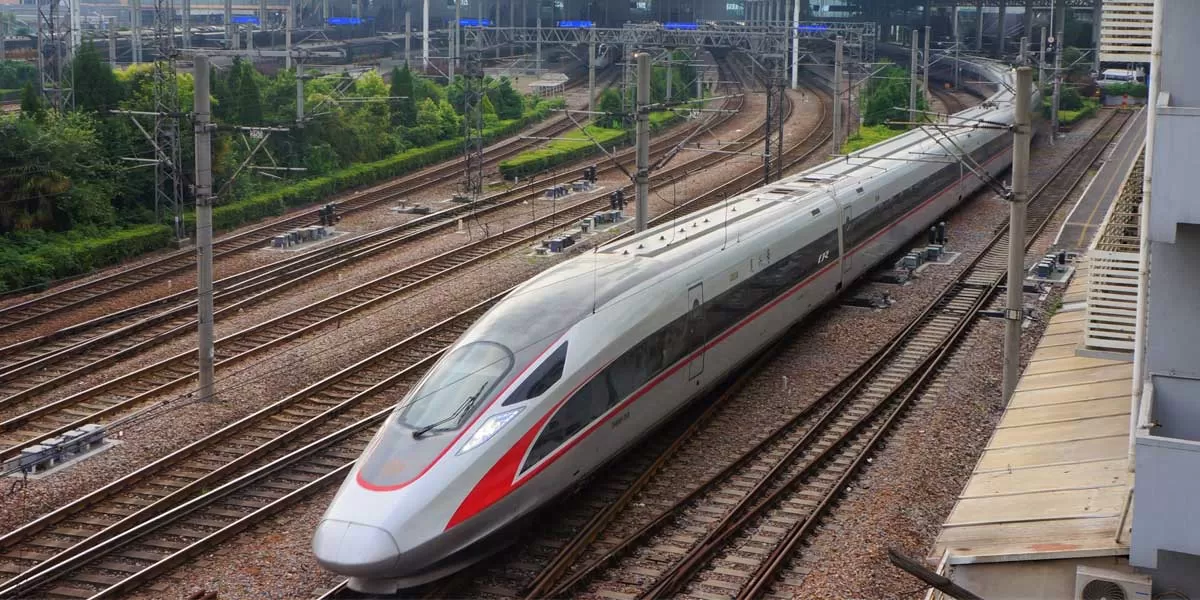
Indian Railways is preparing a significant transformation of intercity travel in western India, with plans to introduce a new generation of semi high speed trains on the Ahmedabad–Mumbai corridor by 2027. The proposed deployment of Vande Bharat Express 4.0 on this route marks a strategic step in aligning passenger rail with emerging high speed infrastructure, offering faster, lower carbon mobility between two of the country’s most economically connected urban regions.
The Ahmedabad–Mumbai corridor is already undergoing extensive track, signalling, and safety upgrades designed to support substantially higher operating speeds. According to officials familiar with the programme, the Vande Bharat Express 4.0 has been engineered for operations of up to 250 kilometres per hour on Indian rail infrastructure, positioning it as the fastest domestically built passenger train planned for service. The corridor’s modernisation is seen as a critical bridge between conventional rail and future dedicated high speed systems. Rail planners say the project reflects a broader shift in how India approaches long distance urban travel. Faster trains on existing alignments are expected to reduce reliance on short haul flights and private vehicles, contributing to lower per capita emissions while improving regional economic integration. Urban development experts note that such corridors often influence land use, commercial clustering, and housing demand around stations, reinforcing the need for coordinated transit oriented planning.
While the trainsets are being designed for much higher technical limits, initial services are expected to run at moderated speeds as infrastructure upgrades are phased in. Safety remains a central focus of the programme. The Vande Bharat Express 4.0 will be equipped with an advanced version of the indigenous automatic train protection system, intended to enhance collision avoidance and operational reliability on high density routes. Industry observers also point to the implications for capacity. The new generation trains are expected to feature longer formations and improved energy efficiency, allowing Indian Railways to carry more passengers with lower operating intensity. This becomes particularly relevant on the Ahmedabad–Mumbai corridor, which connects manufacturing hubs, financial centres, ports, and emerging urban clusters across Gujarat and Maharashtra.
From a city building perspective, the rail upgrade is being viewed as part of a larger mobility transition. Faster, reliable intercity rail can reshape commuting patterns, support decentralised employment growth, and improve access to education and services across regions. Planners emphasise that real benefits will depend on last mile connectivity, station area planning, and integration with metro and suburban networks. As Indian Railways moves closer to the planned 2027 introduction, attention is expected to shift toward execution timelines, affordability, and the readiness of urban systems to absorb the impacts of faster travel. The corridor’s evolution will likely serve as a test case for how India balances speed, safety, sustainability, and inclusive growth in its next phase of rail development.
Indian Railways Plans 250 kmph Rail Leap