


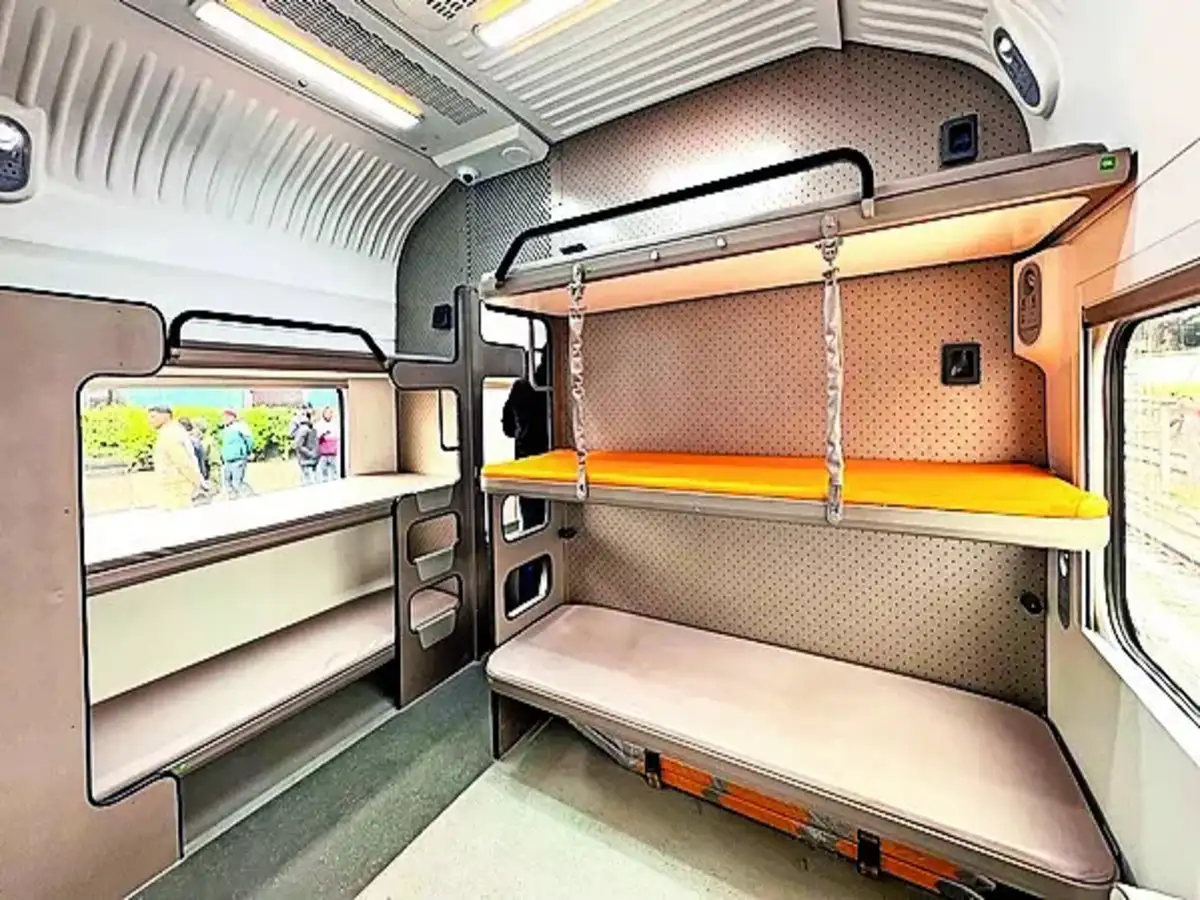
The Indian Parliament is reviewing a proposal requiring Indian Railways to refund a portion of fares to passengers who purchase Reservation Against Cancellation (RAC) tickets but do not receive a full berth. The potential policy adjustment directly affects millions of daily and long-distance travellers, highlighting broader issues of fare fairness, commuter trust, and equitable urban mobility across India’s vast rail network.
RAC tickets, which guarantee travel without confirmed berths, serve as a critical tool for managing overcrowding on high-demand routes. Urban planners note that partial refunds could address long-standing passenger grievances over the perceived value mismatch, while also improving public confidence in railway operations. Commuter advocacy groups argue that such measures are essential in ensuring equitable access to affordable rail travel, particularly for middle- and lower-income populations who rely heavily on trains for work and education. A senior railway official indicated that the move is part of a broader effort to enhance operational transparency and accountability. Historically, RAC fares have been charged at rates close to full berths, raising concerns over overcharging when passengers receive only limited facilities. Analysts suggest that introducing proportional refunds could reinforce the social contract between public transport authorities and the commuting population, encouraging more people to continue using low-carbon transport modes rather than shifting to private vehicles.
Economists and urban mobility specialists point out that fare reform is closely linked to sustainable transport planning. By making RAC travel more equitable, Indian Railways could manage peak-time congestion more effectively and optimise train utilisation. Additionally, more predictable pricing structures may influence commuter behaviour, reducing crowding and improving overall passenger experience, especially in metropolitan corridors where rail remains a backbone of urban mobility. The proposed changes also intersect with digital ticketing platforms. Experts note that integrating partial refund mechanisms into online booking systems will require robust technological upgrades and clear communication protocols to prevent delays or disputes. This reflects a growing need for transport authorities to leverage data-driven solutions while maintaining inclusivity, ensuring that all passenger segments, including those less familiar with digital platforms, are adequately served.
As discussions progress, urban transport analysts emphasise that policy refinement must balance financial sustainability with social equity. Ensuring fair compensation for RAC travellers strengthens the resilience of India’s rail network, reinforces public trust, and supports the broader goal of sustainable, climate-conscious mobility in urban and semi-urban regions.
Also Read: India Railway Stations Redeveloped Under National Plan
Indian Railways Moves to Refund RAC Partial Fares
