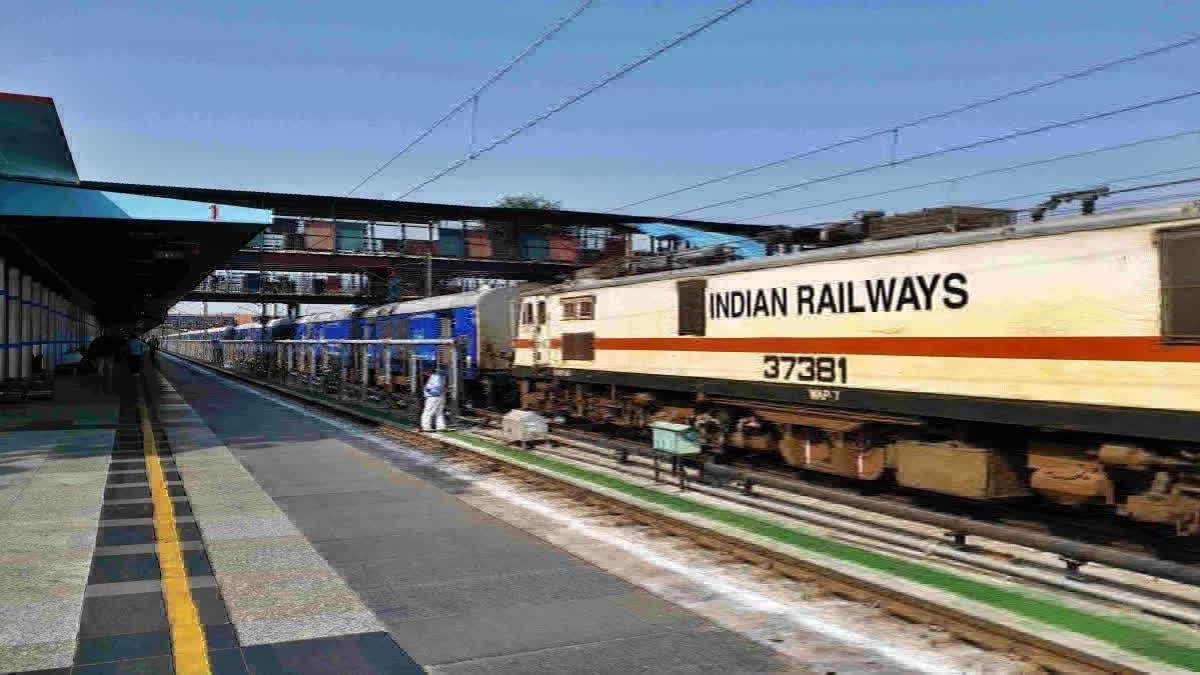
Rail connectivity across large parts of North India has entered a prolonged phase of disruption as dense winter fog continues to impair visibility, forcing Indian Railways to suspend and curtail services across key corridors. The impact is being felt most acutely in Delhi-NCR, Punjab, Uttar Pradesh and eastern freight-linked routes, underlining the vulnerability of critical transport infrastructure to seasonal climate conditions.
Railway officials confirmed that multiple long-distance passenger services have been withdrawn for safety reasons, with suspensions extending through late February and, on select routes, into early March. These corridors include high-demand connections linking the national capital with eastern, northern and north-eastern states routes that collectively carry millions of passengers each winter.
Meteorological data indicates that visibility across several urban and semi-urban centres has frequently dropped below operational thresholds during early morning and night hours. For train operations, this significantly increases braking distances and signal response risks, particularly on older sections of the rail network that lack advanced fog-navigation systems.
The knock-on effects are substantial. Commuters dependent on affordable long-distance rail travel are facing forced rescheduling, while migrant workers, students and small traders are being pushed towards costlier or less reliable transport alternatives. Logistics operators have also reported schedule uncertainty, with passenger train cancellations disrupting shared rail paths used by time-sensitive freight. Urban transport analysts note that repeated winter disruptions are no longer exceptional events but part of a broader climate pattern affecting North India. Colder temperatures, stagnant air and rising particulate pollution are intensifying fog formation, turning seasonal weather into a structural planning challenge. For cities such as Delhi, Kanpur and Varanasi, this compounds existing mobility stress during peak winter months.
Indian Railways has progressively deployed anti-fog devices and GPS-based signal assistance on select routes, yet coverage remains uneven. A senior railway official indicated that safety protocols require conservative operational decisions when visibility drops sharply, even if this results in prolonged service suspensions. From a governance perspective, this highlights the trade-off between reliability and risk management in high-density rail systems. The economic dimension is equally significant. Rail-dependent property markets around major junctions and industrial clusters experience short-term slowdowns during extended cancellations, affecting labour mobility and commercial activity. Transport economists argue that climate-resilient rail infrastructure ranging from upgraded signalling to dedicated winter operating strategies will be critical as cities expand and inter-city travel demand rises.
Passengers have been advised to track live service updates and revised timetables before planning journeys, as fog-related adjustments may continue depending on weather trends. However, urban planners suggest that long-term solutions lie beyond advisories, requiring coordinated investment in technology, pollution mitigation and regional climate adaptation. As winter fog becomes a recurring stress test for North India’s transport spine, the current disruptions serve as a reminder that resilient mobility systems are foundational to inclusive growth, economic stability and sustainable urban development.
Indian Railways Faces Prolonged North India Disruptions