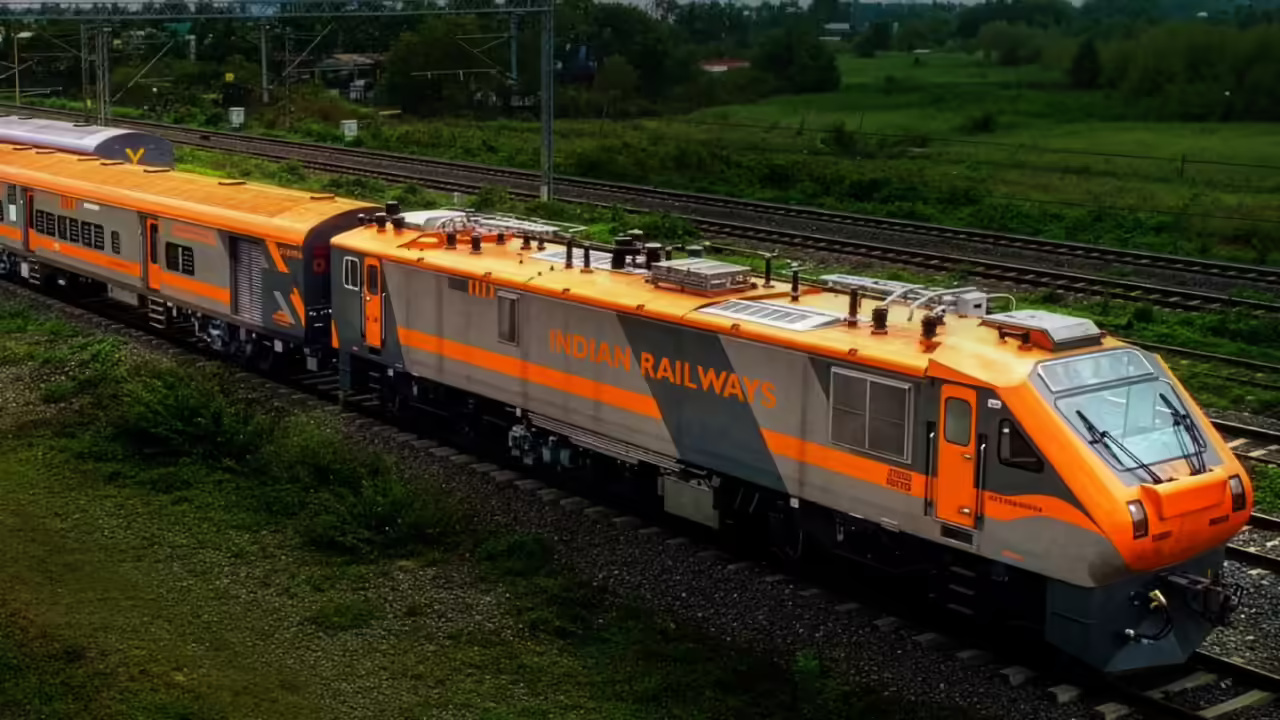
India’s long-distance rail network expanded further on Sunday with the introduction of five additional Amrit Bharat Express services across eastern, northern and southern corridors, signalling a continued push to strengthen affordable intercity mobility. The new trains link major urban centres with regional hubs in Assam, West Bengal, Uttar Pradesh, Haryana and Tamil Nadu, addressing rising demand for cost-efficient, long-haul travel.
Three of the services were inaugurated across Assam and eastern India, while two more were introduced from West Bengal, taking the day’s total to five. The additions form part of a wider rollout that has seen multiple Amrit Bharat Express trains introduced over a single weekend, reflecting the railways’ focus on expanding non-premium, high-capacity services rather than adding luxury-only offerings. Railway officials said the newly operational routes are designed to improve connectivity between economic regions that rely heavily on rail for workforce movement, small trade and social travel. Several of the corridors connect state capitals and industrial clusters with migrant source regions, reinforcing the role of railways as a backbone of inclusive economic integration rather than a city-to-city convenience service alone.
Urban transport analysts point out that the Amrit Bharat Express category occupies a strategic middle ground in India’s rail ecosystem. Unlike premium high-speed or luxury services, these trains prioritise affordability, higher seating capacity and improved on-board standards over speed alone. This makes them particularly relevant for long-distance travellers who are price-sensitive but increasingly expect reliable schedules, cleaner coaches and better safety features. The geographic spread of the newly added routes is also notable. Services linking the northeast with northern and western India are expected to reduce travel friction for regions that have historically faced connectivity constraints. At the same time, new east–south corridors strengthen rail-based alternatives to long road journeys, with potential climate benefits through lower per-passenger emissions.
From an urban development perspective, expanded long-distance rail services can have downstream effects on housing and labour markets. Improved intercity connectivity supports circular migration, enables workers to maintain ties with home regions, and reduces pressure on informal urban housing by making periodic travel more feasible. Transport economists note that such services also support smaller cities by improving access to national markets without requiring major airport-led investments. The launch is part of a broader plan to introduce several new Amrit Bharat Express services across India in the current phase. Railway planners indicate that future additions will continue to focus on underserved corridors and routes with high passenger volumes but limited premium penetration.
As India balances high-speed ambitions with the realities of mass mobility, the Amrit Bharat programme reflects a pragmatic approach to rail investment. Its success, experts caution, will depend not only on new launches but also on operational consistency, maintenance standards and timetable reliability. For millions of long-distance travellers, these factors will ultimately determine whether expanded rail networks translate into genuinely accessible, low-carbon and people-first mobility.
Indian Railways Expands Amrit Bharat Network