


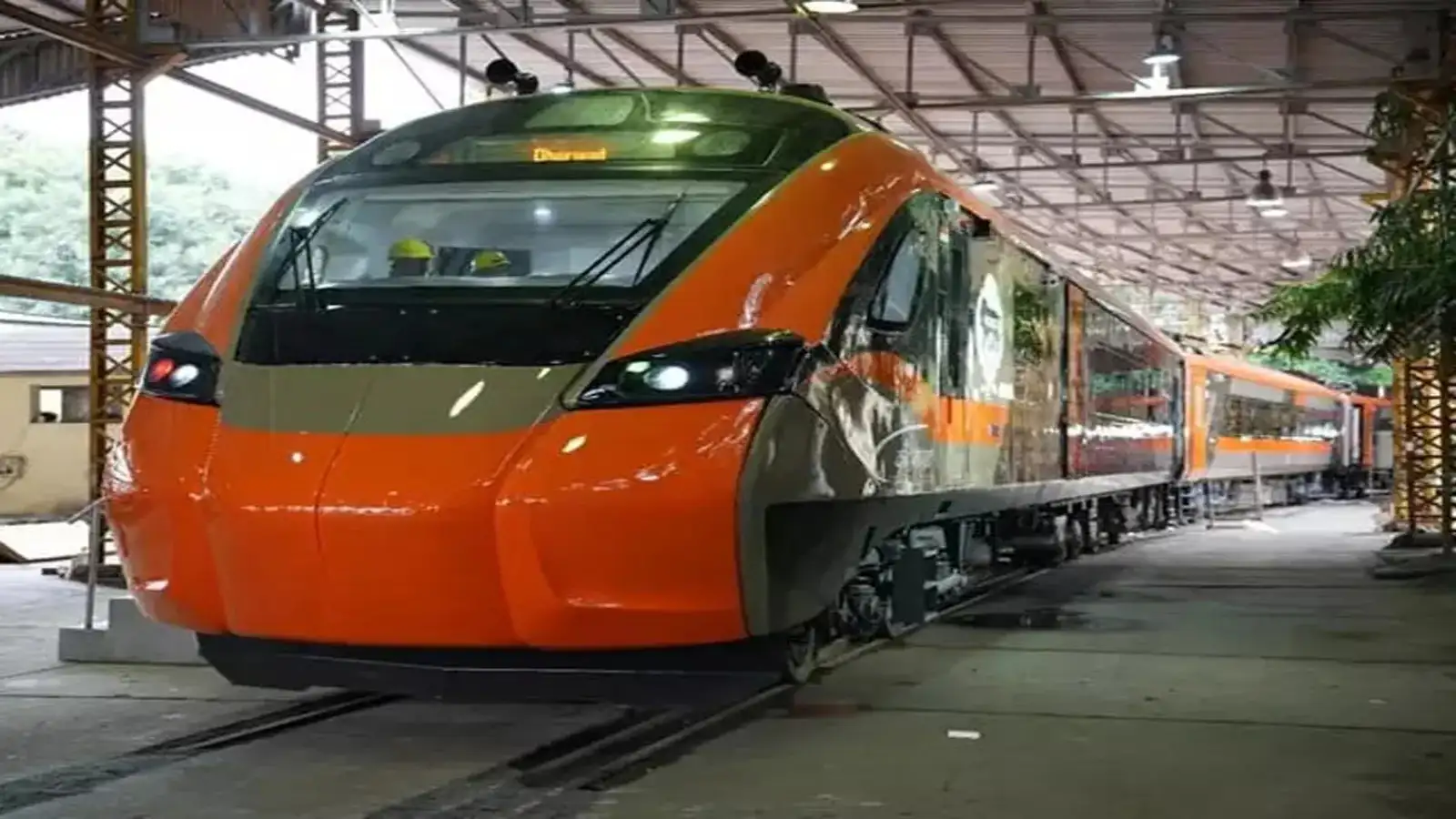
Indian Railways has awarded the contract for producing its next‑generation Vande Bharat Sleeper trains to three key manufacturing partners, marking a significant expansion in its semi‑high‑speed, eco‑friendly rail ambitions. The government body confirmed that BEML, Kinet Railway Solutions, and a consortium of Titagarh Rail Systems and BHEL have been entrusted with building a total of 210 sixteen‑coach sleeper train‑sets under the flagship Vande Bharat platform.
These sleeper variants—designed to revolutionise long‑haul overnight travel—will extend the comfort and speed of Vande Bharat to journey durations traditionally served by Rajdhani and Duronto trains. Unlike the current chair‑car only models, these new trains will feature berths across first, second, and third ac classes. Equipped with modern amenities, they reflect Indian Railways’ commitment to inclusive, gender‑neutral, and sustainable transport that aligns with national carbon‑reduction goals.
In early January, the prototype achieved a peak speed of 180 km/h during loaded trials between Kota and Laban, with additional peak runs of 170 and 160 km/h on adjacent routes—testament to the train’s advanced engineering and stability t. The successful video demonstration of a stationary glass of water at full speed underscored the ride stability and comfort that passengers can expect.
The sleeper variants are being manufactured under three contracts:
BEML (under ICF): Awarded an order for ten stainless steel rake‑sets
Kinet Railway Solutions: A JV between RVNL and Russian TMH, scheduled to produce 120 sets at Latur’s Marathwada coach plant; prototype expected by FY27.
Titagarh Rail Systems–BHEL Consortium: Tasked with manufacturing the remaining 80 sets, reinforcing Make‑in‑India capabilities.
Experts suggest this multi‑supplier model balances capacity, cost efficiency, and technological diversity, allowing Indian Railways to scale up production and mitigate single‑source risks. The distributed manufacturing network aligns with decentralised industrial development strategies and supports national employment goals . Although BEML’s prototype faced quality inspection delays flagged by ICF earlier this year—including 81 corrective issues—Railways clarified that most were minor and under resolution, while RDSO readies it for oscillation testing.
Once trials conclude—expected by January-end for certification by the Railway Safety Commissioner—Vande Bharat Sleeper trains will be cleared for regular services at 160 km/h operational speeds, joining high-speed overnight routes like Delhi–Mumbai and Howrah–Chennai Transportation strategists highlight the broader impact: these trains are expected to shorten travel times, enhance energy efficiency through regenerative braking and aerodynamic design, and reduce carbon intensity by enabling modal shift from air and road to electric rail—a critical step in low‑carbon urban development .
Challenges remain—such as upgrading track infrastructure, ensuring compatibility across varied rolling stock designs, and resolving quality control pressures. However, the emblematic trials and high‑speed achievements signal readiness for ambitious implementation. The sleeper train initiative supports India’s broader rail modernisation drive, which includes expanding the Vande Bharat fleet to 4,500 sets by 2047, electrifying dedicated freight corridors, and enhancing track capacities for 200 km/h+ trains
As Indian Railways transitions from short-distance chair‑car routes to sleeper‑enabled long journeys at near bullet‑train speeds, the move reflects a strategic leap toward green, inclusive, and modern public mobility—setting new benchmarks for national rail systems.
Also Read : Mumbai Central Railway Launches Crackdown on First Class Ticketless Travel
