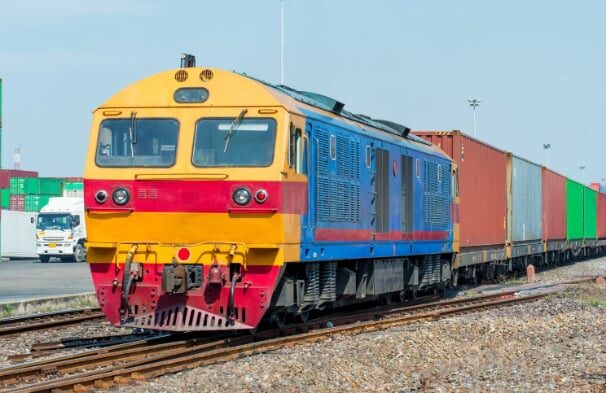
Indian Railways’ recalibration of freight pricing and logistics for bulk cement movement is beginning to reshape how one of India’s most carbon-intensive construction materials travels across the country. Recent changes to tariff structures for cement transported in tank containers have triggered a noticeable rise in industry participation, signalling a gradual shift away from road-based haulage towards rail-led logistics.
Officials familiar with the development said multiple cement manufacturers have approached the national logistics operator to move bulk cement using specialised tank containers, encouraged by lower freight costs and operational efficiencies. The railways’ container arm has simultaneously started enabling silo-based handling at key terminals, allowing cement to be loaded, stored and dispatched in bulk reducing reliance on bagged cement and minimising handling losses.
At the centre of the reform is a revised freight charging mechanism.
Instead of distance-linked container charges that the industry viewed as inflexible, Indian Railways has moved to a tonne-kilometre-based pricing model, lowering the rate and extending incentives for empty return journeys. Logistics experts say this makes rail competitive on both short and medium hauls, a segment historically dominated by trucks due to pricing predictability. The construction sector is a critical test case for freight reform. Cement accounts for a significant share of bulk commodity movement in India, driven by sustained demand from housing, infrastructure and urban redevelopment projects. Yet the material has traditionally travelled by road, contributing to fuel consumption, emissions and congestion around industrial corridors and city edges. The current push to expand rail-based bulk cement transport is therefore being seen as both an economic and environmental intervention.
Industry analysts note that bulk movement through tank containers offers operational advantages beyond cost. Faster turnaround times, reduced spillage, and better integration between plants and distribution hubs can improve supply chain reliability particularly for large urban markets where project timelines are increasingly compressed. For railways, higher utilisation of container rakes also improves asset efficiency without large capital additions. The earlier tariff framework, which relied on container-based charges and declining discounts over time, failed to attract sustained interest from cement producers. Many companies found it misaligned with production cycles and market demand patterns. The revised approach, officials said, was designed after consultations to create a more predictable and scalable pricing structure.
From a sustainability perspective, the implications are significant. Rail transport consumes substantially less fuel per tonne-kilometre than road haulage, translating into lower emissions across long supply chains. Urban planners argue that shifting bulk materials like cement to rail can ease truck congestion on city approaches, improving air quality and road safety particularly in fast-growing metropolitan regions. While adoption is still at an early stage, policymakers see the response as an indicator that targeted freight reforms can influence modal choice. The next phase will hinge on expanding terminal infrastructure, ensuring last-mile connectivity, and maintaining pricing stability. If scaled effectively, bulk cement transport by rail could become a template for decarbonising construction logistics across India’s urban growth corridors.
Indian Railways Drives Shift to Bulk Cement Logistics