


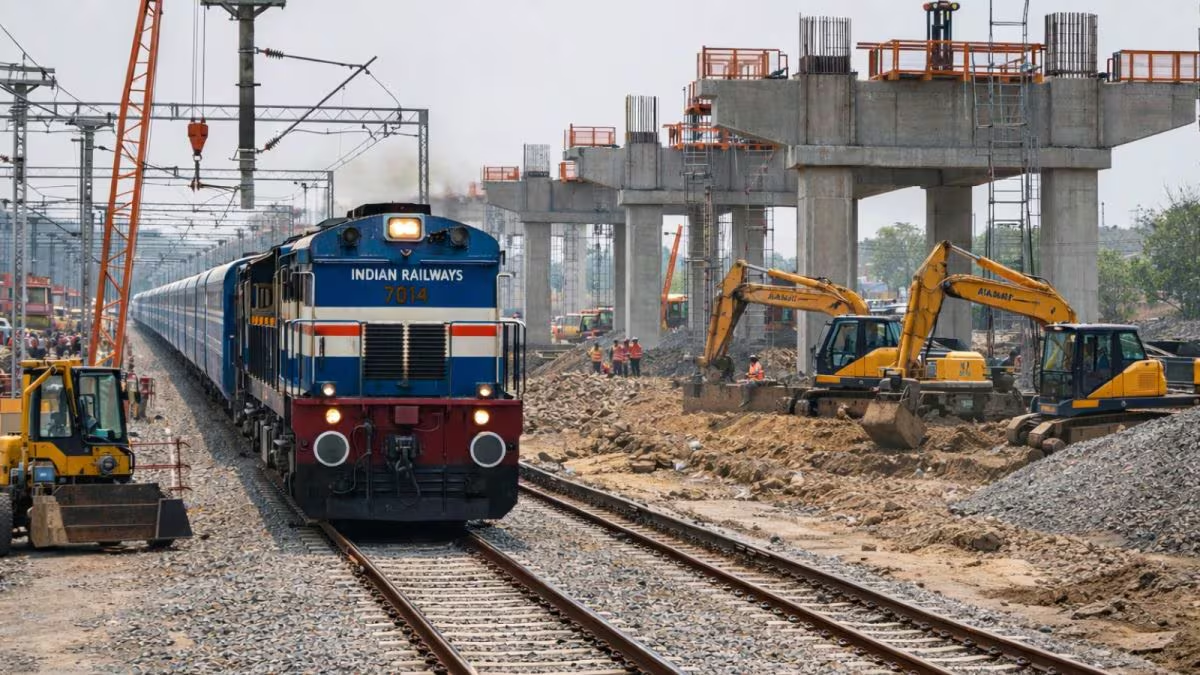
Indian Railways has sanctioned a series of infrastructure projects aimed at expanding network capacity, improving operational safety, and enhancing commuter efficiency across its national rail system. The approvals, encompassing track modernisation, station upgrades, and signalling enhancements, signal a broader effort to modernise rail corridors while supporting urban mobility and regional economic growth.
The projects include electrification of key routes, doubling of high-traffic lines, and modern signalling systems designed to reduce delays and improve train frequency. Urban planners and transport analysts note that increasing rail capacity is critical to meeting rising demand from metropolitan commuters, intercity passengers, and freight operators, all of whom influence urban congestion and regional supply chains. From an environmental perspective, the shift towards electrified lines aligns with India’s climate resilience goals. A senior official highlighted that reducing diesel dependency on major corridors will cut greenhouse gas emissions, lower particulate pollution in cities, and support zero-carbon urban transport networks. Energy-efficient rail infrastructure is increasingly being recognised as a sustainable alternative to road freight, which contributes disproportionately to urban air pollution and congestion.
Economic experts emphasise that capacity upgrades and station modernisations have ripple effects beyond mobility. Enhanced freight corridors can lower logistics costs for businesses, while improved commuter services support workforce mobility and urban economic inclusion. Urban transport specialists point out that integrating stations with last-mile connectivity and multimodal transit hubs can strengthen equitable access to employment, education, and city services. Operational safety measures are a core component of the new projects. Modern signalling, automated train control systems, and upgraded track monitoring will help mitigate accidents, reduce delays, and improve passenger confidence. Industry analysts note that safety and reliability improvements are essential for encouraging modal shifts from private vehicles to rail, which in turn alleviates urban road congestion and reduces carbon footprints.
The rail authority has stressed that project implementation will prioritise efficient resource allocation, minimal disruption to commuters, and long-term resilience against climate-induced risks such as flooding or extreme heat on vulnerable rail sections. Urban infrastructure planners see this approach as a blueprint for integrating transport upgrades with climate-resilient urban development. Looking ahead, the successful execution of these projects could strengthen India’s rail sector as a backbone of sustainable urbanisation and regional growth. Continuous investment in capacity, safety, and efficiency will be critical to supporting cities and towns as they expand, while aligning rail development with broader environmental and social objectives.
Also Read: Indian Railways Migrates Passengers To RailOne App
Indian Railways Approves Major Infrastructure Projects
