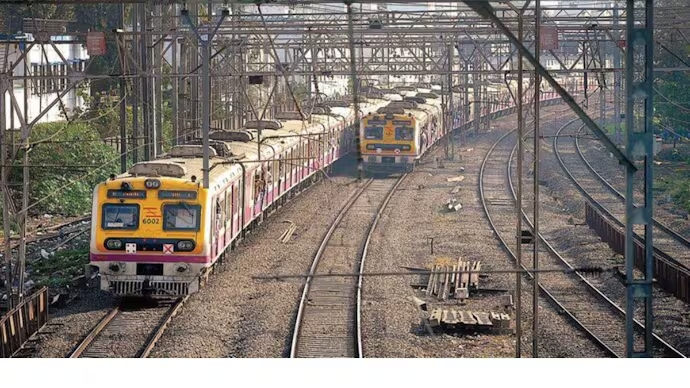
Railways has moved to strengthen festive mobility across southern India by scheduling an additional 150 passenger services during the Makar Sankranti travel window, responding to a predictable spike in long-distance movement between urban centres and coastal districts. The initiative, led by the South Central Railway zone, is designed to manage crowd pressure while keeping regional rail networks functional during one of the country’s busiest travel periods.
The additional services will primarily connect Hyderabad with towns and cities across Andhra Pradesh and Telangana, corridors that typically see intense outbound traffic during the harvest festival. Rail officials said the planning was guided by advance booking trends and historic travel data, which consistently show sharp passenger volumes as families return to hometowns for Sankranti rituals and celebrations. Beyond the headline figure, the operational challenge lies in balancing extra demand without disrupting routine connectivity. More than 600 regular trains will continue to operate as scheduled, maintaining links to northern, eastern and southern states. According to transport planners, this layered approach combining festival-specific services with uninterrupted core operations is increasingly critical for large urban agglomerations where railways function as essential social infrastructure.
Several coastal Andhra routes, including those serving port cities and agrarian districts, have been prioritised for additional services. These corridors support not only passenger movement but also seasonal economic activity, from agricultural trade to small-town retail. Industry observers note that reliable festival transport reduces pressure on road networks, cutting congestion and emissions at a time when intercity highways are already stretched. Within the Hyderabad urban region, operational adjustments have been made to distribute footfall more evenly. Secunderabad station, currently undergoing phased redevelopment, is expected to experience heavy congestion. To reduce bottlenecks, a number of services have been reassigned to suburban terminals such as Charlapalli, Kacheguda and Lingampalli. Urban mobility experts say this decentralisation mirrors long-term goals of spreading transport demand across multiple nodes rather than relying on a single hub.
Train halts have also been temporarily expanded along western and high-technology corridors of the city, allowing passengers to board closer to residential and employment clusters. For daily wage workers and lower-income travellers, such access points can significantly reduce last-mile travel costs and time, reinforcing the railway’s role as an inclusive transport system. To ensure operational stability, a limited number of Mail and Express services have been suspended for the duration of the peak rush, freeing up track capacity and crews for the Makar Sankranti special trains.
Officials advised passengers to verify schedules and boarding stations in advance, as platform assignments may vary during the festive period. As Indian cities grow and seasonal migration intensifies, managing festival travel has become a recurring test of transport resilience. The current deployment suggests a shift toward more data-driven, decentralised rail operations an approach that, if sustained, could improve passenger experience while supporting cleaner, more efficient intercity mobility in the years ahead.
Indian Railways adds Makar Sankranti special trains