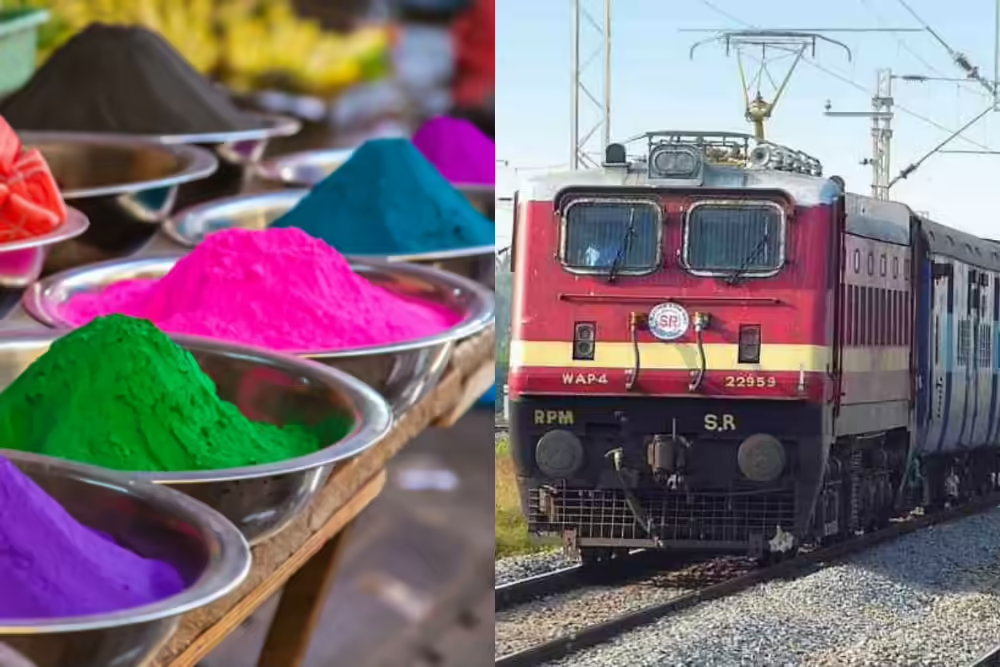
As inter-state travel surges ahead of Holi, Indian Railways has scheduled additional Holi special trains linking western cities such as Pune, Mumbai and Ahmedabad with key destinations across Bihar. The move is designed to absorb seasonal passenger pressure that has pushed regular services to capacity and driven airfares sharply higher.
Railway officials confirmed that multiple pairs of Holi special trains will operate through late March, connecting hubs including Danapur, Patna, Samastipur, Darbhanga, Saharsa and Raxaul. Services from Pune and Mumbai’s Lokmanya Tilak Terminus are among the most significant additions, reflecting sustained migration and workforce links between Maharashtra and eastern India. The annual festival migration highlights structural travel demand between industrial and IT centres in western India and labour-sending regions in Bihar. Urban economists note that this seasonal spike underscores the importance of flexible rail planning in supporting economic mobility. Affordable long-distance rail remains the primary mode of transport for migrant workers and middle-income families.
Several of the Holi special trains will operate daily or on designated weekdays, offering both outbound and return options. Routes include services between Pune and Danapur, Mumbai and Danapur, Mumbai and Samastipur via Patliputra, and Mumbai and Raxaul. Additional links have been introduced between Ahmedabad and Patna, as well as Ahmedabad and Darbhanga. A service connecting Sri Ganganagar and Samastipur further broadens the network. Transport planners say such temporary capacity injections help prevent overcrowding on core routes and reduce informal ticketing pressures. During peak travel windows, waitlists on eastern-bound trains often extend into the hundreds within hours of opening. By adding Holi special trains, Indian Railways aims to moderate congestion while maintaining safety and schedule reliability.
The move also has environmental implications. Rail travel emits significantly less carbon per passenger kilometre than domestic aviation or private road transport. Encouraging passengers to shift from high-emission alternatives during festival peaks contributes, albeit incrementally, to lower transport emissions in high-density corridors. From a real estate and labour market perspective, the pattern of festival travel offers insight into enduring socio-economic ties between metropolitan growth centres and smaller cities. Industrial clusters in Pune and Mumbai rely on a mobile workforce, while remittance flows support housing and consumption in eastern districts.
Bookings for the Holi special trains are now open through official railway channels. Industry observers say the success of these services will depend on punctuality, adequate coach composition and transparent ticket allocation. While festival demand will taper after March, experts argue that long-term capacity planning must account for recurring migration cycles. Seasonal trains provide immediate relief, but sustained investment in rail infrastructure remains central to equitable, low-carbon connectivity across India’s expanding urban network.
Indian Railways Adds Holi Special Trains