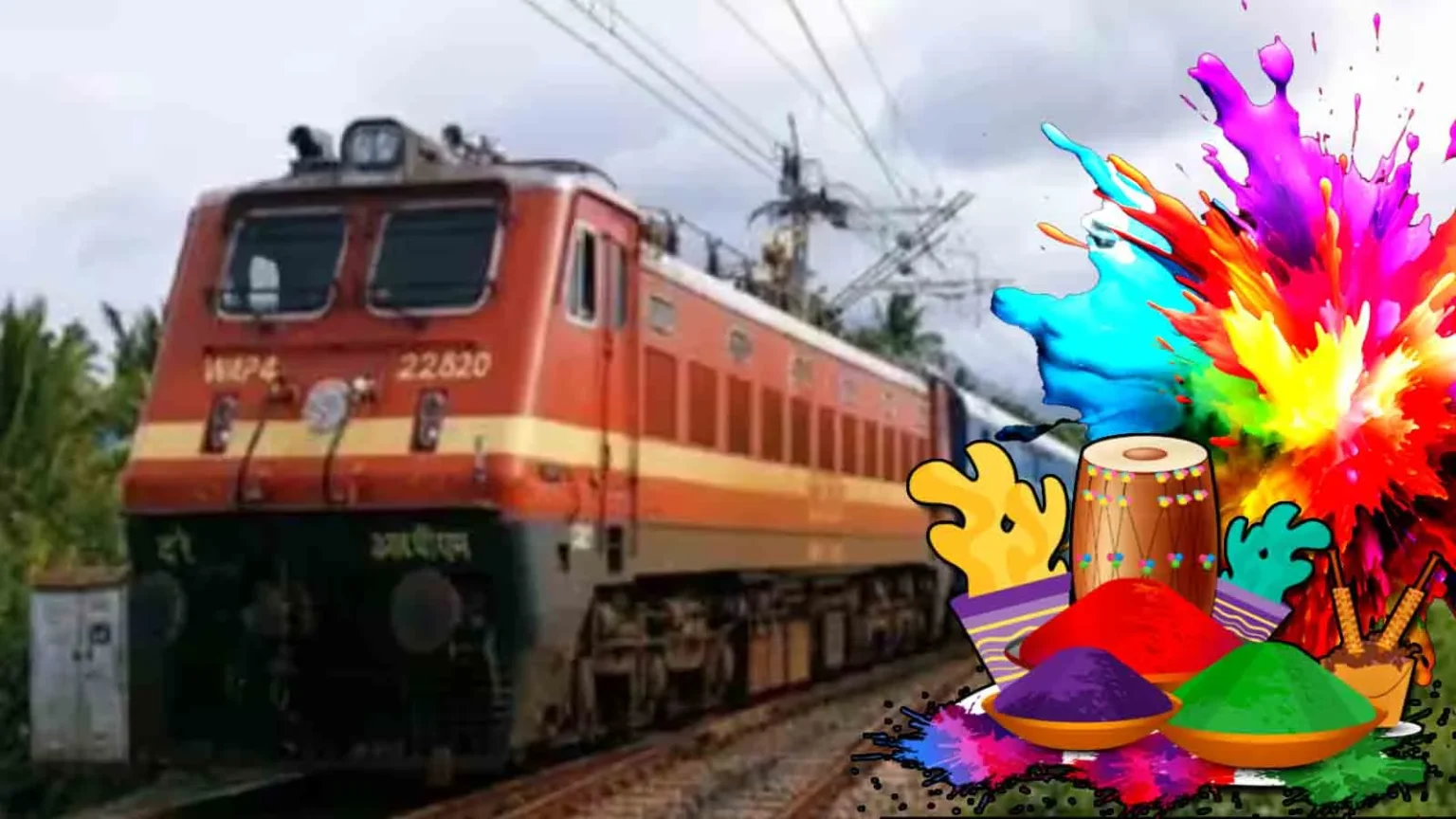
Indian Railways is moving to ease mounting festive travel pressure by proposing additional Holi special trains on key north and west India corridors, as waiting lists for services to and from Lucknow cross 8,000 passengers. The move reflects both the scale of seasonal mobility around major festivals and the growing strain on long-distance rail capacity linking Delhi, Mumbai and eastern Uttar Pradesh. Railway officials said two special trains are being planned from Lucknow to Delhi and one additional service to Mumbai, responding to heavy advance bookings for the Holi period.
The demand spike has left several flagship trains on these routes fully booked weeks ahead of departure, with multiple services showing “regret” status, meaning no further waiting list tickets are being issued in key classes. The Lucknow–Delhi and Lucknow–Mumbai corridors are among the most heavily travelled routes in northern India, driven by labour migration, education, family visits and seasonal commerce. Transport planners note that festival peaks often expose structural capacity gaps in intercity rail networks, particularly on routes that already operate near saturation during normal weeks.
Booking data for late February and early March shows severe crowding across both sleeper and air-conditioned categories on popular long-distance services. On some days, waiting lists have crossed triple digits in Sleeper and 3AC classes, while Second AC availability has also tightened sharply. Several trains serving Purvanchal, Bihar and Maharashtra-bound passengers are already closed to further reservations. At the same time, seats remain available on certain premium daytime services, creating a split between traditional overnight demand and underutilised higher-speed options. Officials confirmed that the Double Decker, Shatabdi and Vande Bharat services on the Delhi–Lucknow axis still have meaningful availability on select dates, offering alternatives for passengers willing to adjust travel timings or budgets.
The temporary suspension of bookings on one premium express service for early March has added further pressure on the reservation system, pushing more travellers towards conventional long-distance trains. Railway analysts say such disruptions, even if operationally necessary, can amplify crowding effects during peak holiday windows. Beyond passenger convenience, the surge in Holi travel carries wider economic implications. Festival mobility supports local economies through tourism, retail activity and remittance flows, while also testing the resilience of national transport infrastructure. Efficient handling of such seasonal spikes is increasingly seen as central to inclusive growth, particularly for lower-income travellers who depend on affordable rail connectivity.
From a sustainability perspective, managing festival demand through rail expansion rather than road or air diversion aligns with India’s low-carbon transport goals. Railways emit significantly less per passenger-kilometre than private vehicles or short-haul flights, making rail-based crowd management a climate-resilient option for mass mobility during peak seasons. Urban transport experts argue that festival demand forecasting should be built into long-term rolling stock planning, especially as domestic travel volumes continue to rise. The rollout of Holi special trains highlights the need for flexible fleet deployment and dynamic scheduling, rather than reactive capacity additions once waiting lists have already surged. As bookings continue to fill, officials are advising passengers to consider alternative services, off-peak travel days and premium trains where seats remain open. The effectiveness of the Holi special trains in absorbing excess demand will be closely watched, offering a real-world test of how adaptive India’s rail system has become in balancing affordability, sustainability and large-scale festive mobility.
Indian Railways adds Holi special trains