


Indian Railways is on the brink of a historic milestone, with more than 99 per cent of its vast broad-gauge network now electrified. The latest data shows that as of August-end, only 646 route kilometres remain to be converted, bringing the national transporter closer to achieving its goal of a fully electrified railway system.
Officials confirmed that Rajasthan, Karnataka, Tamil Nadu, Goa, and Assam are the final states with pending stretches. Assam remains the largest gap with 269 kilometres still to be completed, while Rajasthan has just 93 kilometres left. In comparison, electrification in most other states has reached near-total coverage. This scale of progress positions Indian Railways among the few major railway networks globally transitioning almost entirely to electric traction. The electrification drive is part of the broader vision to make Indian Railways a net zero carbon emitter by 2030. By replacing diesel-powered locomotives, the network is expected to reduce both operational costs and greenhouse gas emissions, while providing faster and more reliable services. Industry experts note that this transformation will not only modernise mobility but also serve as a benchmark for other sectors aiming to decarbonise.
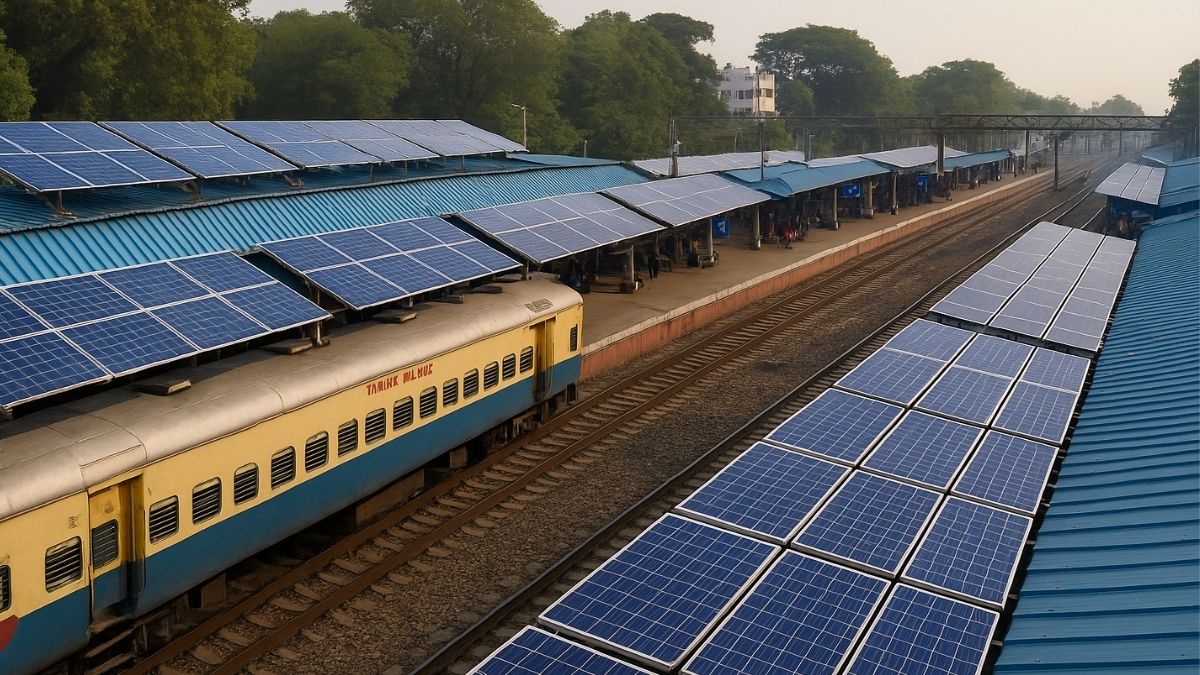
In parallel with electrification, Indian Railways is rapidly scaling up its renewable energy portfolio. Installed solar capacity has already crossed 4,500 MW, including rooftop projects and land-based plants. Data indicates that 236 MW of rooftop panels have been commissioned across 2,427 stations, 1,295 service buildings, and 673 residential quarters. An additional 224 MW of rooftop capacity is under development, alongside land-based projects totalling more than 1,000 MW. Officials also highlighted the adoption of advanced renewable power models such as Round-The-Clock (RE-RTC) supply, which ensures continuous green energy integration into railway operations. More than 2,300 MW of RE-RTC projects are currently under implementation in Rajasthan and Maharashtra. Experts believe that such diversification is essential to balancing demand and ensuring energy security as the system shifts away from fossil fuels.
Beyond its environmental benefits, the electrification programme is expected to strengthen India’s energy independence and reduce its reliance on imported fuel. It also enhances the resilience of railway operations, particularly in high-demand freight corridors. Railway analysts argue that as electrification converges with renewable adoption, the network is emerging as one of the most sustainable transport systems in the world. The final stretches of electrification are expected to be completed in the coming months, marking a turning point for the sector. While challenges remain in balancing energy demand and integrating renewables at scale, the national transporter’s achievements underline India’s commitment to building a modern, sustainable, and equitable mobility system.
Also Read : IndiGo To Start Thrice Weekly Kolkata Purnea Flights From September 15
